What began as a planned home birth over Memorial Day weekend became an extraordinary six-day journey of endurance, faith, and unwavering determination. After nearly a week of continuous labor, one first-time mother made the difficult decision to transfer from home to the hospital, where a dedicated team helped her finally welcome her long-awaited baby boy into the world.
Irma had spent months preparing for the birth of her first child, Xavier. Together with her husband, La Drake, she planned a home birth under the care of Jacksonville Community Midwives. Strong, disciplined, and no stranger to difficult challenges after serving a decade in the U.S. Navy, she approached birth with confidence while also leaning deeply on her faith to guide every decision.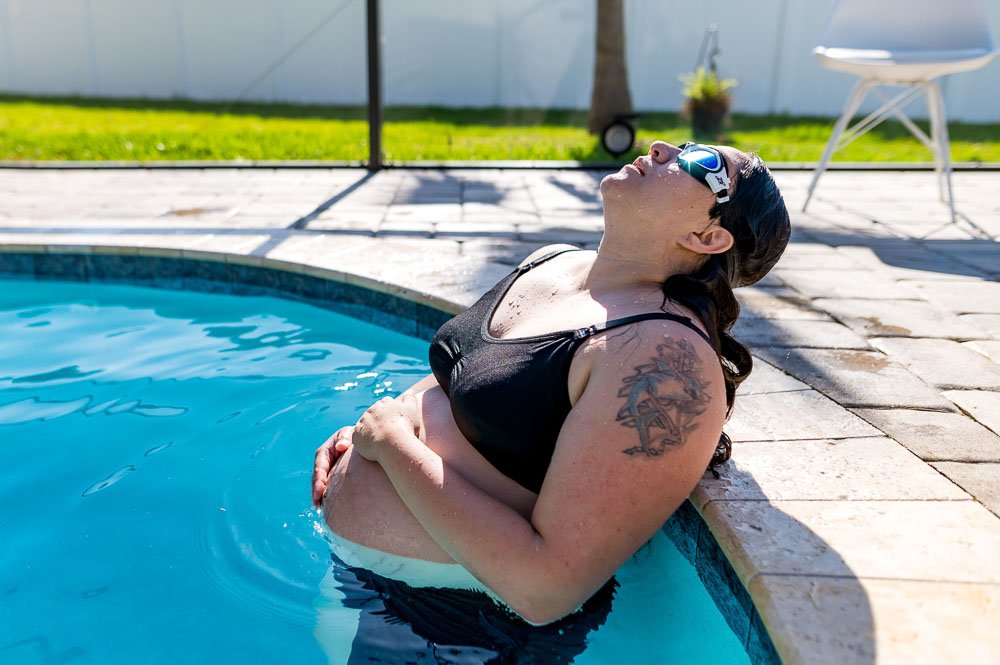
Labor quietly began on Sunday evening during a Memorial Day barbecue at a friend’s home.
At first, the contractions felt like persistent back pain wrapping around her abdomen, arriving roughly every twenty minutes. Believing labor had finally started, she returned home expecting her baby would soon follow.
Instead, the contractions continued.
Hour after hour.
Day after day.
By Monday and Tuesday, the waves had grown stronger but still refused to establish active labor. Her midwives visited regularly, monitoring both mother and baby while encouraging movement and exercises designed to help Xavier rotate into a more favorable position.
The problem soon became clear.
Xavier was positioned occiput posterior, often referred to as “sunny side up,” meaning the back of his head rested against his mother’s spine rather than facing forward. Although perfectly safe in many pregnancies, this position frequently leads to prolonged labor, intense back pain, and difficulty descending through the pelvis.
Rather than becoming discouraged, Irma threw herself into every recommendation her birth team offered.
She climbed stairs.
Used birth balls.
Practiced positioning exercises.
Rested with a peanut ball.
Allowed her hips and abdomen to be gently shifted using specialized techniques designed to encourage her baby to turn.
Throughout it all, contractions continued relentlessly.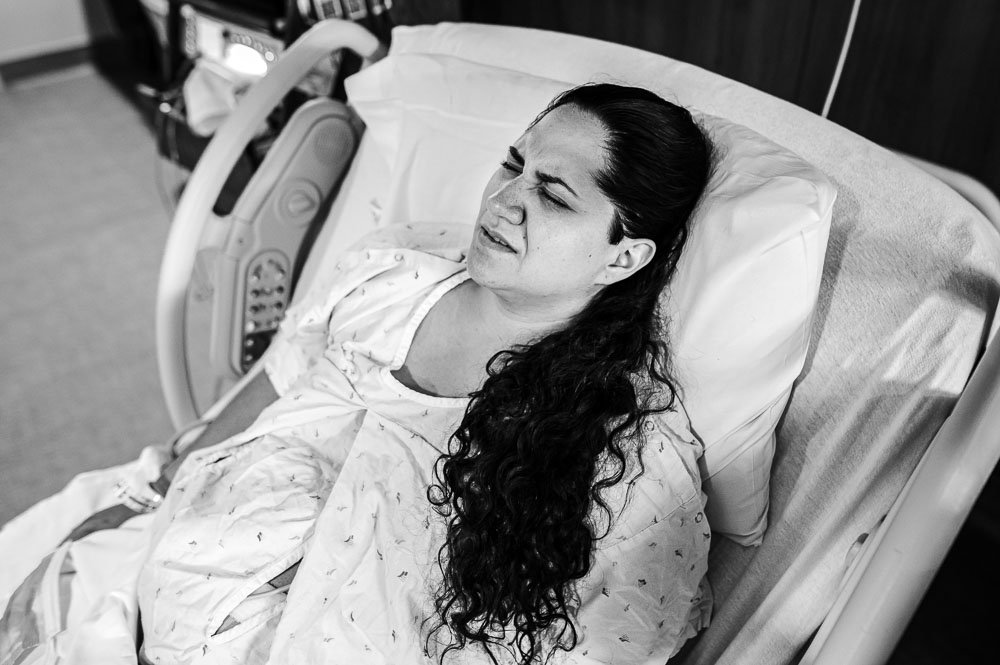
On Wednesday, another examination showed encouraging progress to four centimeters, and by evening her home buzzed with optimism. Between contractions, Irma laughed with family and friends. During each surge, however, her focus became absolute as she gripped the staircase and breathed through increasingly powerful contractions.
Despite the intensity, labor refused to move forward.
Thursday brought another emotionally exhausting day.
After visiting a chiropractor to encourage better fetal positioning, Irma even climbed into a swimming pool, hoping floating, handstands, and gentle movement might finally persuade Xavier to rotate. Between contractions, she and her husband joked together, played basketball in the water, and tried to preserve moments of normal life despite the growing exhaustion surrounding them.
Yet once again, labor slowed.
Contractions that had strengthened to every three or four minutes suddenly spread back out to five or even ten minutes apart.
Each apparent breakthrough seemed to disappear almost as quickly as it arrived.
Still, Irma held firmly to the birth she had planned.
Guided by prayer, Scripture, and conversations with her husband, she initially chose to remain at home, believing they should continue trusting the process.
By Friday morning, however, everything had changed.
Five consecutive days of contractions with almost no meaningful rest had taken an enormous physical and emotional toll.
Looking around the room, Irma saw exhaustion reflected not only in her own face, but also in her husband, her mother, and the close friends who had remained beside her through every contraction.
When one of her midwives gently admitted that, in her own situation, she would already have transferred to the hospital because maternal exhaustion had become a serious concern, Irma finally felt peace with making the difficult decision.
Together, they traveled to St. Vincent’s Clay Medical Center.
Rather than disappointment, they found immediate reassurance.
The labor and delivery staff welcomed Irma warmly, affirming that transferring care after such an extraordinarily long labor was not a failure but a wise medical decision.
After nearly a week without meaningful sleep, Irma accepted something she never imagined she would request.
An epidural.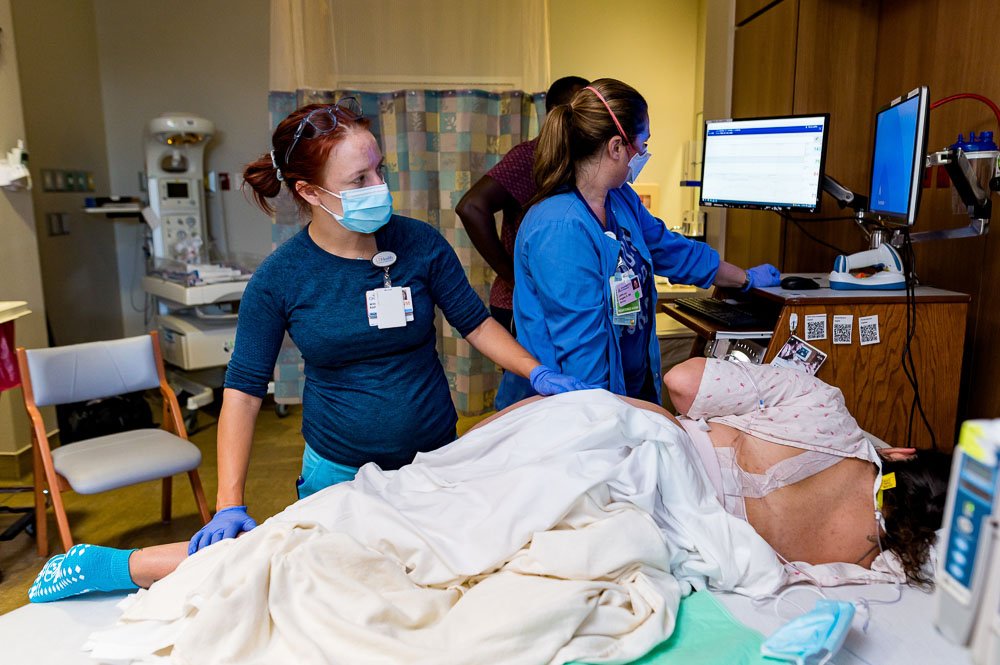
“I never thought I’d be begging for one,” she later admitted with a laugh.
The medication finally allowed her body to rest.
Soon afterward, midwife Whitney carefully broke her water, Pitocin was started to strengthen contractions, and—perhaps most importantly—the hospital staff continued supporting the same movement-based labor techniques Irma had practiced throughout her home birth journey.
Even with an epidural, nurses helped her rotate through side-lying positions, seated postures, “throne position,” gentle abdominal support techniques, and even modified inversions designed to create additional space inside the pelvis.
Rather than abandoning her birth goals, the hospital team embraced them.
Gradually, progress returned.
After several precious hours of uninterrupted sleep, Irma advanced from four centimeters to six.
Later that night, she reached nine.
As dawn approached after nearly six days of labor, one final obstacle remained.
A stubborn cervical lip prevented complete dilation, and Xavier still resisted descending despite every effort.
Her husband quietly read Scripture aloud.
Family members prayed over her.
Friends held her hands.
Coffee was shared.
Snacks were passed around.
Everyone waited together.
Eventually, the medical team sat down for an honest conversation.
After nearly twenty-four hours with ruptured membranes and days of extraordinarily difficult labor, they explained that a cesarean delivery might become necessary if Xavier continued struggling to descend.
They emphasized one thing above all else.
Whatever happened next would never reflect a lack of effort.
Irma had already accomplished something extraordinary.
Moments later, another examination brought the news everyone had been praying to hear.
Ten centimeters.
It was finally time to push.
Despite weeks of worrying that an occiput posterior baby might require hours of pushing, Xavier surprised everyone.
Within minutes, the top of his head appeared.
Encouraged by cheers from every corner of the room, Irma summoned the last reserves of strength she had left.
For 55 minutes, she pushed steadily while her husband prayed beside her, holding her hand through every contraction.
Then, after six unforgettable days of labor, Xavier entered the world.
The delivery room immediately erupted into applause, cheers, and tears.
Although he arrived covered in meconium—a surprise no one had anticipated—he cried immediately, reassuring everyone before being briefly assessed by the pediatric team.
Moments later, he returned to where he had always belonged.
Curled beneath his mother’s chin.
Instantly calm.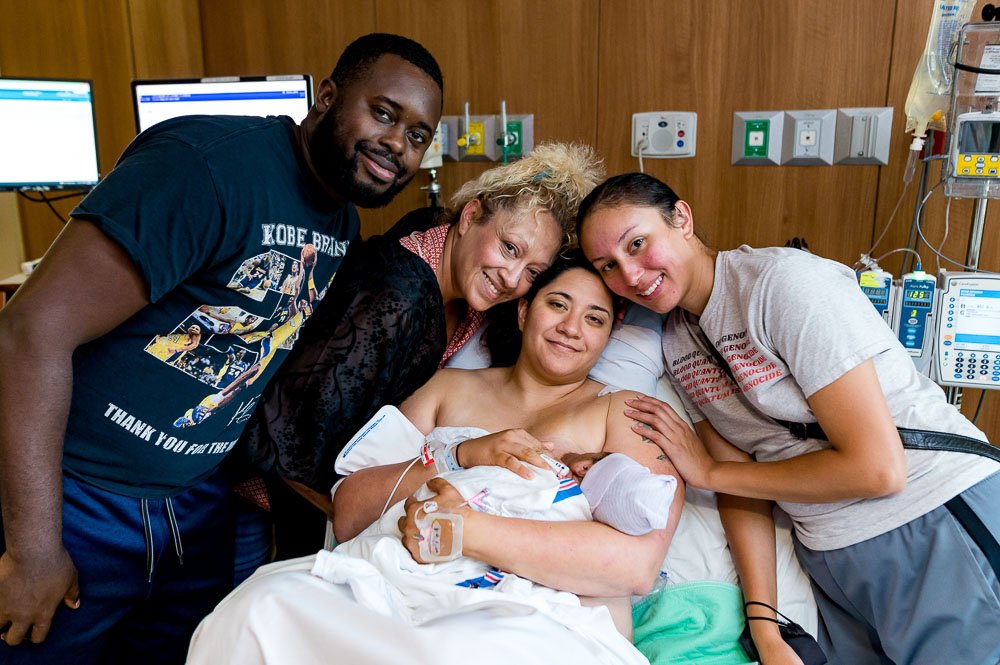
Holding her son for the first time, Irma described an overwhelming feeling of recognition.
She felt as though she had always known him.
Watching him peacefully settle against her chest, she recalled the biblical verse, “Before I formed you, I knew you,” believing those words had suddenly taken on an entirely new meaning.
For La Drake, hearing his son’s first cry transformed months of anticipation into overwhelming love.
Throughout pregnancy, he had known his child only through tiny kicks and movements beneath his wife’s skin.
Now, seeing Xavier’s face for the first time, he struggled to put the experience into words.
All he knew was that he wanted to give his son the world.
Soon afterward, Xavier instinctively latched for his first breastfeeding session, surprising his mother with how naturally he seemed to understand exactly what to do.
Reflecting on everything she had endured, Irma says childbirth surpassed every challenge she had ever faced—including ten years of military service.
Nothing compared.
Her six-day labor became not only the hardest experience of her life, but also its greatest achievement.
Looking back, she sees profound meaning in the timing.
They labored for six days.
On the seventh, they finally rested.
For Irma and her family, Xavier’s birth was far more than the arrival of a healthy baby boy. It became a testament to perseverance, humility, faith, and the courage to change plans when circumstances demanded it. What began as a dream of home birth ultimately became a story not about where her son was born, but about the extraordinary strength required to bring him safely into the world—and the unwavering love that carried an entire family through every step of the journey.