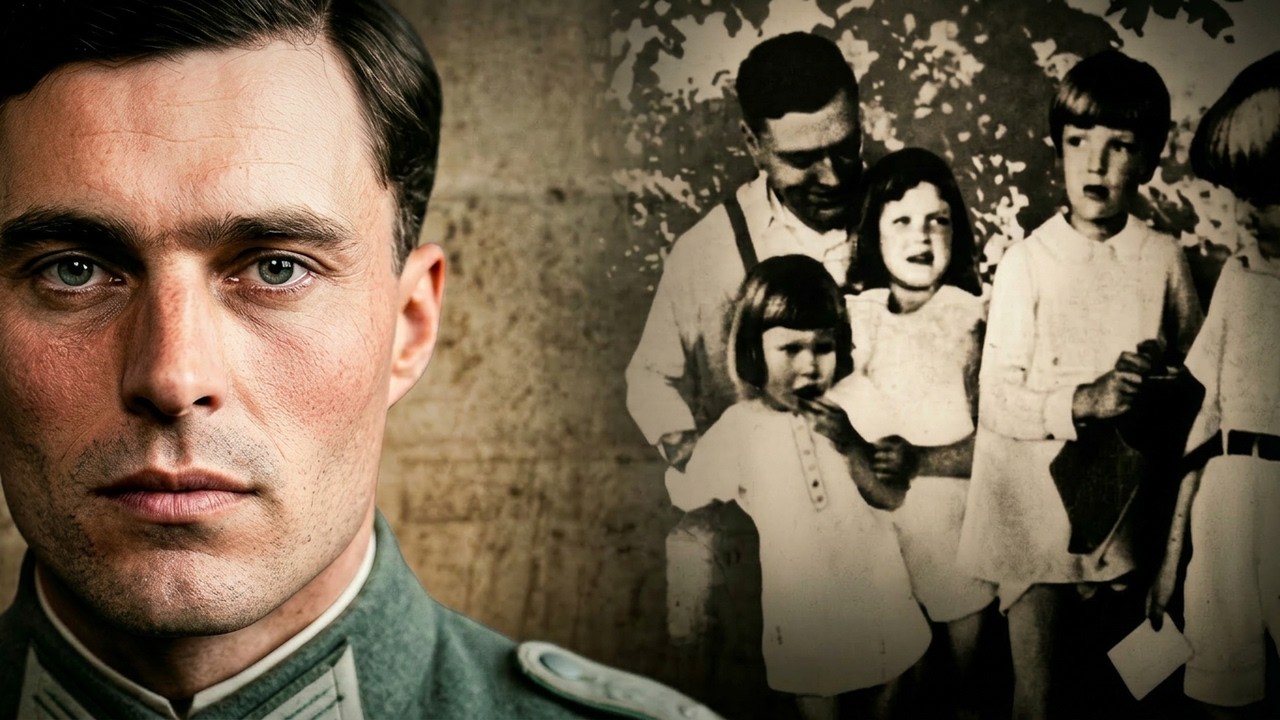
On January 27, 1945, Konstanze von Stauffenberg was born in captivity, the daughter of Claus von Stauffenberg, executed months earlier for his failed assassination attempt on Hitler. The Nazi regime sought to obliterate his family, but their efforts were thwarted, and the Stauffenbergs survived to shape Germany’s future with resilience and resolve.
Claus von Stauffenberg’s daring July 20, 1944 assassination attempt on Adolf Hitler ended in failure, sealing his fate with execution by early morning. The Nazi regime responded with brutal swiftness, invoking Sippenhaft—kinship guilt—to annihilate the Stauffenberg family line entirely, branding them traitors beyond redemption.
The regime’s vengeance extended beyond Claus. His brother Berthold was executed, and Alexander was detained despite no involvement in the plot. Relatives across Germany, including elderly and distant kin, were arrested, painting a vast net of guilt over the entire bloodline in a chilling display of collective punishment.
The retaliation struck hardest at the children. Four of Claus’s children were uprooted from their home in summer 1944, taken to Bad Sachsa’s children’s home. There, the regime stripped away their identity, confiscating belongings, forbidding contact with family, and renaming them “Meister” — a deadly erasure of the Stauffenberg name.
The youngest children faced a grim fate: forced adoption by loyal Nazi families, while the older boys were earmarked for indoctrination in political boarding schools designed to mold loyal servants of the Reich. The Nazi plan aimed to crush the Stauffenberg legacy long after the failed coup, molding the next generation into loyal followers.
Meanwhile, Nina von Stauffenberg, pregnant and grieving, was arrested days after the plot. Subjected to Gestapo interrogation and isolation in Ravensbrück, she was reduced from colonel’s wife to a mere prisoner carrying a traitor’s child under the iron fist of the regime, her fate hanging precariously over her unborn daughter.
With her due date looming, Nina was moved to a maternity home in Frankfurt an der Oder. On January 27, 1945, she gave birth to Konstanze, a child born in captivity and branded by the very regime that sought to erase her family’s name. Even childbirth was manipulated as another tool of control.
As the Red Army advanced, the Nazis shuffled prisoners, including the Stauffenbergs, through forced marches into the mountains of South Tyrol, holding them as hostages. Their liberation came only with the war’s end in May 1945, when American troops freed Nina and her infant daughter—survivors against staggering odds.
The family reunion was bittersweet. In July 1945, Nina’s four older children, discovered at Bad Sachsa, were reunited with their mother and baby sister at the Lautlingen estate. The siblings met the youngest, born in captivity, marking a rare moment of hope amidst heavy losses and a fragmented family history.
The Stauffenbergs returned from the brink of obliteration, but their lives bore scars. Estates were confiscated, assets frozen, and their name was synonymous with treason. Nina labored quietly to rebuild, refusing to sanctify her husband’s memory or foster a cult of martyrdom, choosing instead a sober, measured remembrance.
The children’s futures diverged profoundly. Valerie, the youngest raised in Bad Sachsa, died tragically young. Heimeran lived privately, shielding himself from public debate. Konstanze, born captive, pursued nursing and later preserved her mother’s story in a 2008 biography. Each bore the weight of a complex legacy in their own way.
Berthold, the eldest, defied Nazi intentions by dedicating 38 years to the West German army, rising to major general—a stark transformation from a boy stripped of his name to a pillar of the democratic state. His military career symbolized the family’s reintegration and redemption within a new Germany.
Franz Ludwig, meanwhile, carried the family name into politics, serving both the Bundestag and European Parliament. A fierce guardian of his father’s legacy, he publicly defended the integrity of the July 20th plotters against politicized revisionism, asserting their resistance as a stand for genuine freedom against totalitarianism.
Nina von Stauffenberg’s death in 2006 closed a chapter marked by endurance and quiet strength. She witnessed her husband’s legacy evolve from a taboo traitor to a symbol of German resistance, immortalized in memorials, commemorations, and popular culture, including the 2008 film “Valkyrie” which introduced their story worldwide.
The Nazis sought to obliterate the Stauffenbergs, yet the family persisted, flourishing through military service, politics, and personal testimony. Their story illuminates the enduring cost of resistance under tyranny and the complex path of reconciliation and remembrance in postwar Germany’s struggle with its past.
The legacy of Claus von Stauffenberg and his family stands as a testament to courage, resilience, and the power of memory, reminding a nation that even in the darkest times, defiance can sow seeds of hope for generations to come. Their name, once marked for erasure, endures as an emblem of principled resistance.