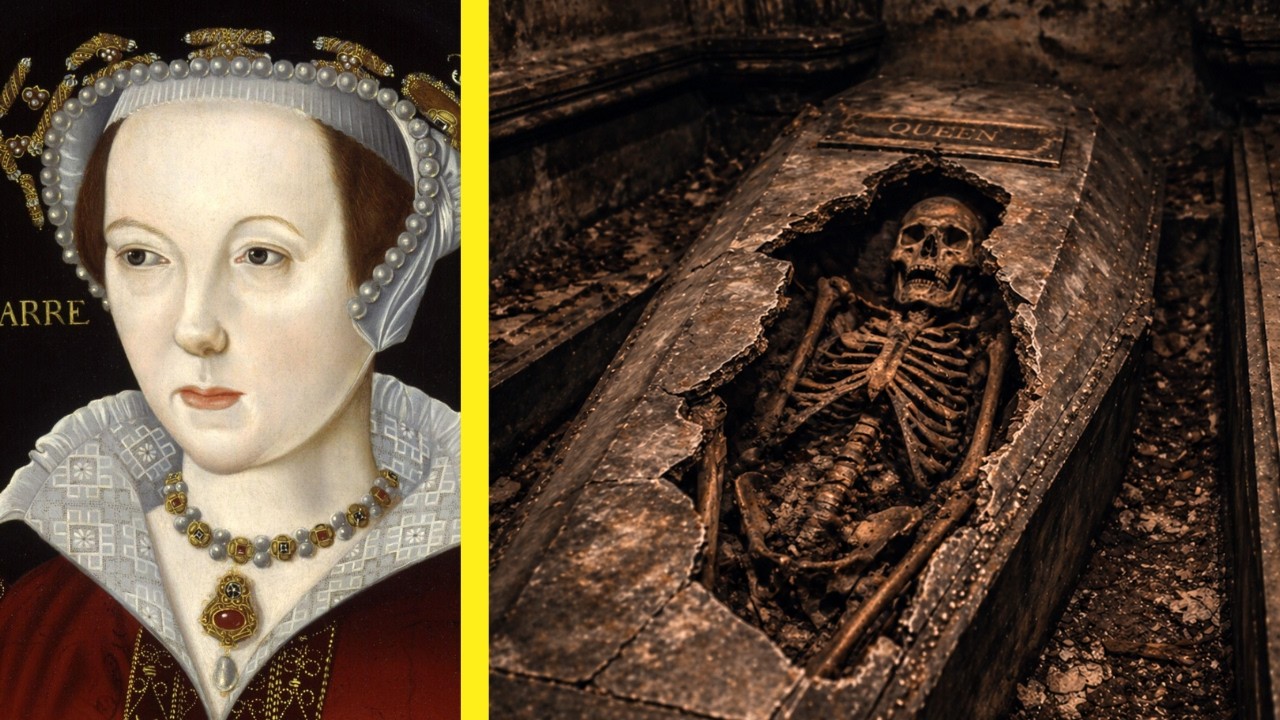
Catherine Parr, the sixth wife of Henry VIII, faced a 𝓈𝒽𝓸𝒸𝓀𝒾𝓃𝑔 posthumous fate as her coffin was repeatedly opened, exposing her body to decay and desecration over centuries. Once honored as queen, her remains suffered neglect, war damage, and invasive curiosity before finally receiving a dignified reburial in the 19th century.
Catherine Parr was more than just a royal consort; she was a formidable figure during Tudor England’s turbulent era. As Henry VIII’s last wife, she survived the deadly politics that claimed others before her. Her intelligence, religious devotion, and political skill defined her tenure and cemented her legacy. Yet, what happened after her death tells a darker, unsettling story.
After Catherine gave birth to her daughter in 1548, she tragically succumbed to childbed fever. She was buried with honor at Sudeley Castle’s chapel, a resting place befitting her status. For nearly two centuries, her tomb remained undisturbed—a silent testament to a queen who navigated power and peril with remarkable grace.
However, the peace surrounding her grave was shattered during England’s Civil War in the 17th century. Sudeley Castle was attacked and partially ruined, and the chapel where Catherine was laid to rest fell into neglect and decay. Over time, the exact location of her coffin became uncertain, setting the stage for a disturbing fate.
The first known disturbance occurred in 1782 when a local landowner, John Lucas, discovered a sealed lead coffin containing Catherine’s remarkably well-preserved body. Lead coffins delayed decomposition, and witnesses reported seeing hair and facial features still intact. What followed, however, spiraled into disrespect and exploitation rather than reverence.
Instead of immediate reburial, Catherine’s coffin became an object of morbid fascination. It was opened repeatedly, exposing her body to air and moisture that accelerated decay. Visitors took souvenirs, disturbing the queen’s remains as though they were relics, reflecting a macabre curiosity prevalent in that era toward historical human remains.
The pattern of desecration culminated in 1817, when the coffin was again opened in front of spectators. Reports describe Catherine’s body as fragile, darkened, and crumbling—testimony to the damage caused by repeated exposure. This public spectacle underscored a tragic disregard for the dignity owed to the dead, especially one of royal stature.
Catherine Parr’s treatment after death reveals a grim truth—while she survived the dangerous court of Henry VIII, her remains did not survive the curiosity and neglect of later generations. The phrase “left to rot” is chillingly apt, illustrating how fascination overtook respectful burial practices and historical reverence.
The Victorian era brought a critical turning point. With renewed respect for heritage and proper memorials, Emma Dent and her husband restored Sudeley Castle and its chapel. Catherine’s remains were reinterred in 1863 beneath a neo-Gothic monument, finally granting her a dignified resting place reflective of her royal status and historic importance.
Today, visitors to St. Mary’s Chapel at Sudeley Castle encounter a restored tomb honoring Catherine Parr with solemn reverence. Her posthumous journey—from honored queen to disturbed spectacle and back to respected monarch—symbolizes shifting societal attitudes on death, legacy, and respect for history’s figures.
Her story also shines light on the broader treatment of the dead in English history—initially sacred, then vulnerable to exploitation during periods of upheaval, and ultimately reclaimed with Victorian values of dignity and preservation. Catherine’s fate serves as a compelling reminder of these evolving cultural attitudes.
Catherine Parr’s influence was substantial during her lifetime; she diplomatically bridged Henry VIII with his daughters Mary and Elizabeth, acted as regent in his absence, and made literary history as the first English queen to publish under her own name. Despite this, her legacy was nearly overshadowed by disrespect after death.
The damage inflicted on her coffin and remains was not the result of a single act but a tragic series of events—warfare, neglect, antiquarian intrigue, and repeated coffin openings—that culminated in a violation of her resting place. The decay witnessed was accelerated by human hands, turning preservation into deterioration.
This 𝓈𝒽𝓸𝒸𝓀𝒾𝓃𝑔 saga emphasizes the need for safeguarding historic sites and respecting human remains, especially those of notable figures. Catherine Parr’s coffin, once a curiosity-driven spectacle, now stands as a monument to dignity and the consequences of failing to protect the dead from intrusive fascination.
Her tale offers a parallel narrative to the dramatic and often brutal history of Tudor England itself—marked by survival, downfall, and eventual restoration. While Catherine escaped the scaffold and political executions, she could not outrun the curious and careless hands of history after her demise.
The restoration of Catherine’s tomb and its solemn presence today offer a poignant contrast to her earlier years of 𝒔𝒄𝒂𝓃𝒅𝒂𝓁 and mismanagement. It serves as a somber lesson on how societies must balance historical curiosity with respect and the ethical treatment of the dead.
As we reflect on Catherine Parr’s posthumous treatment, her story resonates beyond Tudor history. It reminds us that even queens are vulnerable to the shifting tides of cultural values and that the dead deserve respect, regardless of their fame or era.
Catherine Parr survived one of England’s most dangerous monarchs and navigated a perilous court. Yet, it was not royal intrigue but the long shadow of neglect and human curiosity that posed the greatest threat to her legacy in death.
Her reburial restored a measure of honor, but the scars on her remains echo through history, exposing uncomfortable truths about how the dead are sometimes mistreated in the name of knowledge and spectacle. Her coffin’s opening remains a stark symbol of that tension.
The narrative of Catherine Parr’s coffin reopened offers urgent lessons for historians, conservators, and the public. It calls for vigilance in preserving historical remains and a deeper respect for those who shaped the past—and for their memory in the present.
Today, as Sudeley Castle welcomes visitors, Catherine Parr’s tomb stands quietly but powerfully. It confronts us with a history both revered and violated, a dramatic reminder that respect for the dead is not just a ceremony but a lasting responsibility.
The unsettling saga of a Tudor queen’s coffin opened time and again reveals how curiosity collided disastrously with dignity, leaving a legacy as fractured as the stone ruins that once threatened to erase her memory.
Catherine Parr’s story is an urgent call to protect heritage sites and honor those resting within them. Her life, influence, and posthumous trials teach that history is fragile, and respect must prevail over exploitation and neglect.
In the end, the queen who survived Henry VIII was forced to endure an even grimmer fate in death—her body became a spectacle, subjected to violation until Victorian sensibilities restored her dignity and memorialized her rightful place in history.