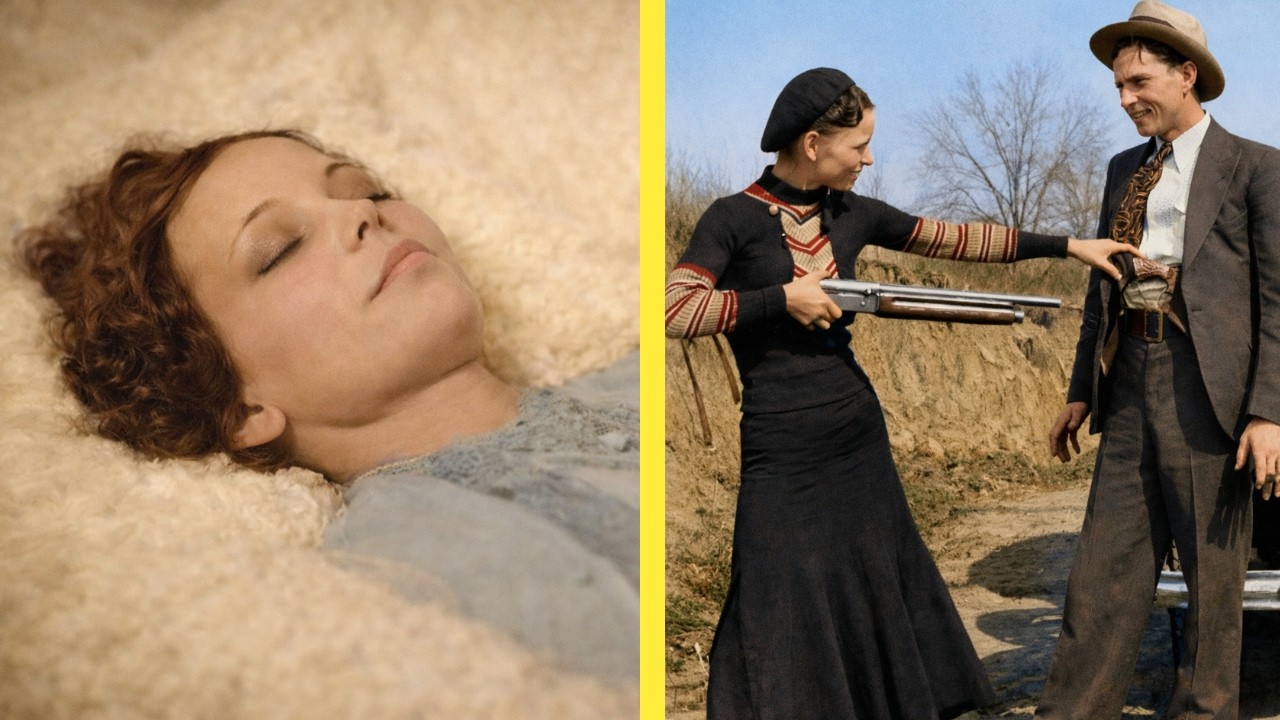
In a chilling revelation, the coffins of notorious outlaws Bonnie Parker and Clyde Barrow were opened, exposing the brutal reality behind their violent deaths. Decades after their fatal ambush, the bullet-riddled remains tell a harrowing story of a ruthless crime spree ended in merciless carnage that shocked a nation.
Bonnie and Clyde, infamous as America’s most notorious criminal couple, were mercilessly gunned down on May 23, 1934. Their stolen Ford V8 was riddled with over 130 bullets, marking a violent end to their reign of terror. These bullet wounds created extraordinary challenges in embalming their bodies later revealed during coffin openings.
At just 23 years old, Bonnie Parker’s body bore 26 bullet wounds, including fatal impacts severing her spinal column. Despite the brutality, an expert undertaker managed to preserve her appearance, presenting a peaceful visage that starkly contrasted the violent chaos of her final moments. Bonnie was laid in a delicate blue dress, surrounded by white velvet—to mask the scars of death.
Bonnie’s life, shaped amidst the desperation of the Great Depression, transformed from an aspiring young woman with a love for poetry into a symbol of lawlessness alongside Clyde. Her unwavering loyalty persisted despite physical torment, including severe leg burns suffered while fleeing police in 1933.
Clyde Barrow, her partner in crime, embodied deadly leadership. Born into poverty in Texas, he escalated swiftly from petty theft to cold-blooded murder, including the killings of at least nine law enforcement officers. His obsession with speed and firearms turned him into a formidable fugitive.
The couple’s violent demise was orchestrated by six officers lying in wait on a Louisiana road. When Bonnie and Clyde’s car appeared, officers unleashed a relentless hailstorm of gunfire, emptying rifles, shotguns, and pistols into the vehicle without warning. The ambush ended in mere seconds with no chance for surrender.
Clyde alone suffered at least 17 entrance wounds; his death was instantaneous but gruesome. His body slumped forward, foot pressed on the accelerator as the car careened into a ditch. Such overwhelming force was justified by law enforcement as necessary to halt the dangerous fugitives’ killing spree.
Post-mortem chaos enveloped the crime scene. Onlookers swarmed, some mutilating Clyde’s corpse—attempting to remove his ear and trigger finger as dark trophies. Bullet casings, clothing, and shattered glass were scavenged by a macabre crowd fascinated by these infamous killers’ violent end.
Embalming both bodies posed a stern test for funeral directors due to the sheer number of bullet wounds and shattered flesh. Yet, careful preparation allowed the public a final, somber viewing—offering a glimpse of the young individuals behind the ruthless legends. Thousands gathered to pay respects amid heightened emotions and curiosity.
Bonnie’s mother insisted her daughter be buried separately, denying Bonnie’s wish to rest beside Clyde. Originally interred at Fishtrap Cemetery, Bonnie’s remains were later relocated to the Crown Hill Cemetery in Dallas, marked by an epitaph celebrating the brighter light she once brought to the world.
Clyde was buried alongside his brother Marvin at Western Heights Cemetery in Dallas, their graves sharing a single granite marker. The contrast between their violent life and muted resting place highlights the stark realities of a nation grappling with crime and justice amid economic despair.
This grim chapter continues to captivate, reminding America of the violent end that befell Bonnie and Clyde—a brutal lesson in the costs of crime and the deadly finality of law enforcement’s pursuit during the desperate years of the Great Depression. Their legacy remains a haunting reflection of unchecked violence and fleeting infamy.


