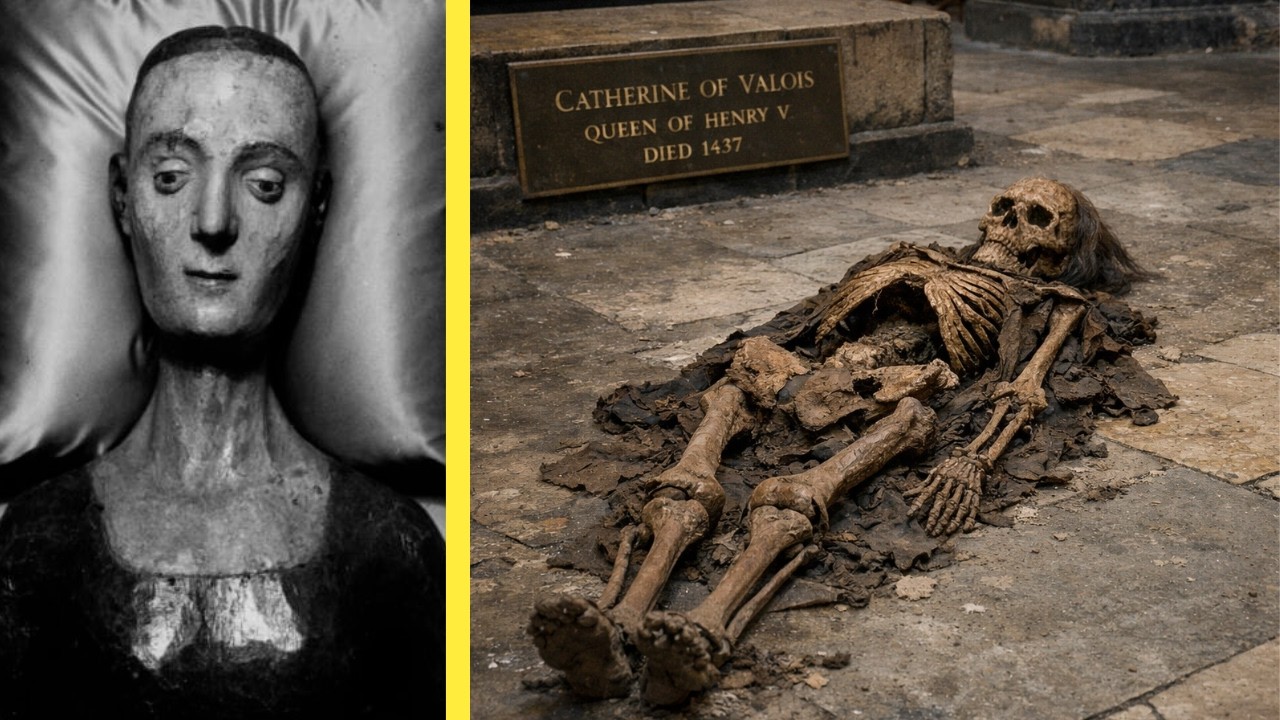
For nearly four centuries, the coffin of medieval Queen Catherine of Valois lay 𝓮𝔁𝓹𝓸𝓼𝓮𝓭 and unburied inside Westminster Abbey, bizarrely left open to public view. This 𝓈𝒽𝓸𝒸𝓀𝒾𝓃𝑔 story has finally been uncovered, revealing how a series of historical accidents and evolving attitudes led to the disrespectful neglect of English royalty’s resting place.
Catherine of Valois, born in 1401 to French King Charles VI, became Queen of England through marriage to Henry V in 1420, a union forged amid the Hundred Years’ War. Her short, politically important life ended abruptly in 1437 at age 35, leaving behind her infant son, Henry VI.
Initially honored with a traditional burial near Edward the Confessor inside Westminster Abbey, Catherine’s coffin rested in dignity. However, the late 15th-century renovations to Henry V’s tomb triggered a catastrophic displacement of her remains, beginning a staggering four-century saga of neglect.
The ambitious construction of Henry V’s chantry chapel forced the dismantling of nearby graves. Catherine’s tomb was removed, but instead of reburial, her coffin was crudely placed above ground near the new chapel, 𝓮𝔁𝓹𝓸𝓼𝓮𝓭 to the elements and unprotected as time wore away its fragile wooden casing.
As decades passed, Catherine’s burial cloths dried and her body partially mummified, turning her into an uncanny spectacle. By the 16th and 17th centuries, her 𝓮𝔁𝓹𝓸𝓼𝓮𝓭 remains had become a morbid curiosity, openly displayed to visitors touring Westminster Abbey’s royal relics and tombs.
Samuel Pepys, the famous 17th-century diarist, documented his eerie encounter with Catherine’s visible corpse. In 1669, he witnessed her face and remains with the Abbey sexton, even recounting a surreal moment where he kissed the queen’s mouth, a bizarre testimony to changing perceptions of royal remains.
During this era, handling and displaying remains were not seen as taboo but part of a broader fascination with historical figures. Yet Catherine’s continuous exposure illustrated a grim disrespect wrought by neglect and circumstance rather than intent, as no protective reburial followed the chapel’s construction.
For centuries after the initial disturbance, fragments of her body and burial cloths could be seen by visitors, a haunting reminder that the queen had been abandoned in an incomplete and degrading resting place. This disturbing scenario challenged evolving views on dignity for royal burials.
It was not until 1778 that Westminster Abbey authorities acted to restore honor to Catherine of Valois. Her fragmented remains were gathered, reinterred beneath the Abbey floor near the Henry V Chapel, finally granting her a lasting, protected tomb after nearly 400 years of unintended exposure.
Catherine’s strange burial tale serves as an extraordinary chapter in royal history, juxtaposing her vital role in shaping English monarchy—with descendants founding the Tudor dynasty—and the bizarre fate of her physical remains being displayed like a public spectacle.
Today, Westminster Abbey visitors see none of that grim scene; Catherine lies in respectful silence beneath the Abbey’s sacred ground. Yet her story remains a stark reminder that even royal rest can be marred by time, neglect, and a shift in cultural attitudes toward death and remembrance.
The bizarre exposure of a medieval queen’s corpse inside one of England’s most hallowed sites reveals how historical accidents and shifting values profoundly affected royal burial traditions, demanding renewed respect and care for the resting places of monarchs and their families.
This unsettling history challenges us to reconsider how we treat our past and those who shaped it, illustrating that even centuries-old grave disturbances can echo loudly through time, altering narratives and public memory about the dignity owed to royal ancestors.
Catherine of Valois’ posthumous journey—from honored queen to 𝓮𝔁𝓹𝓸𝓼𝓮𝓭 curiosity and back to dignified rest—highlights the complexities of preserving royal heritage amid changing political landscapes and architectural transformations, reflecting broader shifts in societal norms around death and legacy.
Ultimately, this revelation about Catherine of Valois is not just a curiosity but a crucial lesson in how fragile royal legacies can be, underscoring the importance of vigilance in protecting tombs that hold the history of nations and reminding us that respect for the dead must endure beyond their era.
As historians continue to uncover and analyze the details surrounding Catherine’s neglected burial, this story offers a vivid window into medieval and early modern England, providing insight into the interplay between monarchic tradition, historical change, and cultural values that shape royal remembrance today.