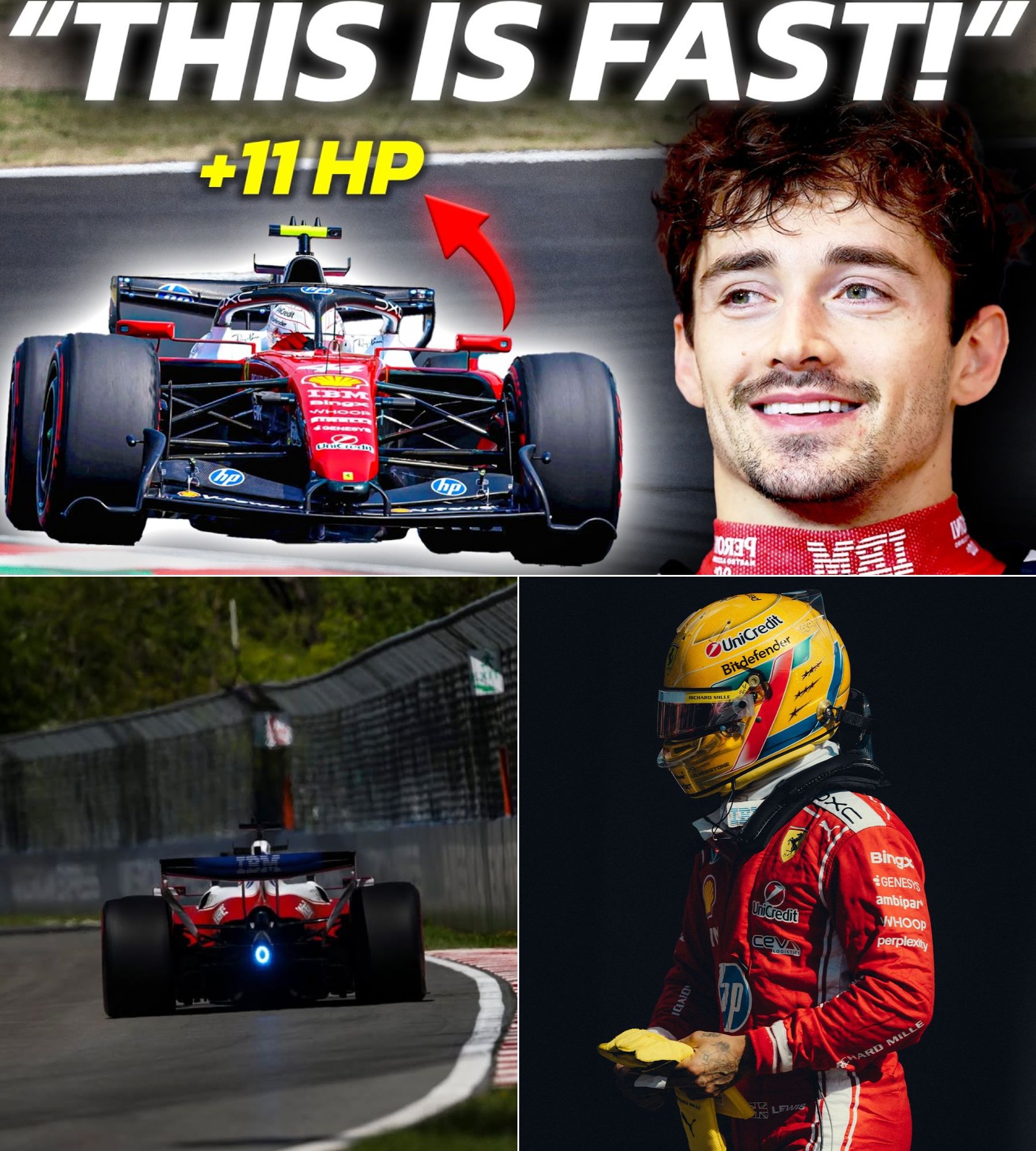
Ferrari is gearing up for a pivotal moment at the Spa Grand Prix, unveiling a bold aerodynamic upgrade that could redefine their performance on the track. After struggling with straight-line speed throughout the season, the Italian team is set to debut their new SF-26 “Macarena” EVO wing, a move that could be a game-changer in their championship pursuit.
The SF-26 has been a formidable contender in the corners, showcasing exceptional chassis capabilities. However, its Achilles’ heel has been its inability to match Mercedes on the straights, a critical disadvantage at Spa-Francorchamps, the longest circuit on the Formula 1 calendar. With its extensive straights, Spa could expose Ferrari’s weaknesses, making this upgrade crucial for their chances.

This weekend, Ferrari is introducing a low-drag rear wing that builds upon their innovative Macarena design. Italian sources suggest this upgrade could potentially add up to 11 km/h in top speed, a significant boost that could help them compete more effectively against Mercedes. Coming off recent victories in Silverstone and Barcelona, the timing of this enhancement couldn’t be better, especially with Lewis Hamilton now just 32 points behind in the championship race.
To understand the significance of the new wing, it’s essential to look back at the original Macarena design. Under the 2026 regulations, teams utilize active aerodynamics, allowing them to adjust wing configurations for optimal performance. Ferrari’s original Macarena wing ingeniously folds to reduce drag on straights while maintaining stability in corners.
The EVO version takes this concept further, increasing the gap between the wing’s flaps to enhance drag reduction, a critical factor at Spa.

The strategic timing of this upgrade is also noteworthy. The FIA has confirmed a record five straight-line mode zones at Spa, providing Ferrari multiple opportunities to maximize their drag reduction capabilities. This advantage could be pivotal, especially as they aim to neutralize Mercedes’ strengths on this particular track.
However, while the potential speed increase is promising, it’s important to note that Ferrari’s straight-line speed issues are partially rooted in their power unit. Thus, while the new wing is expected to help, it may not completely bridge the gap. Moreover, a reduction in downforce could impact cornering stability and tire management, especially on a circuit known for its unpredictable weather.

As the weekend unfolds, Ferrari’s upgrade will be put to the test against a backdrop of uncertainty, with rain forecasted to potentially complicate matters. Spa’s notorious weather could shift the race dynamics, emphasizing driver skill over sheer speed.
With their recent development push, Ferrari has shown a commitment to addressing their weaknesses. The introduction of the Macarena EVO wing is a calculated step aimed at enhancing their performance, particularly in straight-line speed. As the championship race heats up, all eyes will be on whether this innovative upgrade can help Ferrari maintain their momentum against a formidable Mercedes team.

Will the new Macarena EVO wing be the key to closing the gap on Mercedes at Spa? Or will the unpredictable elements of racing once again play a decisive role in the outcome? Share your thoughts below!