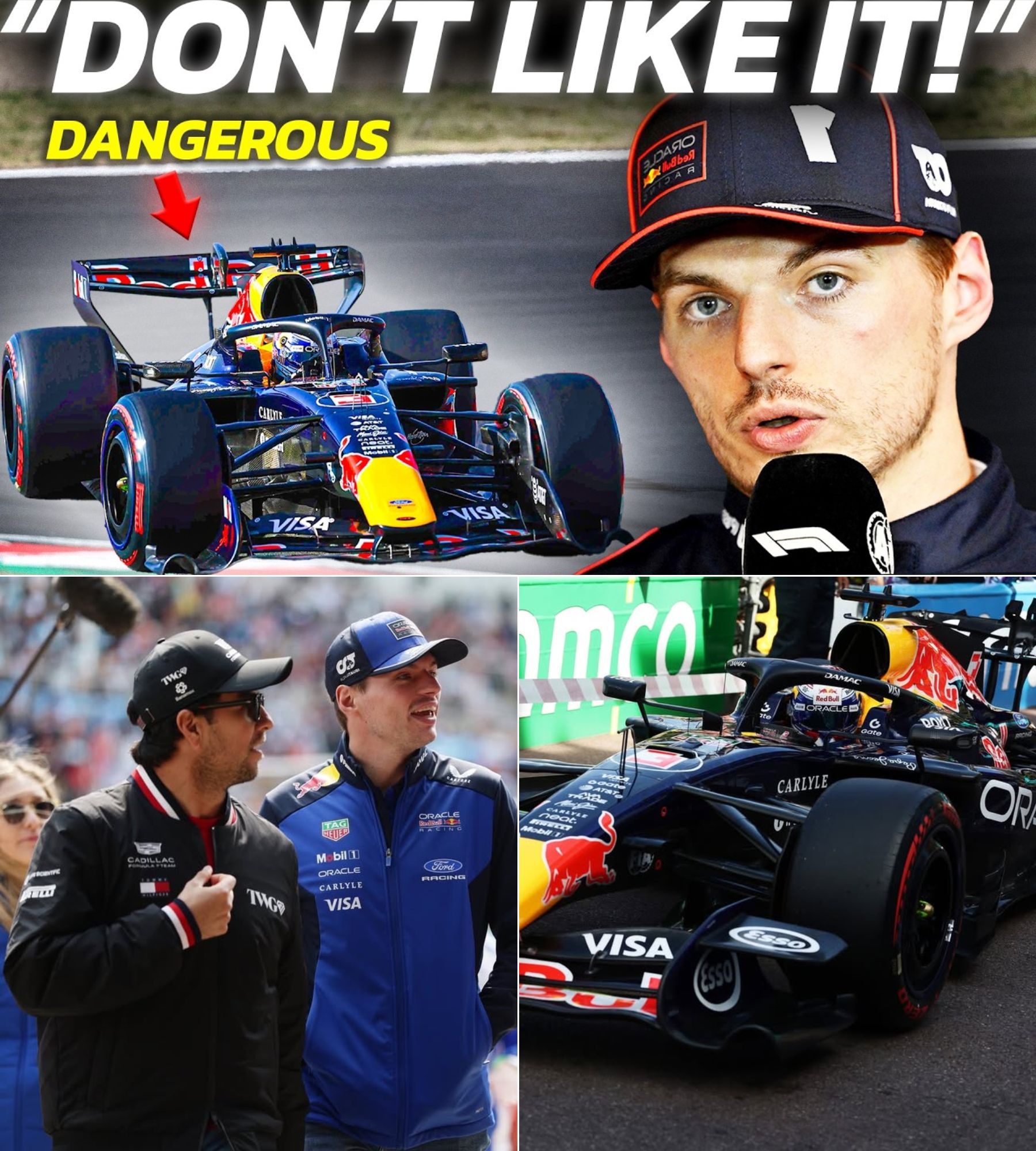
Red Bull has made a dramatic and risky decision on the eve of the Belgian Grand Prix, stripping Max Verstappen’s car of its innovative but dangerous “Macarena” rear wing and reverting to an older design after two terrifying high-speed failures nearly injured their four-time world champion.
The team confirmed Thursday at Spa-Francorchamps that both cars will run the conventional rear wing they used at the start of the season, abandoning the rotating concept introduced in Miami that was supposed to provide a performance edge under Formula 1’s 2026 active aero regulations.
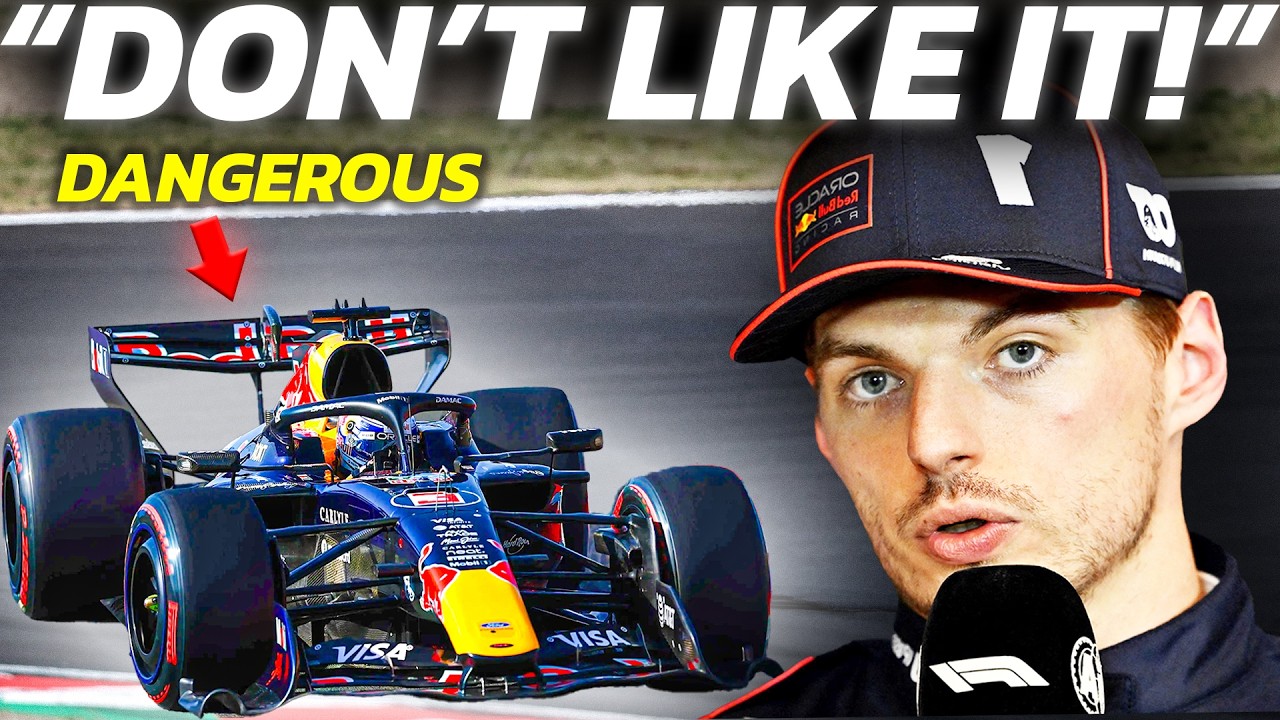
The reason is blunt: the wing endangered Verstappen twice in consecutive weekends. At the Austrian Grand Prix in qualifying, the mechanism failed to close properly during a corner, sending the car into a violent spin into the barriers. Four weeks later at Silverstone, the same fault struck again.
Running third with four laps to go at the high-speed Stowe corner, the wing again did not reattach in time. Verstappen lost rear downforce instantly, the car snapped around, and he ended up beached in the gravel. He was lucky to walk away without injury.
Verstappen did not mince words afterward. “Super dangerous,” he said, adding that he was “lucky” and could have “really hurt himself.” When a four-time world champion tells his team twice that his car is unsafe, the response cannot be anything but immediate.
Red Bull’s engineers have identified the root cause. The rotating wing, which flips 180 degrees in straight-line mode to maximize drag reduction, suffers from a slow airflow reattachment when it snaps shut before a corner. For a fraction of a second, the wing produces no downforce.
That tiny gap is all it takes at more than 180 miles per hour. Verstappen turned into the corner, the rear grip vanished, and the spin became inevitable. The team realized that fixing the issue on the fly at Spa was impossible, so they chose safety over speed.
“We’ll go back on the old one and see when the latest one is ready again to be used,” Verstappen said Thursday. The message is clear: Red Bull is not abandoning the Macarena concept forever, but for now, at the most demanding circuit on the calendar, they are retreating.
Spa-Francorchamps features five designated drag reduction zones this weekend, the most of any track all season. Those are the exact conditions that stress the active aero system harder than anywhere else. Red Bull is heading there with a less optimized wing.
The timing could hardly be worse. Ferrari, whose original rotating wing concept inspired the nickname, has run its version flawlessly all season. Red Bull copied the idea but used a different mechanism to achieve the same effect.
That mechanism proved dangerous.
McLaren also worked on a rotating wing, planned to test it in Austria, but abandoned it because the design was not ready. Of the three teams that pursued the Macarena concept, only Ferrari made it work. Red Bull’s failure is now a public and painful embarrassment.
The decision to revert to the old wing is not an upgrade. It is damage control. Red Bull is deliberately choosing a slower configuration because the faster one is unsafe.
While Ferrari brings genuine performance updates to Spa, Red Bull is effectively going backward.
This saga captures everything that has gone wrong for Red Bull this season. Once the gold standard of reliability and innovation, the team is now fourth in the Constructors’ Championship, a shadow of the dominant force that won four straight titles.
Verstappen, despite his immense talent, is seventh in the drivers’ standings, openly frustrated with the car’s unpredictability. His future is under a cloud, with reports of an active exit clause in his contract that could let him leave at the end of 2026.
Now, at his home race, on a circuit he has won three times and loves, he has to drive a car stripped of its most advanced part. When asked about his prospects for the weekend, he was notably noncommittal. “Let’s see tomorrow, to be honest.
I don’t know how we are going to perform.”
That is not the confident Verstappen fans have come to expect. The frustration is palpable. Watching his team remove performance from his car for his own safety, at a track where he should be fighting for victory, cannot be helping his thinking about the future.
The FIA has confirmed it is taking a closer look at both Red Bull’s and Ferrari’s rotating wing designs. Red Bull’s failures have drawn regulatory scrutiny. Ferrari, by contrast, remains relaxed, confident its own system has been thoroughly tested and proven reliable.
Red Bull plans to continue working on modifications at its Milton Keynes factory, with the aim of bringing the Macarena wing back later this year once it is safe. But for the Belgian Grand Prix, the priority is clear: keep the driver alive, even if it hurts the result.
The consequences for the championship could be significant. Red Bull is already struggling to keep pace with McLaren, Ferrari, and Mercedes. Sacrificing performance at a circuit that demands maximum speed through five active aero zones may cost them valuable points.
Verstappen’s relationship with the team is already strained. He has criticized the car’s balance and reliability all season. Now, he is driving a compromised machine because the team’s engineering gamble backfired.
That does not breed trust or confidence.
Ferrari’s success with the same concept only deepens the sting. Their rotating wing has functioned flawlessly through every race, offering optimal drag reduction without the dangerous reattachment delay. Red Bull’s engineers must be asking themselves what they got wrong.
McLaren’s decision to abandon their own rotating wing before even testing it now looks prescient. They recognized the difficulty and chose reliability over a marginal gain. Red Bull pushed forward and paid the price with two crashes and a driver who feels unsafe.
The Belgian Grand Prix weekend is now a test of damage control, not championship ambition. Red Bull will run the conventional wing, which is safe and predictable but offers less drag reduction. Verstappen will have to fight harder for every position.
Spa’s long straights are the lifeblood of overtaking opportunities. With a less efficient rear wing, Verstappen may struggle to pass or defend. The team knows it, but safety leaves no choice.
The Macarena wing will sit in the garage, untouched.
For Verstappen, the psychological toll is real. He has built his legacy on pushing limits, but having a car that nearly injures him twice is a stark reminder of the risks. His comments about being “super dangerous” and “lucky” carry weight.
Red Bull team principal Christian Horner has not yet spoken publicly, but sources inside the team say the decision was unanimous. The drivers, engineers, and management agreed: no part is worth a potential injury to the sport’s biggest star.
The wider F1 paddock is watching closely. Rivals see Red Bull’s trouble as a sign that the new 2026 active aero era is forcing teams to walk a tightrope between innovation and safety. Ferrari has mastered it.
Red Bull has stumbled dangerously.
Verstappen’s future may now become the dominant story of the season. He has a contract through 2028 but an exit clause that can be triggered if the team fails to meet certain performance criteria. Seeing his car downgraded at his home race is not a good sign.
When asked directly if the wing removal changes his thinking about staying with Red Bull, Verstappen deflected. “I just focus on driving,” he said. But his tone betrayed frustration.
The bond between driver and team is fraying more with every failure.
The Macarena wing saga is far from over. Red Bull will fix it, refine it, and likely bring it back before the season ends. But the damage to reputation, to driver trust, and to championship hopes is already done.
This weekend, they race on the back foot.
Ferrari, meanwhile, arrives at Spa with confidence. Their version of the rotating wing has been a quiet but crucial advantage, helping Charles Leclerc and Lewis Hamilton fight at the front. They bring upgrades while Red Bull brings a step backward.
McLaren, too, looks strong. Lando Norris and Oscar Piastri have a car that is both fast and reliable. Red Bull, once the benchmark, now watches from the middle of the pack.
The fall from grace is steep and public.
For the fans, the Belgian Grand Prix just got a lot more interesting. Will Verstappen overcome the handicap of an older wing? Can Red Bull’s engineers find a temporary workaround in setup to compensate?
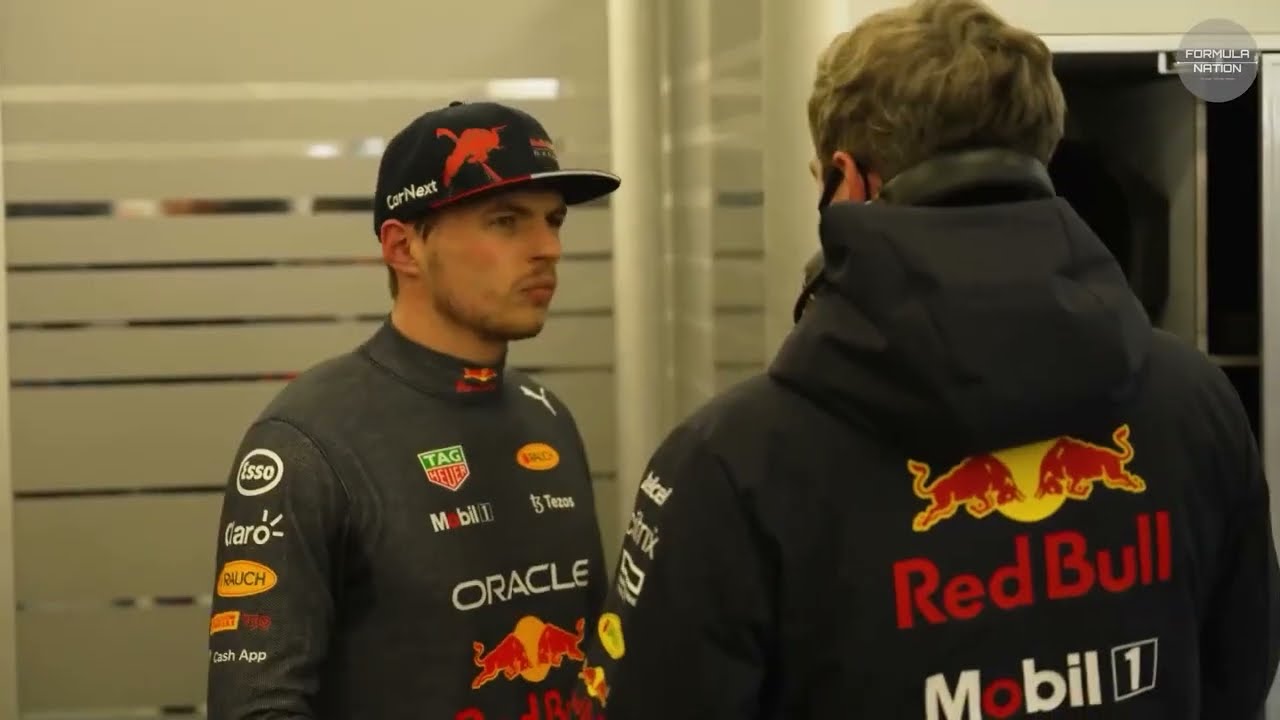
Or will Spa expose the depth of the crisis?
One thing is certain: this is not a normal race weekend for Red Bull. It is a survival exercise, a damage control mission at the sport’s most iconic and demanding circuit. The Macarena wing is gone, and with it, a piece of Red Bull’s once unshakeable confidence.
Verstappen has won at Spa three times. He calls it his favorite track. But this year, he arrives in a car that scared him badly, with a team in retreat, and with his own future hanging in the balance.
The pressure has never been higher.
The FIA’s interest in the rotating wing designs adds another layer of scrutiny. If the governing body decides that Red Bull’s approach is inherently flawed, it could force a redesign that further delays the wing’s return. That would be a nightmare for Milton Keynes.
Ferrari’s relaxed confidence suggests their design is robust. Red Bull will likely try to understand what Ferrari did differently, but copying a rival’s solution is never straightforward. The intellectual property and engineering secrets are tightly guarded.
The 2026 regulations were supposed to create closer racing and more overtaking. They have succeeded, but they have also created a new technical arms race where reliability is as critical as performance. Red Bull has learned that lesson the hard way.
Verstappen’s “super dangerous” comment reverberates through the paddock. Drivers know the risks they take every weekend. When a four-time champion says he felt lucky to survive, everyone listens.
Safety cannot be compromised, not even for an innovative wing.
Red Bull’s decision to revert for Spa is correct, but it is also an admission of failure. The team that once set the pace in engineering excellence is now forced to go backward. The question is whether they can recover before the season slips away.
For now, the focus is on the Belgian Grand Prix. The track is fast, challenging, and unforgiving. Verstappen will give everything, but his car will not have the ultimate weapon.
The Macarena wing is parked, and Red Bull is hoping that safety does not cost them the race.
The story of the 2026 season is being written in real time. Red Bull’s struggles, Verstappen’s future, Ferrari’s supremacy, and the constant push for innovation versus reliability. This weekend at Spa, the consequences of one flawed design will play out on the world stage.
Stay tuned for more updates as the weekend unfolds. The Belgian Grand Prix promises high drama, and Red Bull’s dramatic wing removal is just the first chapter. The team is in damage control, and every lap will tell us whether they made the right call.