James Arness, best known as Marshal Matt Dillon on Gunsmoke (1955–1975), remains one of television’s most enduring icons. Born in 1923 in Minneapolis, Minnesota, Arness’s early life shaped the quiet strength and integrity he would later bring to the Western screen. During World War II, he served with distinction in the U.S. Army, participating in the Normandy invasion and sustaining a serious leg injury. These experiences instilled in him a sense of discipline, resilience, and leadership that would define both his personal life and his portrayal of Matt Dillon, the steadfast lawman of Dodge City.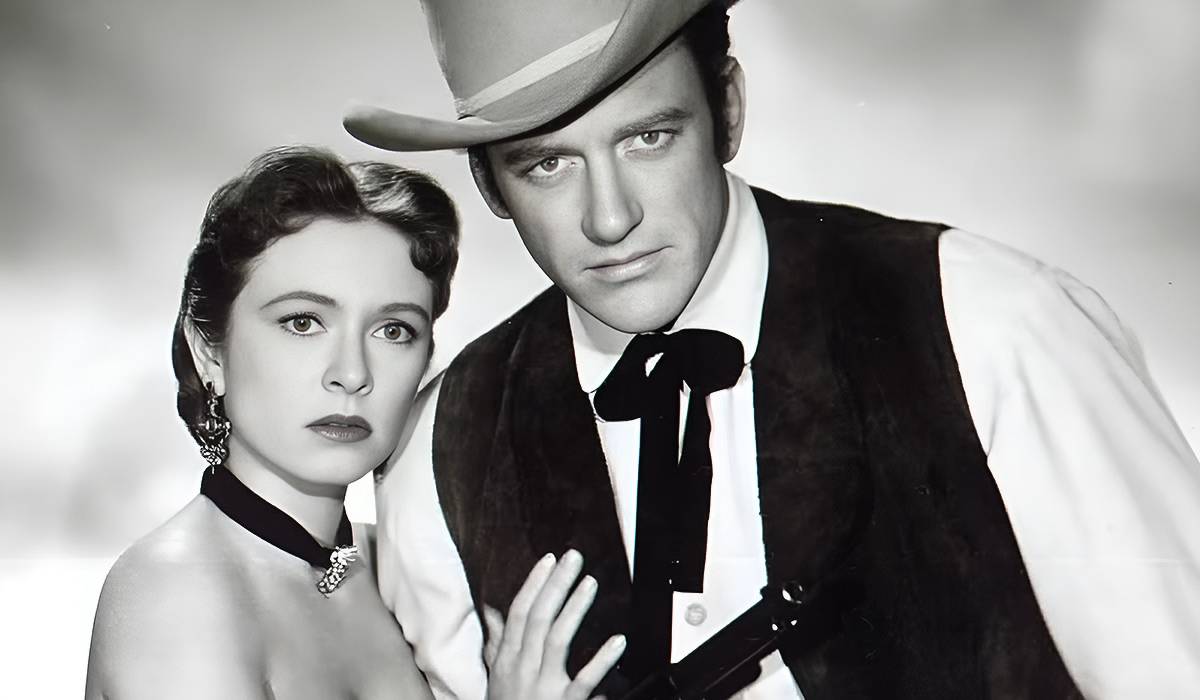
After the war, Arness moved to California to pursue acting. Towering at 6’7” with a commanding presence, he quickly drew attention in films such as The Thing from Another World (1951) and Big Jim McLain (1952), often alongside John Wayne. His screen persona—stoic, reliable, and silently authoritative—made him a natural fit for the Western genre. In 1955, he was cast as Matt Dillon in Gunsmoke, a role he would inhabit for the next 20 years. The show became one of television’s longest-running series, and Arness’s portrayal became inseparable from the character: a lawman whose moral compass and dedication to justice guided every decision.
One of the most frequently asked questions about Gunsmoke centers on the relationship between Matt Dillon and Miss Kitty, played by Amanda Blake: why did the show never depict the two sharing an on-screen kiss? Arness himself addressed this question repeatedly, offering insight into the values and choices that guided both his performance and the show’s direction.
First, propriety and mystery played a key role. Television in the 1950s and 1960s operated under strict standards regarding romance and physical intimacy. Arness felt that the strength of Matt Dillon and Miss Kitty’s relationship did not require overt gestures; maintaining a subtle, unspoken bond allowed the audience to imagine the depth of their connection without breaking the decorum expected for family viewing. The restraint kept their relationship both compelling and enduring, letting viewers invest emotionally through dialogue, mutual respect, and shared experiences rather than physical demonstration.
Second, Arness considered character integrity paramount. Matt Dillon was the archetypal Western hero—honorable, courageous, and disciplined. Any onscreen kiss or overt romantic display could have undermined Dillon’s aura of authority and stoicism, softening a character whose power lay in quiet decisiveness and moral rectitude. Arness believed that Dillon’s strength derived from his consistency and the weight of his responsibilities, not from romanticized gestures, and he was committed to preserving that vision throughout the show’s two-decade run.
Finally, audience expectations shaped the decision. Gunsmoke appealed to a broad, family-oriented viewership. By avoiding explicit romantic contact, the show was able to explore nuanced emotional connections—loyalty, trust, and affection—without alienating viewers who expected a wholesome depiction of life in the Old West. Miss Kitty’s interactions with Matt Dillon—her supportive counsel, moments of quiet tension, and shared understanding—conveyed love and partnership in ways that transcended a simple kiss.
Despite the lack of physical intimacy, the chemistry between Arness and Blake remained undeniable. Their performances created an enduring sense of trust and mutual respect that contributed to the show’s longevity and emotional resonance. Arness’s deliberate choice to maintain this subtlety elevated the storytelling, proving that romance on television could be expressed with depth, sophistication, and integrity.
James Arness passed away on June 3, 2011, at the age of 88. He left behind a legacy defined not only by the iconic role of Matt Dillon but also by his principled approach to acting. The choice to never kiss Miss Kitty stands as a testament to his commitment to character, audience, and the enduring power of restraint, demonstrating that sometimes the most memorable love stories are those felt quietly rather than shown overtly.