
„Ab heute existierst du weder für mich noch für deine Mutter.“
Diesen Satz sagte mein Stiefvater Dane an seinem ersten Abend in unserem Haus. Ich sah sofort zu meiner Mutter Mara, in der Hoffnung, sie würde ihn hochkant rausschmeißen. Doch sie seufzte nur. Es war dieses eine, vertraute Seufzen, das bedeutete, dass ich wieder der Schwierige war.
„Dane und ich haben geredet“, sagte sie leise. „Wir müssen unsere ganze Energie in seinen Sohn Duke stecken. Er hat eine schwere Scheidung hinter sich. Du bist stark, Callum. Du bist unabhängig. Ab jetzt bist du auf dich allein gestellt.“
Mein Vater war seit elf Monaten tot. Ich war derjenige, der Hilfe gebraucht hätte. Doch Dane lächelte nur kalt und sagte: „Wenn du uns ein Problem bringst, lautet die Antwort Nein. Spar dir den Atem.“
Was sie nicht wussten: Mein Vater hatte mir einen College-Fonds von 50.000 Dollar hinterlassen. An dem Tag, an dem ich 18 werden würde, würde ich diese Tür hinter mir schließen und nie wieder zurückblicken. Ich musste bis dahin nur überleben.
Zwei Wochen lang hielt ich den Kopf unten. Doch am vierzehnten Tag kam ich von der Schule nach Hause und fand mein Zimmer komplett leer geräumt vor. Das Hochbett, das mein Vater aus massivem Holz gebaut hatte, war weg. Mein Schreibtisch – weg. Stattdessen stand Duke mitten im Raum und filmte sich für Social Media.
„Das wird mein Trainingsraum“, grinste er mich an. „Mein Dad lässt das hässliche Holz an der Tür auch rausreißen. Er sagt, es sieht aus wie Müll.“
Mein Herz blieb stehen. An diesem Türrahmen hatte mein Vater mich an jedem meiner Geburtstage barfuß hingestellt. Er hatte ein Buch auf meinen Kopf gelegt, mit einem Bleistift einen Strich gezogen und das Datum in seiner krakeligen Schrift daneben geschrieben. Elf Linien. Die letzte stammte aus dem Jahr, bevor er krank wurde.
Ich stürmte nach unten zu Dane. Doch er blickte nicht einmal von seinem Laptop auf. „Dein Vater ist tot, Callum. Diese Striche sind nur Bleistift auf Kiefernholz. Du kannst nicht das ganze Haus als Geisel halten, nur weil du nicht akzeptieren willst, dass er nie wiederkommt. Deine Mutter wollte nicht, dass du eine Szene machst. Du erschöpfst sie.“
Die Worte trafen mich wie ein Schlag. In dieser Nacht lag ich auf einer Matratze im kleinen Gästezimmer und schwor mir, alles zurückzuholen, was mein Vater mir hinterlassen hatte.
In den nächsten drei Jahren lernte ich, unsichtbar zu werden. Ich arbeitete in zwei Jobs, hielt einen Notendurchschnitt von 1,0 und sprach kaum ein Wort. Ich beobachtete, wie Duke zu einem 17-Jährigen heranwuchs, der keine Wäsche waschen, nicht kochen und keinen Job länger als sechs Wochen behalten konnte. Dane hatte einen Sohn erschaffen, der ohne fremde Hilfe nicht einen Tag überleben konnte.
Kurz vor meinem 18. Geburtstag eskalierte es. Duke saß am Küchentisch und trug die Stahluhr meines Vaters – die Uhr mit dem Sprung im Glas, die mein Vater jeden Tag getragen hatte.
„Zieh sie aus“, sagte ich mit bebender Stimme. „Mein Dad hat sie mir gegeben“, grinste Duke. „Dein Vater ist tot, und ehrlich gesagt steht sie mir besser.“
Noch bevor ich nachdenken konnte, stürzte ich mich auf ihn und riss ihm die Uhr so heftig vom Handgelenk, dass das Armband brach. Duke schrie auf. Dane stürmte herein und brüllte mich an. Ich schubste Dane mit aller Kraft gegen die Wand. Als meine Mutter hereinlief und die Szene sah, plädierte ich auf mein Recht. Doch sie sah mich nur kühl an und sagte: „Dein Vater würde sich so für dich schämen.“
In diesem Moment starb der letzte Funke Hoffnung in mir, dass meine Mutter mich jemals lieben würde.
Wenige Monate später ging ich zu ihr, um den College-Fonds für mein Studium einzufordern. Sie wurde blass. Dane trat in die Tür und sagte gefühllos: „Das Geld wurde vor Jahren in die Haushaltskasse aufgenommen. Für Dukes Eishockey-Training, Ausrüstung und Trainer. Wir sind eine Familie, Callum.“
Sie hatten die 50.000 Dollar, die mein Vater 17 Jahre lang für mich angespart hatte, für Dukes Hobbys ausgegeben. Ich schrie nicht. Ich nickte nur. „Ich hätte es wissen müssen“, sagte ich, drehte mich um und ging zu meinem Großvater.
Mein Großvater erwartete mich bereits. Er hörte sich meine Geschichte schweigend an, holte dann einen dicken Ordner aus dem Schrank und legte ihn vor mich hin.
„Dein Vater war kein Idiot, Callum“, sagte er sanft. „Er wusste genau, wen er geheiratet hatte. Er wusste, dass sie schwach war und dass der nächste Mann versuchen würde, alles zu nehmen. Der College-Fonds lief auf beide Namen, da konnten wir nichts tun. Aber das Haus…“
Er schob mir ein Dokument hin. Mein Name stand dort in offiziellen Buchstaben: Alleineigentümer.
„Das Haus gehört dir, seit dem Monat, bevor er ins Hospiz kam. Deine Mutter lebt seit vier Jahren in deinem Haus. An deinem 18. Geburtstag hast du die volle rechtliche Kontrolle. Und es gibt noch mehr.“
Grandpa zeigte mir ein anderes Konto, von dem meine Mutter nichts wusste: 62.000 Dollar, nur für mich. Mein Vater hatte alles vorausgesehen. Er hatte mir eine Tür gebaut.
Sechs Wochen vor meinem Geburtstag versuchte meine Mutter, mich zu betrügen. Sie legte mir ein Dokument vor, angeblich für die Versicherung, und bat mich zu unterschreiben. Doch ich hatte den Ordner meines Großvaters studiert. Es war eine Eigentumsübertragung. Sie wollte mir mein 450.000-Dollar-Haus für mickrige 10 Dollar abluxen.
Ich unterschrieb nicht. Ich machte heimlich Fotos davon und behielt mein Gesicht unter Kontrolle. Sie wusste es die ganze Zeit. Sie wusste, dass das Haus mir gehörte, und hatte geschwiegen.
An meinem 18. Geburtstag gab es keinen Kuchen. Keiner gratulierte mir. Stattdessen ging ich zu einer Anwältin namens Sloan. Als sie die Fotos der versuchten Betrugsübertragung sah, sagte sie: „Du kannst sie rausschmeißen. Es ist dein Haus.“ „Ich will sie draußen haben“, antwortete ich.
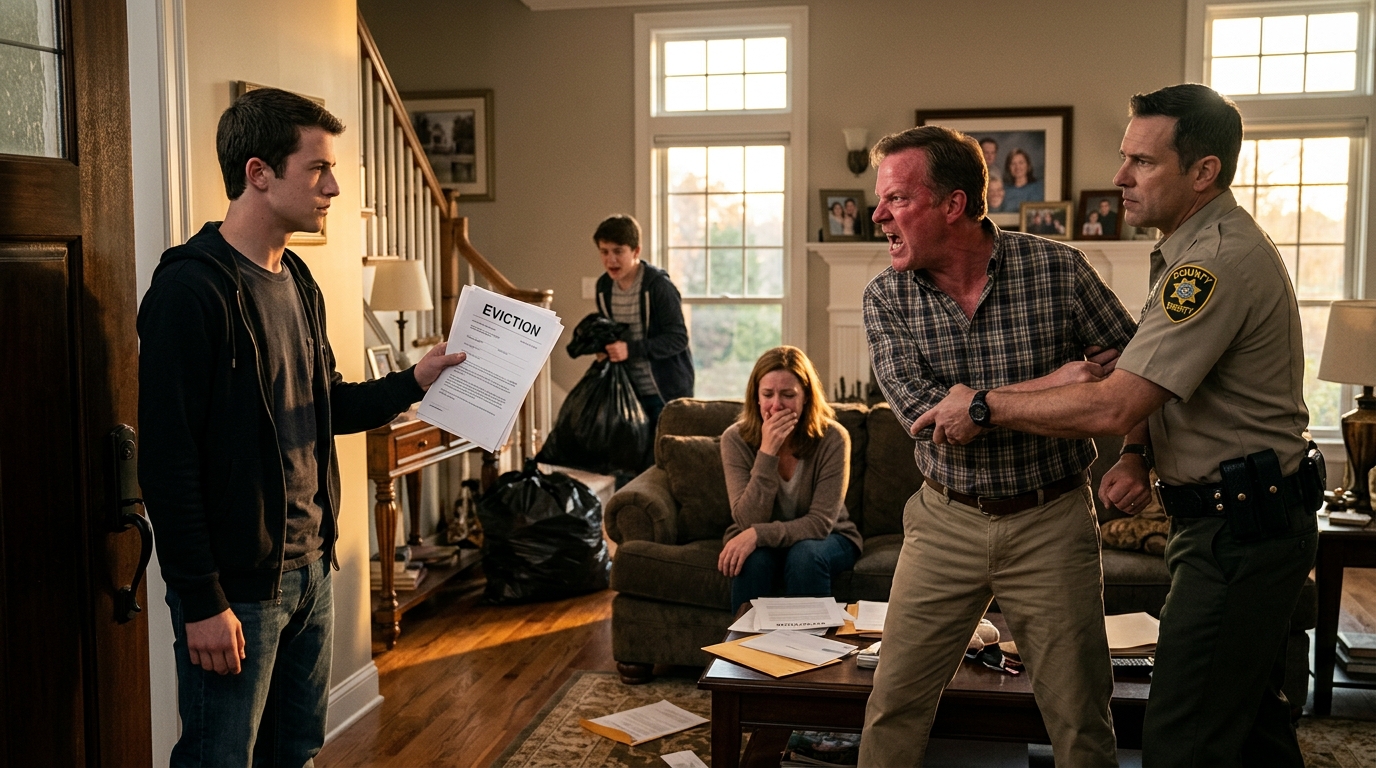
Drei Tage später, an einem ganz normalen Abend, rief ich alle im Wohnzimmer zusammen. Ich legte einen Umschlag auf den Tisch. „Das ist eine Räumungsklage. Ihr habt 30 Tage Zeit, um auszuziehen.“
Dane lachte ungläubig. Doch meine Mutter wurde kreidebleich. Ich legte mein Handy daneben und zeigte Dane das Foto der gefälschten Versicherungspapiere. „Sie wusste seit vier Jahren, dass das Haus mir gehört, Dane. Und vor sechs Wochen hat sie versucht, es mir heimlich zu stehlen, ohne dir ein Wort zu sagen. Du hast 22.000 Dollar für eine Terrasse ausgegeben, die dir nie gehört hat.“
Innerhalb von 90 Sekunden zerbrach ihre Ehe vor meinen Augen. Dane schrie sie an, Duke weinte vor Verwirrung. „Ihr wart unhöfliche Gäste in meinem Haus“, sagte ich kühl. „Eure Einladung ist hiermit widerrufen.“
Die nächsten Wochen waren ein verzweifelter Kampf für sie. Dane versuchte es erst mit Charme, dann mit Anwälten. Doch mein Vater hatte das Dokument so hieb- und stichfest aufgesetzt, dass kein Richter der Welt es anfechten konnte. Dane gab das letzte Geld für Anwälte aus, die ihm alle dasselbe sagten: Es gibt keine Chance.
Duke bettelte mich unter Tränen an: „Bitte, Callum, wir haben keinen Ort, an den wir gehen können! Ich war doch nur ein Kind!“ „Du warst genauso alt wie ich“, entgegnete ich. „Du hast nur nie geglaubt, dass irgendwann die Rechnung kommt. Willkommen in der Realität.“
Dane versuchte, die Verwandten meines Vaters gegen mich aufzuhetzen. Doch als ich meinem Onkel und meiner Tante die ganze Wahrheit über den College-Fonds und die gefälschten Papiere erzählte, wendeten sich alle von Dane ab. Er war völlig isoliert.
Am 30. Tag stand ich in der Küche und aß mein Frühstück. Dane hatte bis zuletzt keine einzige Kiste gepackt. Meine Mutter saß seit sechs Uhr morgens mit zwei Koffern stumm an der Tür.
Um Punkt 12 Uhr fuhr der Sheriff vor. „Sie haben bis 17 Uhr Zeit, das Gebäude zu verlassen, Sir“, sagte der Officer zu Dane.
Die nächsten fünf Stunden waren das reinste Chaos. Duke warf seine Sachen verzweifelt in Müllsäcke, Dane schrie hysterisch herum. Um 17:00 Uhr kam der Sheriff zurück. Dane weigerte sich zu gehen. Er drehte sich zu mir um und zischte: „Du wirst einsam enden! Niemand wird je jemanden lieben, der so kalt ist wie du!“
„Vielleicht“, sagte ich ruhig. „Aber ich werde in einem Haus sein, das mein Vater gebaut hat. Du wirst in einem billigen Motel sein.“
Dane schrie nach meiner Mutter: „Mara! Tu doch was!“
Doch Mara starrte nur stur geradeaus durch die Windschutzscheibe des Autos. Sie sah ihn nicht an. Sie sah mich nicht an. Sie ließ ihn in diesem Moment genauso im Stich, wie sie mich vier Jahre lang im Stich gelassen hatte.
Der Sheriff packte Dane am Arm und führte ihn ab, während er wie ein gefangenes Tier schrie. Sie fuhren davon.
Ich schloss die Haustür, atmete tief ein und blickte mich um. Jedes einzelne Holzbrett in diesem Haus gehörte endlich wieder mir.

