For more than a century, she lay silently beneath a San Francisco home, untouched by time, sealed away in glass and iron as the city above her transformed beyond recognition. When construction workers unearthed her tiny body in 2016, perfectly preserved and dressed in delicate lace, the world was transfixed by a haunting question: Who was she?
Now, after years of painstaking research and cutting-edge DNA analysis, scientists have finally uncovered the heartbreaking truth.
Her name was Edith Howard Cook.
She was just two years old when she died in 1876 — not from violence or mystery, but from severe undernourishment and illness, a tragic reminder of how fragile childhood was in the 19th century, even for those born into privilege.
 THE DISCOVERY THAT STOPPED A CITY
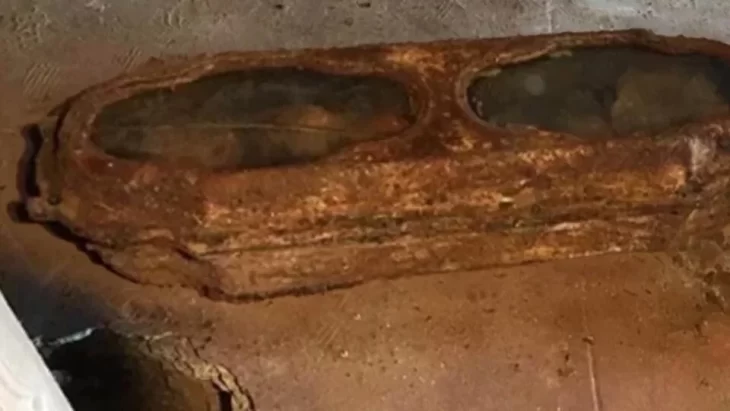
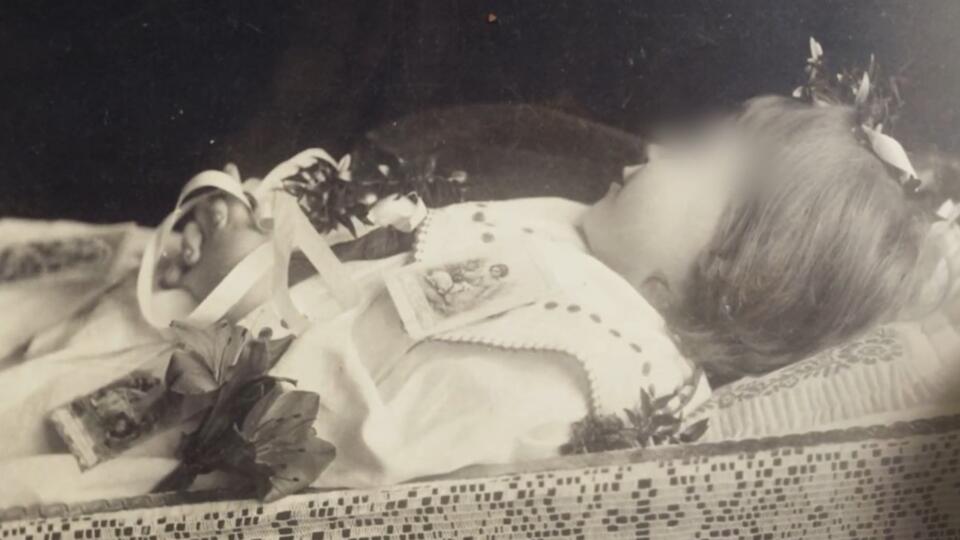
The moment the crystal coffin was lifted from the soil, it was clear this was no ordinary burial. Inside lay a child whose face appeared almost lifelike, her skin softly preserved by the airtight seal of the coffin. She was wrapped in white lace, clutching a floral cross, her golden hair still intact.
The coffin itself was an expensive iron-and-glass design — rare even in the Victorian era — immediately suggesting that her family had means and that her death had been deeply mourned.
For a time, she was known only as “Miranda Eve,” a name given by the public as her image spread across the world. She became a symbol of forgotten history, a ghost from a vanished San Francisco buried beneath layers of progress.
 SCIENCE BRINGS HER NAME BACK
Determined to restore her identity, a team of scientists, genealogists, and historians launched an unprecedented investigation. Using DNA extracted from strands of her hair, researchers compared genetic markers with historical records and living descendants.
The result was conclusive.
Edith Howard Cook was born into a well-established family. Her father, Horatio Cook, worked in leather manufacturing, while her mother came from a respected family with Greek heritage. Census records, death certificates, and family trees aligned perfectly with the DNA evidence.
What had once been a mystery was now a child with a name, a family, and a place in history.
A SHORT LIFE IN A HARSH ERA
Despite her family’s social standing, Edith’s world was shaped by the brutal realities of 19th-century urban life. San Francisco at the time was plagued by infectious diseases, poor sanitation, and limited medical knowledge. Childhood mortality was tragically common.
Records indicate Edith suffered from chronic illness and malnutrition — conditions that modern medicine could easily treat, but which were often fatal in her era. Her death devastated her parents, who spared no expense in giving her a burial meant to preserve her forever.
And in an eerie way, it worked.
 LEFT BEHIND BY HISTORY
Perhaps the most tragic twist came decades later.
In the 1930s, San Francisco undertook massive cemetery relocations to make room for urban expansion. Thousands of bodies were exhumed and moved. But Edith was forgotten — likely due to incomplete records or the unusual nature of her coffin.
While the city grew, homes were built, and generations passed, she remained underground, untouched and unknown.
Until science found her again.
 WHY HER STORY MATTERS
Edith’s rediscovery is more than a scientific triumph — it is a moral reckoning. Her story forces us to confront how many lives, especially those of children, have been erased by time and development.
She is a reminder that beneath modern cities lie untold stories — families, losses, and histories waiting to be acknowledged.
Thanks to DNA technology, Edith is no longer an anonymous curiosity preserved in glass. She is remembered as a real child, deeply loved, mourned, and finally recognized.
A NAME RESTORED, A MEMORY HONORED
Today, Edith Howard Cook rests not as a mystery, but as a symbol of remembrance. Science gave her something no monument ever could: her identity back.
And though her life was heartbreakingly brief, her story now lives on — a quiet voice from the past reminding us that no one, no matter how small or forgotten, truly disappears forever.


