![[Vollständige Geschichte] Meine Schwiegermutter sagte, noch nie habe ein Mädchen die Blutlinie ihres Mannes überlebt...](http://s.hardtopis.com/wp-content/uploads/2026/07/Pregnant_woman_defends_against_i…_202607200923.jpeg)
Der Türgriff drehte sich langsam. Ganz langsam. So wie jemand, der vorsichtig das Eis eines zugefrorenen Sees testet. Ich stand in der dunkelsten Ecke meines Schlafzimmers, eine Hand flach gegen die kalte Wand gepresst, die andere schützend unter meinem Bauch. Ich war im achten Monat schwanger – und ich wagte es nicht, auch nur den geringsten Laut von mir zu geben.
„Komm heraus, Liebes“, erklang Judiths Stimme durch das dicke Holz der Tür. Sie klang sanft, beinahe mütterlich. Doch genau diese Sanftheit ließ mir einen eisigen Schauer über den Rücken laufen, schlimmer als jedes Brüllen es gekonnt hätte. „Lass uns das regeln, wie die Familie es schon immer getan hat. Es muss nicht wehtun, wenn du aufhörst zu kämpfen.“
Unten im Erdgeschoss war es vor wenigen Sekunden schlagartig still geworden. Diese Stille war tausendmal furchterregender als das Poltern und Schreien davor. Stille bedeutete, dass Weston, mein Ehemann, nicht mehr schrie. Ich wusste nicht, ob er überwältigt worden war – oder ob ihm etwas Zerstörerisches angetan worden war. Ich presste das Telefon an mein Ohr. Die Notrufzentrale war noch in der Leitung. Meine Stimme war nur noch ein hauchdünnes Flüstern: „Sie ist an der Tür. Bitte beeilt euch…“
„Zwei Minuten noch, Ma’am. Die Polizeiwagen sind unterwegs!“, sagte die Beamtin. Zwei Minuten. In meinem Kopf lief ein verzweifelter Countdown. Wie viele Sekunden blieben mir, wenn eine Besessene entschlossen war, eine verriegelte Tür zu durchbrechen?
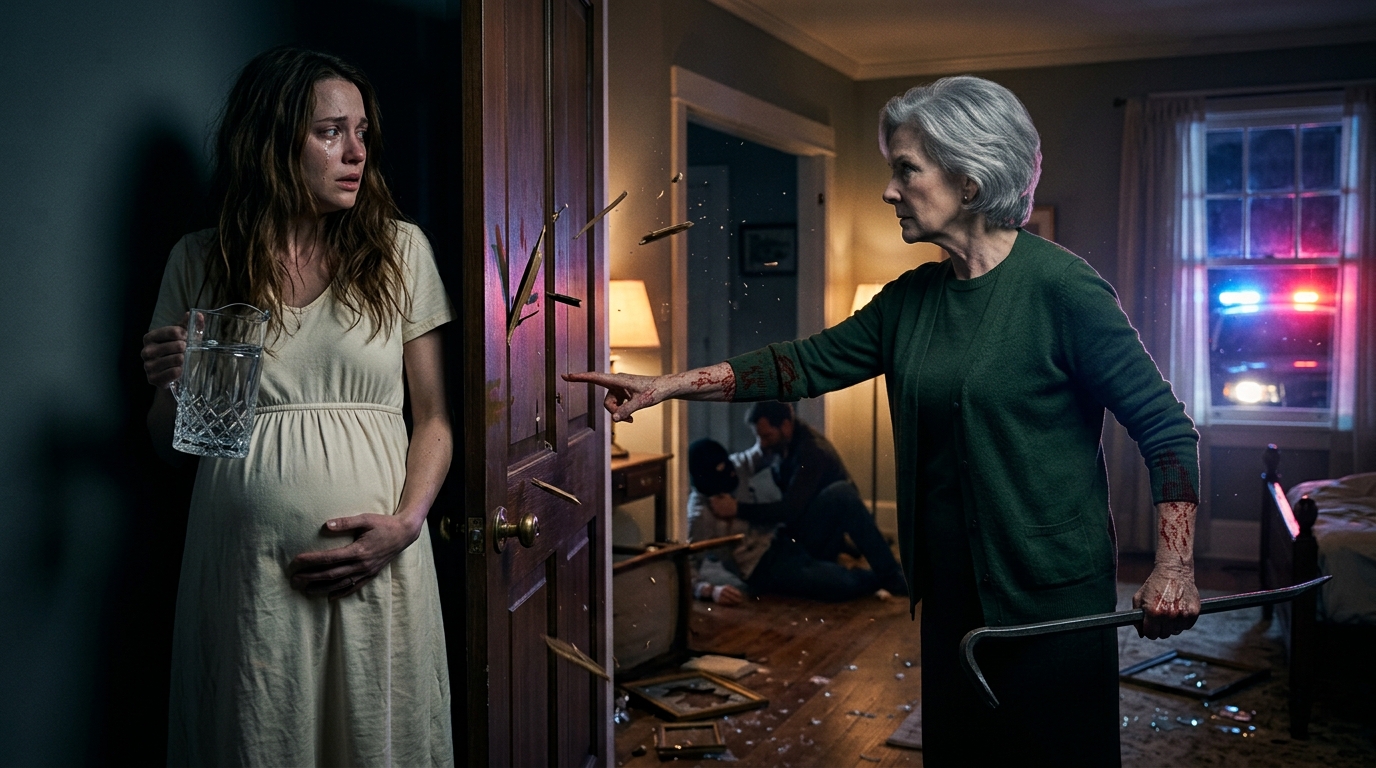
Plötzlich knackte das Holz der Türrahmen laut wie ein Pistolenschuss. Judith hatte ein Brecheisen gefunden. „Jede Frau, die Töchter in diese Familie gebracht hat, hat irgendwann ihren Platz gelernt“, sprach Judith ruhig weiter, als ginge es um ein Kuchenrezept. „Tod oder spurlos verschwunden. Jetzt bist du an der Reihe zu wählen.“
Das Holz splitterte. Die Tür flog mit brachialer Gewalt auf. Und da stand sie: Judith Callaway, 61 Jahre alt, das graue Haar perfekt hochgesteckt. An den Ärmeln ihrer Strickjacke klebte bereits frisches Blut von dem Kampf im Erdgeschoss. Sie trat ein, die Hände gierig nach vorne gestreckt, direkt auf meinen Bauch gerichtet. Ich schrie nicht. Ich nahm das Einzige, was in Reichweite lag – die schwere Glaskaraffe vom Nachttisch – und schleuderte sie mit voller Wucht.
Um zu verstehen, wie eine elegante Großmutter zur Bestie wurde, muss man vier Jahre zurückblicken. Als ich Weston heiratete, wirkte seine Familie wie das Paradebeispiel traditioneller Perfektion. Sie führten seit 1889 ein prestigeträchtiges Bestattungsunternehmen in Zanesville, Ohio. Fünf Generationen lang ging das Geschäft lückenlos vom Vater auf den Sohn über. Für Judith war das kein Zufall, sondern ein heiliger Pakt mit dem Schicksal. Ein Pakt, der keinen Raum für Töchter ließ.
Schon am Hochzeitsabend packte Judith mein Handgelenk so fest, dass ihre Fingernägel Spuren hinterließen. „Schenk uns einen Stammhalter. Enttäusche uns nicht“, zischte sie. Ich hielt es damals für einen makabren Scherz einer altmodischen Schwiegermutter. Ein tödlicher Irrtum.
Als unsere erste Tochter Marlo geboren wurde, veränderte sich alles. Judith hielt das Baby im Krankenhaus für genau vier Minuten. Ihr Blick war eiskalt. „Nicht von unserer Seite“, flüsterte sie bloß. Monatelang folgten stichelnde Bemerkungen, bis ich zufällig im alten Hauptbuch des Bestattungsinstituts stöberte. Dort stieß ich auf das Jahr 1953: Zwei Namen weiblicher Neugeborener – Faith und Grace – waren mit einer dicken, schwarzen Linie durchgestrichen. Keinerlei Todesursache, kein Begräbnisort. Sie wurden einfach aus der Familienexistenz gelöscht.
Als ich mit unserem zweiten Kind schwanger wurde und der Ultraschall bestätigte, dass es erneut ein Mädchen war, brach das Monster in Judith endgültig aus. Bei einem gemeinsamen Abendessen verlangte sie unverblümt einen Vaterschaftstest und beschuldigte mich der Untreue. Als ich schockiert aufstand, ergriff sie meine Kleidung, verpasste mir eine wuchtige Ohrfeige und schleuderte eine schwere Schneekugel aus Glas gegen meinen Kopf!
Ich stürzte mit blutender Platzwunde zu Boden. Im Krankenhaus musste ich genäht werden, während die Polizei Judith festnahm. Doch der wahre Albtraum begann erst, als ihr Neffe Preston uns anrief und das dunkle Geheimnis der Callaways enthüllte: Seit über hundert Jahren wurden weibliche Babies in der Familie heimlich zur Adoption freigegeben, totgeschwiegen oder verschwinden gelassen. Judith erfand keinen Fluch – sie führte eine blutige Familientradition fort!
Aus dem Gefängnis schickte Judith uns ein anonymes Paket. Darin lagen zwei vergilbte Krankenhaus-Identifikationsbändchen aus dem Jahr 1953. Die Namen darauf waren mit einer Klinge zerkratzt. Darunter lag eine Notiz in ihrer feinen Handschrift: „Manche Familientraditionen sind es wert, bewahrt zu werden.“ Es war keine Beichte. Es war eine explizite Morddrohung gegen mein ungeborenes Kind.
Dank der Kaution ihres jüngsten Sohnes kam Judith am selben Tag frei. Und sie kam direkt zu unserem Haus. Zusammen mit einem bewaffneten Komplizen brach sie die Tür auf, um das zu beenden, was sie als ihre „Pflicht“ ansah. Weston kämpfte unten verzweifelt gegen die Eindringlinge, während ich mich im Schlafzimmer verbarrikadierte.
Als die Tür schließlich krachend nachgab und Judith auf mich zustürzte, gab es kein Zögern mehr in mir. Ich kämpfte nicht nur für mein eigenes Leben, sondern für das meiner beiden Töchter und all der ausgelöschten Frauen vor ihnen. Ich traf Judith mit der schweren Glaskaraffe an der Schläfe. Sie ins Wanken geraten, stürzte Weston in den Raum und drückte seine eigene Mutter auf den Boden, genau in dem Moment, als die Sirenen der Polizei durch die Straße dröhnten.
Judith schaute mich vom Boden aus an, Blut sickerte durch ihr graues Haar. Selbst in Handschellen flüsterte sie noch voller Wahn: „Du wirst es eines Tages verstehen. Jede von uns tut es.“
Ich sah ihr direkt in die eisigen Augen und sagte laut und bestimmt: „Ich werde dich niemals verstehen. Du bist kein Fluch und keine Tradition. Du bist nur eine grauenhafte Frau, die Kindern wehgetan hat. Und ich werde jeden Tag meines Lebens dafür sorgen, dass meine Töchter niemals so werden wie du.“
Judith wurde wegen schwerer Körperverletzung, Hausfriedensbruchs und Gefährdung eines Ungeborenen zu sieben Jahren Haft ohne Bewährung verurteilt. Wir verkauften das Haus und zogen weit weg von Zanesville, an einen Ort, an dem der Name Callaway keine Macht mehr besitzt.
Unsere zweite Tochter Everly kam sechs Wochen später gesund zur Welt. Wenn ich morgens in der Küche stehe und beobachte, wie meine beiden Töchter lachen, spüre ich eine tiefgreifende Erleichterung. Das Blut der Callaways hat mein Kind nicht ausgelöscht. Die Wahrheit hat gesiegt – und der Teufelskreis aus Schweigen, Schmerz und Gewalt ist für immer durchbrochen.


