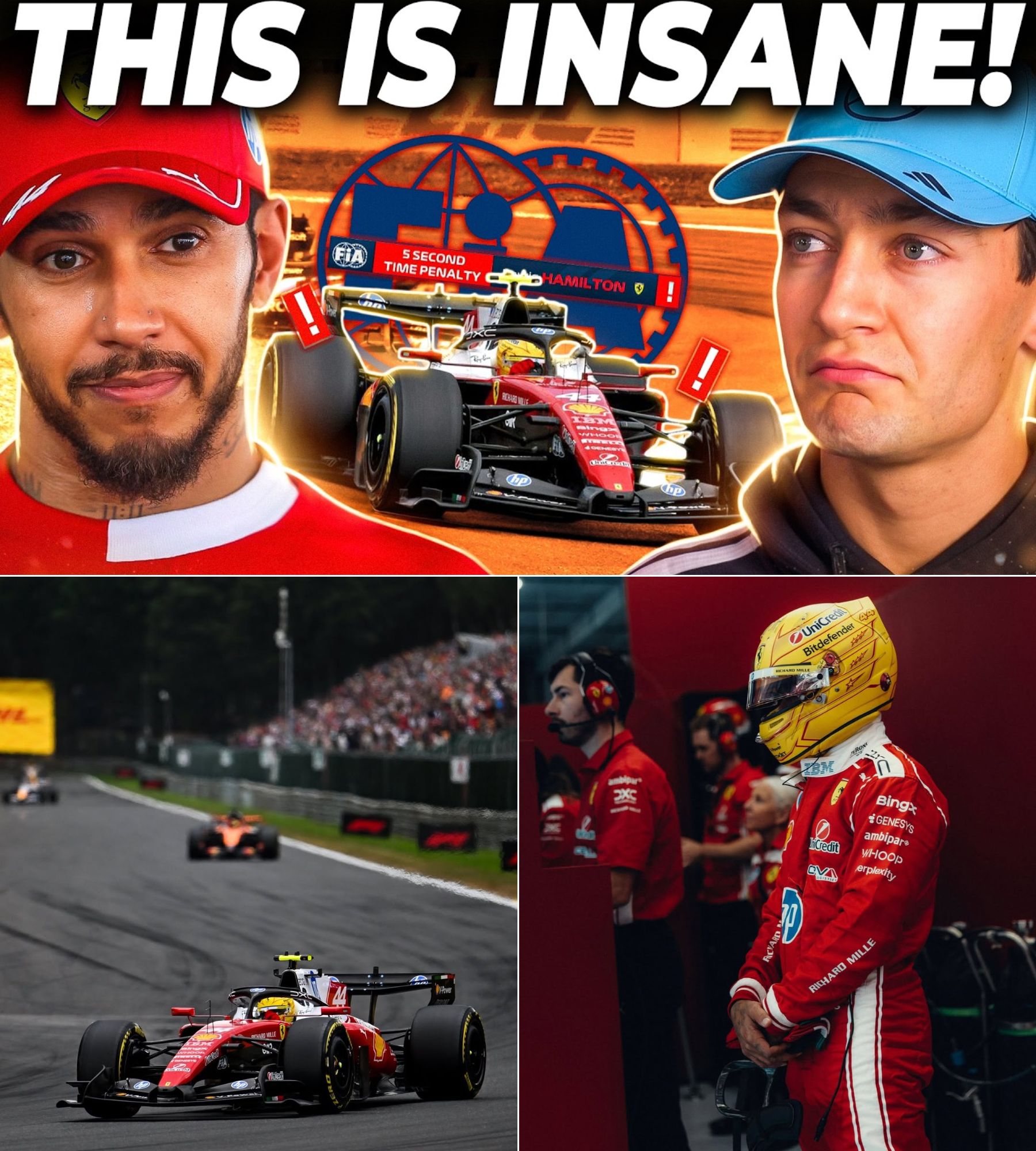
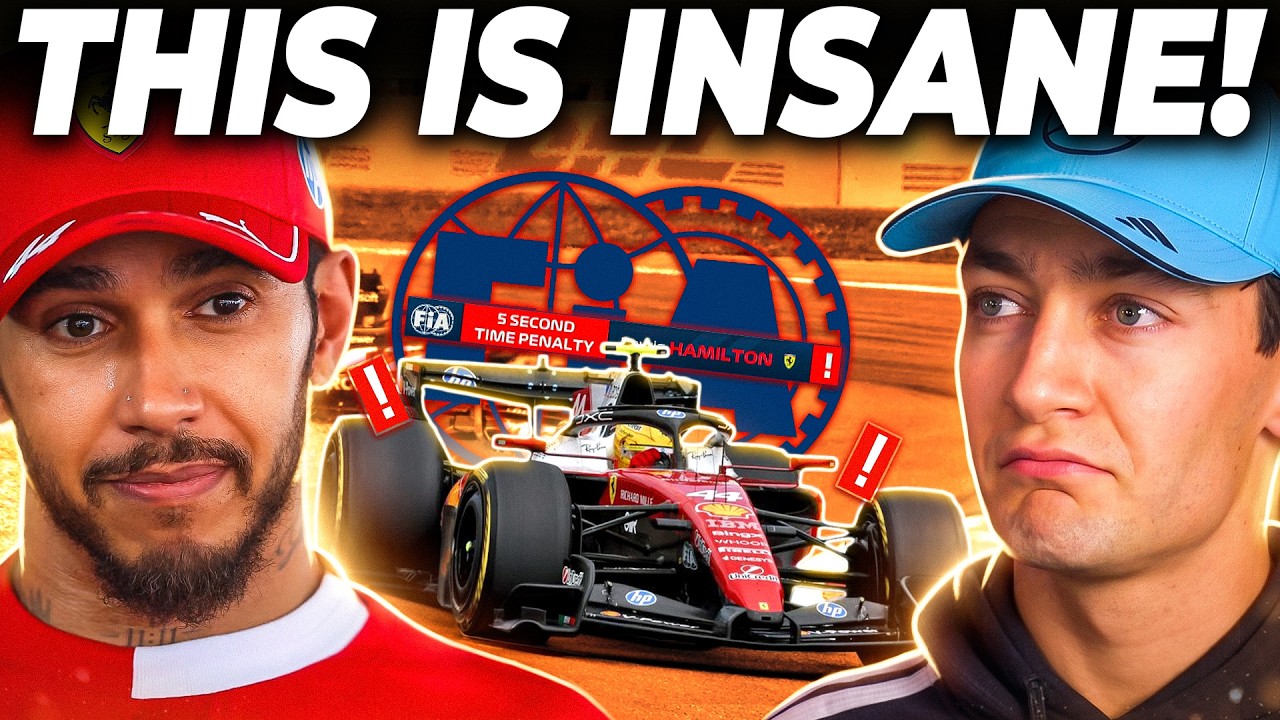
The stewards’ decision at Spa-Francorchamps has ignited a firestorm that has united the entire paddock against them, a rare moment of consensus in a sport defined by fierce rivalries. Lewis Hamilton was penalized five seconds for colliding with George Russell on the opening lap, a call that handed Russell a DNF and Hamilton a fourth-place finish—yet the driver whose race was destroyed, his team principal, the rival team principal, and a legendary commentator all lined up to say the penalty was wrong.
The crash itself unfolded in the most predictable yet unforgiving way at Les Combes. Hamilton had pulled alongside Russell down the Kemmel Straight, a classic overtaking move at one of Formula 1’s fastest corners. Russell refused to yield, hugging the outside line, and the two cars touched.
Hamilton’s front-left clipped Russell’s right-rear, spinning the Mercedes into the gravel. Russell’s race ended before it began.
The FIA stewards reviewed the incident and ruled Hamilton wholly at fault. Their reasoning: Russell had earned the right to racing room, and Hamilton’s car suffered understeer in dirty air, causing the contact. But then they halved the standard 10-second penalty to five, citing Hamilton’s attempt to avoid the collision and the tricky first-lap conditions.
No penalty points were added. The punishment was so light that Hamilton lost virtually nothing, serving it during a virtual safety car.
That contradictory verdict—total blame with a slap on the wrist—immediately struck the paddock as illogical. The real explosion came when the key players spoke. George Russell, the victim, climbed out of the gravel trap and did not blame Hamilton.
“It’s a racing incident,” he said flatly. He admitted Hamilton was more at fault but insisted the move was not reckless. His anger was directed at his own Mercedes, which suffered a battery deployment failure on the straight, robbing him of the power he needed to defend.
Toto Wolff, the Mercedes team principal whose car was wrecked, agreed. He called it a racing incident, noting that such contact happens in wheel-to-wheel racing. Fred Vasseur, Ferrari’s boss, called the penalty “mega harsh.”

Martin Brundle, the respected commentator, said he would not have made that call. Even Hamilton himself shrugged it off as a normal first-lap tangle. The victim, the victim’s team, the culprit’s team, and the commentator all landed on the same side—against the stewards.
To understand why this verdict stings so deeply, look at the broader context. Spa is Hamilton’s track. He holds the record for most pole positions here (six) and most wins (five, tied with Senna).
His 2020 qualifying lap record still stands. This was supposed to be his weekend to shine, but instead he became the center of a controversy that none of the sport’s most influential figures think he deserved.
The FIA’s inconsistency only deepened the anger. Earlier in the weekend, Ferrari was fined €10,000 for a procedural tire error. Later, Hamilton was involved in an unsafe release from his pit box—a mechanic was briefly caught under his front tire—and the stewards cleared Hamilton of any fault, fining the team €30,000.
So within hours, the same officials penalized Hamilton for a crash the paddock called a racing incident, then absolved him for a genuine safety breach that could have injured a crew member. That fracture erodes trust.

The accident itself, when analyzed frame-by-frame, shows Hamilton’s Ferrari washing into understeer as it lost front grip in the turbulent air behind Max Verstappen. Karun Chandhok made the case that Russell was innocent—he had left space and was entitled to be there. But fault and penalty are not the same thing.
“Fault does not require intent,” Chandhok argued. Yet the entire paddock, including Russell, insisted the lack of intent and the first-lap chaos made punishment excessive.
Russell’s emotional state revealed the true cost. “I’m numb to the disappointment now,” he said, describing a season where his car keeps failing him. He was fighting for a title, and in one corner, all that evaporated.
But instead of rage, he showed exhaustion. That is the kind of response that makes a steward’s call look out of touch with the reality of racing.
The championship implications are brutal. Kimi Antonelli won the Belgian Grand Prix, pulling 45 points clear of Hamilton in the drivers’ standings. Hamilton’s fourth-place finish, thanks to the penalty, actually kept him ahead of Russell, who scored zero.

Russell dropped from second to third in the standings behind the driver who hit him. In the constructors’ battle, Mercedes leads Ferrari by 73 points, and even with a full Mercedes retirement, Ferrari only clawed back five points all weekend. That is a pace problem, not a luck problem.
Ferrari knew Spa would expose their engine weakness. The team brought an evolved rear wing—the so-called “Macarena” design—to shed drag, and debated removing their blown exhaust flap to recover horsepower. But the real fix, a redesigned turbocharger, is still weeks away, targeting Zandvoort or Monza after the summer break.
That turbo is the second half of Ferrari’s engine catch-up plan, and by 2027, the clever blown exhaust wings will be banned anyway.
So the question that lingers from Spa is not about who touched whom. It is about whether the FIA just set a precedent that nobody in the paddock wanted. When the driver you penalized, the driver you protected, both team principals, and a hall-of-fame commentator all say you got it wrong, you have a consistency problem.
Drivers need to know where the line is. Right now, nobody does.
Hamilton walks away from Spa in second place, 45 points adrift, in a car that is fast everywhere except where it matters most. The engine fix is coming, but will it arrive in time? Zandvoort is next, and that is the moment to find out whether Ferrari can turn this noise into a title challenge—or whether Spa was the day the fight quietly slipped away.
The paddock will be watching, and so will the stewards, who now face a credibility test that goes far beyond one corner at Les Combes.