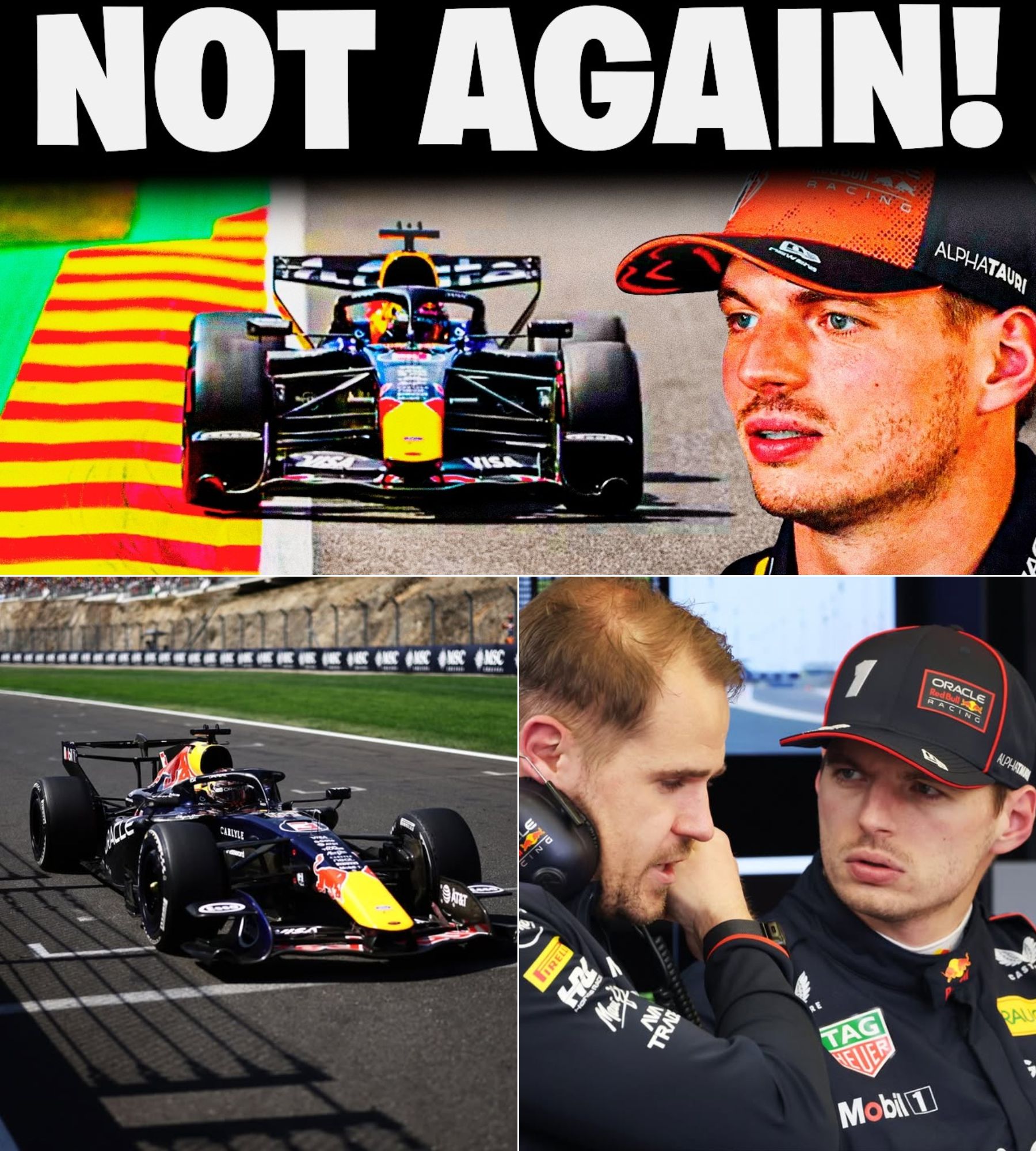
Max Verstappen crossed the finish line third at Spa-Francorchamps, but his own words have exposed a far more troubling reality: Red Bull’s podium was a dangerous illusion. The reigning champion started second, just 0. 317 seconds from pole, seized the lead at the first corner, and pushed the car to its absolute limit – yet still finished more than 11 seconds behind the winner.
That gap is not a glitch. It is a confession.
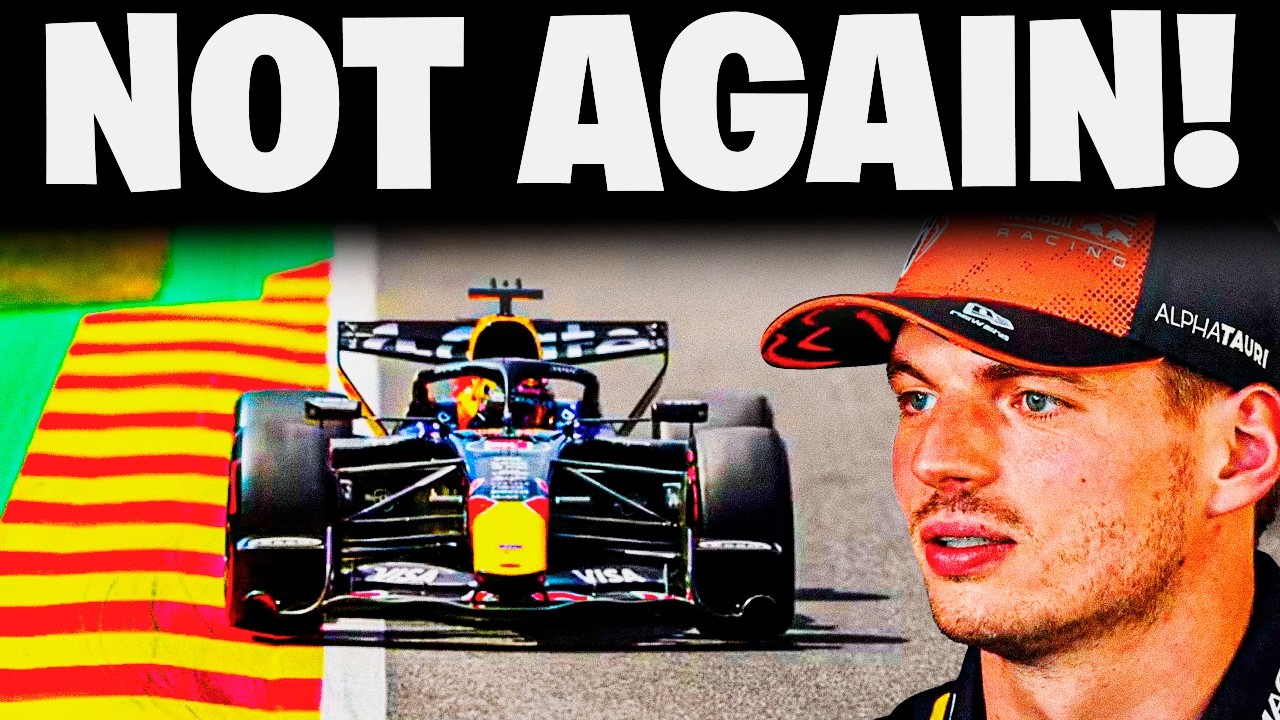
Verstappen’s post-race comment – “I gave everything I had, and third place is a good result” – sounds modest at first. But the first half of that sentence is the key. He gave everything.
There was no hidden pace, no secret setting, no reserve left in the car. The limit was third place, and that limit was defined by a deep aerodynamic weakness that no amount of driver talent can overcome over a full Grand Prix distance.
The Belgian weekend began with hope. Red Bull used a clever tow from teammate Isack Hadjar to vault Verstappen to the front row. That tow maximized the car’s strongest asset: straight‑line speed.
It worked perfectly for one lap. But a race is not one lap. As the fuel load increased and the tires aged, the same fundamental problem resurfaced.
The car lacks downforce through medium‑ and high‑speed corners. It cannot generate enough grip to maintain momentum, and that weakness bleeds time corner after corner.
When Verstappen took the lead on the opening lap, it looked like a statement. But Andrea Kimi Antonelli’s Mercedes retook the position on the Kemmel Straight almost immediately. Red Bull could threaten, but it could not hold.
That single moment – the inability to defend after grabbing the lead – is the first crack in the illusion. The car had the speed to attack, but not the balance to control the race.
By the second half of the race, the hard tire amplified the problem. Verstappen suffered severe understeer, meaning the front of the car refused to turn. Understeer is not a setup mistake; it is a symptom of insufficient aerodynamic load.
The front tires lose grip, the driver has to brake earlier, wait longer before turning, and accelerate more gently. Each tiny hesitation adds up. Over 44 laps, those fractions become 11.
586 seconds.
That gap did not come from one bad pit stop or a single mistake. It accumulated silently, corner by corner. And it reveals the truth Red Bull has been trying to mask: the car works for one lap on low fuel and fresh tires, but it cannot sustain performance over a race distance.
This is not a new problem. Earlier this season, Verstappen described the car as “undrivable” in China. In Japan, he said he was fighting in the midfield.
Those were warnings. Spa did not change the pattern; it confirmed it.
The obvious scapegoat would be the engine. But the evidence points elsewhere. Red Bull’s own power unit has regularly been among the fastest in a straight line.
Christian Horner himself called it the best among the new manufacturers. And here is the most damning proof: Racing Bulls uses the same engine, yet their top speeds are significantly lower. Same power unit, different speed profile.
That means the issue is not the engine – it is the car’s aerodynamic philosophy.
Red Bull has designed the RB21 with extremely low drag to maximize straight‑line speed. That works brilliantly on the straights. But the trade‑off is reduced downforce, and less downforce means less grip in corners.
At circuits like Spa, which combine long straights with fast, committed corners, that trade‑off becomes a trap. The car can look fast on the speed trap, but the damage happens before the straight begins – in the exit of the previous corner, where a lack of grip forces the driver to carry less momentum.
Imagine a sprinter wearing lightweight shoes on a straight track. He looks fast. But when the track becomes wet and full of turns, the shoes offer no grip.
He has to slow down just to stay upright. That is Red Bull’s car: efficient in a straight line, vulnerable everywhere else.
Verstappen’s ability to drag this car to a front‑row start and a podium finish is remarkable. But it also hides the severity of the problem. When a driver of his caliber says he gave everything and still finished 11 seconds behind, the message is clear.
Red Bull’s apparent pace at Spa was not fake – but it was incomplete. It was fast enough to create hope, not complete enough to dominate.
The next races on the calendar will be the real test. Circuits with fewer long straights and more corner sequences will expose this weakness further. Unless Red Bull finds a way to add downforce without sacrificing drag – a near‑impossible engineering challenge mid‑season – the podium at Spa will be remembered not as progress, but as the moment the illusion shattered.