
Die kurvige Auktionsassistentin schickte den Mafiaboss von der Bühne – Seine nächste Entscheidung schockierte alle
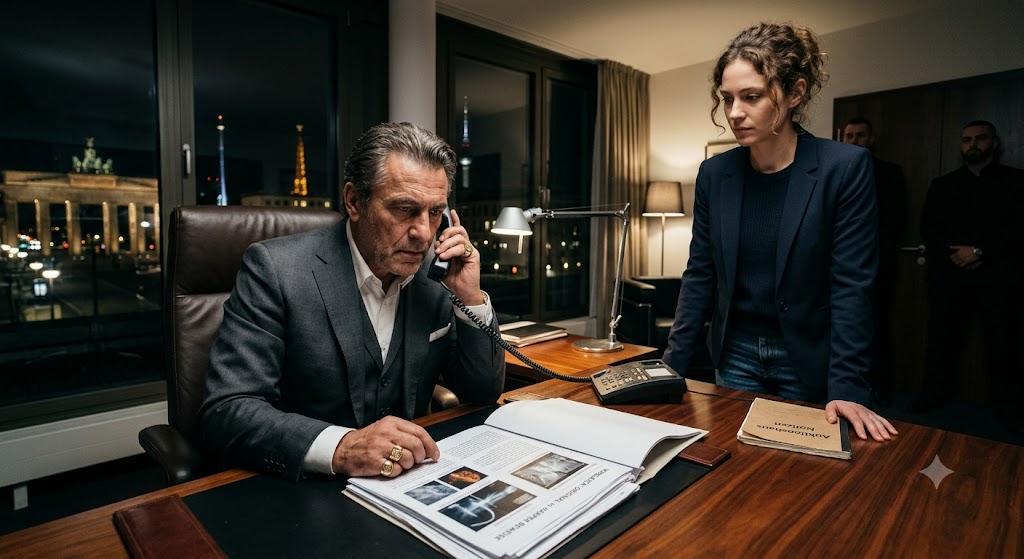
„Runter von der Bühne. Sofort.“
Der Befehl schnitt durch den Auktionssaal wie ein Messer. Evelyn Harper hatte gerade Adrien Maro, den gefürchtetsten Mafiaboss in Berlin, von einem 20-Millionen-Gemälde weggeschickt. Sie wusste nicht, wer er war. Sie wusste nur, dass das Meisterwerk wahrscheinlich eine Fälschung war.
Die Security bewegte sich auf sie zu. Adrien hob eine Hand. Sie blieben stehen.
Wenige Minuten später bewies Evelyn, dass sie recht hatte.
Alle erwarteten, dass er ihre Karriere zerstören würde.
Stattdessen schaute Adrien Maro die kurvige Auktionsassistentin an, die ihn öffentlich blamiert hatte, und fragte: „Wer hat sie eingestellt?“
Drei Stunden früher hatte Evelyn Harper genau das getan, was Bowmont & Vale von ihr erwartete: nützlich und unsichtbar sein.
Mit 33 Jahren hatte sie fast sechs Jahre hinter der polierten Maschinerie eines der renommiertesten Auktionshäuser Berlins gearbeitet. Sie erstellte Provenienz-Unterlagen, korrigierte Katalogfehler, koordinierte Spezialisten und bemerkte leise Details, die Menschen mit größeren Büros regelmäßig übersahen.
Ihr Titel war Assistentin. Ihr Wissen war deutlich schwerer zusammenzufassen.
An jenem Abend, während Sammler die Haupthalle für die wichtigste Auktion des Jahres füllten, stand Evelyn hinter dem Administrations-Tisch und prüfte einen letzten Stapel Provenienz-Dokumente.
Los 47 war der Star des Abends – ein europäisches Meisterwerk, das angeblich seit Jahrzehnten in einer privaten Sammlung verschwunden war. Schätzwert: 18 bis 22 Millionen Euro.
Evelyn hatte die Unterlagen bereits zweimal geprüft. Beim dritten Mal störte sie etwas. Nicht das Gemälde – die Papiere.
Ein Ausstellungsdatensatz zeigte das Werk in einer Privatsammlung, während ein Restaurierungs-Foto es fast 18 Monate später an einem anderen Ort zeigte. Entweder war das Datum falsch, oder ein Teil der Provenienz war rückwärts konstruiert worden.
Evelyn holte die Archivunterlagen, dann die Restaurierungsnotizen, dann die Besitzurkunden. Ihr Magen zog sich zusammen. Es gab weitere Widersprüche – kleine, genau die Art, auf die raffinierte Fälschungen angewiesen waren, dass man sie übersah.
Sie trug die Akte direkt zu Celeste Bowmont.
Celeste sprach gerade mit zwei Sammlern, als Evelyn sich näherte. „Ich brauche jemanden, der Los 47 stoppt.“
Celestes Lächeln blieb perfekt. „Warum?“ „Es gibt eine Lücke in der Provenienz.“ „Bei alten Provenienzen gibt es immer Lücken.“ „Diese widerspricht einem dokumentierten Restaurierungsdatensatz.“
Celeste schaute kurz auf die Papiere, nahm sie aber nicht. „Hat die Authentifizierung unterschrieben?“ „Ja, aber dann wurde sie überprüft.“ Evelyn senkte die Stimme. „Ich denke, sie müssen sie noch einmal prüfen.“
Zum ersten Mal schaute Celeste sie direkt an – nicht wütend, fast mitleidig. Das fühlte sich schlimmer an. „Evelyn, heute Abend ist nicht der Abend, um wegen eines bürokratischen Fehlers Unsicherheit zu schaffen.“
Dann drehte sie sich wieder zu den Sammlern. Gespräch beendet.
Evelyn versuchte es bei einem anderen Spezialisten, dann bei einem weiteren. Jede Antwort war eine Variation derselben: Das Gemälde war bereits authentifiziert. Der Einlieferer war angesehen. Die Dokumente sahen überzeugend aus. Die Auktion lief bereits.
Niemand wollte derjenige sein, der einen 20-Millionen-Euro-Verkauf wegen einer Sorge einer Assistentin stoppte.
Dann erschien Los 47 auf der Bühne.
Evelyn stand nahe beim Seiteneingang, immer noch mit der Akte in der Hand. Das Bieten begann bei 12 Millionen. 14. 16. Ein Mann in der vorderen Reihe hob sein Paddle ohne Zögern. Evelyn bemerkte, wie der Saal auf ihn reagierte. Die Leute starrten nicht. Sie vermieden es bewusst, ihn anzustarren.
18 Millionen. Derselbe Mann bot erneut. 19.
Evelyn schaute zu Celeste. Nichts.
20 Millionen. Der Auktionator hob den Hammer.
Evelyn hörte auf zu denken. Unter Druck war Diplomatie noch nie ihre stärkste Fähigkeit gewesen.
Sie ging direkt zur Bühne. „Stopp.“
Der Auktionator erstarrte. Jede Gesicht wandte sich ihr zu.
Der Bieter trat vor, offenbar, um das Gemälde vor der endgültigen Zuschlagserteilung zu prüfen. Evelyn sah, wie seine Hand sich dem Rahmen näherte. „Fassen Sie das nicht an.“
Stille.
Er schaute sie an. „Wie bitte?“
„Runter von der Bühne. Sofort.“
Irgendwo hinter Evelyn machte jemand ein ersticktes Geräusch. Zwei Sicherheitsleute bewegten sich sofort auf sie zu.
Dann hob der Fremde eine Hand. Sie blieben stehen.
In diesem Moment erreichte Celeste Evelyn und flüsterte mit kaum beherrschter Panik: „Haben Sie eine Ahnung, wer das ist?“
Evelyn wusste es nicht. „Adrien Maro.“
Der Name veränderte alles. Evelyn wusste genug über Berlin, um zu verstehen. Das Maro-Syndikat – Schifffahrt, Finanzen, Immobilien, Luxusgeschäfte und darunter ein Ruf, über den mächtige Menschen nur sprachen, wenn Türen geschlossen waren.
Evelyn schaute zurück zu Adrien. Er beobachtete sie mit beunruhigender Ruhe. „Warum?“, fragte er. „Sollte ich das Gemälde nicht berühren, das ich gerade kaufen wollte?“ „Weil ich nicht glaube, dass es das Gemälde ist, für das Sie es halten.“
Der Verkauf wurde ausgesetzt. Spezialisten wurden gerufen. Unterlagen wurden erneut geöffnet. Unter Vergrößerung erschienen technische Unstimmigkeiten. Die Pigmentanalyse zeigte Materialien, die nicht mit der angegebenen Restaurierungsperiode übereinstimmten. Dann kam der Provenienz-Widerspruch, den Evelyn gefunden hatte.
Das Meisterwerk war eine Fälschung. Eine bemerkenswert raffinierte, aber dennoch eine Fälschung.
20 Millionen Euro verschwanden an einem einzigen Nachmittag aus der Auktionsliste.
Alle erwarteten, dass Adrien Maro wütend sein würde.
Er war nicht wütend.
Geld war nicht das, was seine Aufmerksamkeit hielt.
Er schaute weiter auf Evelyn.
Sie hatte führende Experten herausgefordert, ihren Job riskiert, eine große Auktion gestoppt und einen Mann, den alle anderen fürchteten, von einer Bühne geschickt – ohne zu wissen, wer er war.
Alles nur, weil die Beweise ihr gesagt hatten, dass etwas nicht stimmte.
Adrien wandte sich an Celeste. „Wer hat den Widerspruch gefunden?“
Celeste zögerte. „Evelyn.“
Welcher Spezialist? „Sie ist Assistentin.“
Adriens Blick kehrte zu Evelyn zurück. Zum ersten Mal berührte fast so etwas wie Belustigung seine Miene. „Eine Assistentin.“
Dann schaute er in den Raum voller Experten, die übersehen hatten, was sie gesehen hatte, und Evelyn erkannte: Der gefährlichste Mann im Gebäude interessierte sich nicht mehr für das gefälschte Gemälde.
Er interessierte sich für sie.
Evelyn erwartete, am nächsten Morgen gefeuert zu werden.
Stattdessen bot Adrien Maro ihr einen Job an.
Nicht dauerhaft. Nicht ganz.
Er wollte, dass jede fragwürdige Akquisition im Zusammenhang mit der Fälschung überprüft wurde – und er wollte Evelyn dabei haben.
Celeste nannte es eine vorübergehende Beratung. Adrien nannte es notwendig. Evelyn nannte es verdächtig.
„Sie haben Zugang zu den besten Experten Berlins“, sagte sie, als sie sich zwei Tage später in einem privaten Untersuchungsraum trafen. „Warum ich?“
Adrien stand ihr gegenüber in einem perfekt geschnittenen schwarzen Anzug und sah für einen Mann, dessen 20-Millionen-Kauf beinahe der teuerste Fehler der Saison geworden wäre, viel zu entspannt aus. „Weil ich vor zwei Tagen Zugang zu den besten Experten Berlins hatte.“
Evelyn hielt inne. Das war ärgerlich schwer zu widerlegen.
Drei Gemälde und mehrere Provenienz-Akten waren aus Adriens Privatsammlung zur Untersuchung übergeben worden.
Evelyn zog Handschuhe an. Adrien griff nach dem ersten Ordner. Sie schlug seine Hand weg.
Der Raum wurde still. Nicht metaphorisch. Wirklich still.
Einer von Adriens Sicherheitsleuten starrte Evelyn an, als hätte er gerade gesehen, wie jemand einen schlafenden Tiger getreten hatte.
Evelyn schaute auf. Adrien schaute auf seine Hand. „Haben Sie mich gerade geschlagen?“ „Sie trugen keine Handschuhe.“ „Es ist Papier.“ „Es ist Beweismittel.“
Für mehrere Sekunden bewegte sich niemand. Dann zog Adrien langsam seine Hand zurück. „Handschuhe“, sagte er.
Einer seiner Männer trat vor. Evelyn zeigte auf eine Box auf dem gegenüberliegenden Tisch. „Er kann sie sich selbst holen.“
Der Sicherheitsmann blieb stehen. Adriens Augen verengten sich leicht.
Evelyn erinnerte sich plötzlich mit unangenehmer Klarheit, mit wem sie sprach.
Dann ging Adrien zum Tisch und nahm die Handschuhe selbst.
Das hätte die Sache beenden sollen. Stattdessen etablierte es ein Muster.
Wenn Evelyn arbeitete, hörte die Hierarchie auf zu existieren. Sie sagte Adrien, wo er stehen sollte, weil sein Schatten ihr Licht blockierte. Sie ließ ihn warten, während sie Katalogunterlagen verglich. Wenn er eine Untersuchung mit einer Frage unterbrach, hielt sie einen Finger hoch, ohne ihn anzuschauen. „Eine Minute.“
Niemand hatte Adrien Maro je eine Minute gegeben. Offenbar brauchte Evelyn sieben. Er wartete alle sieben.
Die ersten beiden Gemälde waren echt. Das dritte schuf Probleme. Evelyn fand Widersprüche zwischen Restaurierungsunterlagen und Versanddokumenten, aber nicht genug, um Betrug zu erklären. Adrien wollte eine Schlussfolgerung. Sie weigerte sich, ihm eine zu geben.
„Also ist es echt.“ „Ich habe das nicht gesagt.“ „Dann ist es gefälscht.“ „Das habe ich auch nicht gesagt.“
„Sie scheinen ungewöhnlich entschlossen, keine Fragen zu beantworten.“ „Ich bin entschlossen, keine Unsicherheit als Gewissheit auszugeben, nur weil Gewissheit praktischer ist.“
Das brachte ihn zum Schweigen. Evelyn erwartete Verärgerung. Stattdessen betrachtete Adrien sie mit demselben konzentrierten Ausdruck, den er nach der Auktion getragen hatte.
Die meisten Menschen um ihn herum beeilten sich, Antworten zu liefern. Evelyn schien vollkommen wohl damit, zu sagen, dass sie es nicht wusste.
Er begann zu verstehen, warum ihre Antworten wichtig waren.
In den folgenden Tagen erschien Adrien bei fast jeder Untersuchung. Zuerst nahm Evelyn an, er überwache sie. Dann bemerkte sie etwas Seltsames. Er hörte zu. Nicht höflich. Aufmerksam.
Wenn sie einen verdächtigen Galerie-Stempel erwähnte, erinnerte er sich am nächsten Tag daran. Wenn sie erklärte, warum Besitzlücken wichtig waren, stellte er später Fragen mit der richtigen Fachsprache.
Einmal erwischte sie ihn, wie er zwei Provenienz-Unterlagen verglich, bevor sie kam. „Sie lernen.“ „Ich lese Unterlagen.“ „Sie lernen Kunst-Authentifizierung.“ „Ich hasse es, zweimal zum Narren gehalten zu werden.“
Das klang fast bescheiden. „Verbreiten Sie das nicht.“
Evelyn lachte, bevor sie sich stoppen konnte. Adrien schaute sie an. Es war das erste Mal, dass er sie in seiner Nähe lachen hörte.
Etwas veränderte sich – nur leicht, aber genug, dass Evelyn sich plötzlich sehr für die Papiere vor sich interessierte.
Sie hatte erwartet, dass Adrien Maro arrogant war. War er. Sie hatte erwartet, dass er kontrollierend war. Absolut. Was sie nicht erwartet hatte, war der trockene Humor unter all dieser beängstigenden Beherrschung.
Auch Adrien begann Dinge zu bemerken. Die Art, wie Evelyn die Lippen zusammenpresste, wenn ein Dokument sie störte. Die Art, wie sie alles um sich herum vergaß, wenn sie konzentriert war. Die Art, wie ihre Wärme in absolute Präzision verschwand, sobald jemand Beweise infrage stellte, ohne sie zu prüfen.
Sie war nicht furchtlos. Das verstand er jetzt. Sie wusste genau, wer er war. Sie weigerte sich nur, die Angst entscheiden zu lassen, was wahr war.
Diese Unterscheidung faszinierte ihn mehr als Furchtlosigkeit es je gekonnt hätte.
Am Ende der Woche fand Evelyn ein Muster, das mehrere verdächtige Akquisitionen mit überlappenden Vermittlern verband. Noch nichts bewies einen größeren Betrug, aber es reichte für eine tiefere Untersuchung.
Sie breitete die Unterlagen auf dem Tisch aus. „Wir brauchen einen weiteren Authentifizierer.“
Adrien lehnte sich neben sie und studierte die Verbindungen. „Wir?“
Evelyn schaute ihn an. „Sie haben mich eingestellt, um zu untersuchen.“ „Ja.“ „Also, wenn Sie nicht selbst 19. Jahrhundert-Pigmentzusammensetzungen authentifizieren wollen, brauchen wir einen weiteren Experten.“
Adrien sah fast beleidigt aus. „Ich könnte es lernen.“
Trotz allem lächelte Evelyn. „Das ist genau die Art von Selbstvertrauen, die Sie fast 20 Millionen gekostet hat.“
Für eine seltene Sekunde hatte Adrien Maro keine Antwort. Evelyn kehrte zu den Unterlagen zurück, leise zufrieden mit sich selbst.
Sie bemerkte nicht, wie er sie ansah.
Die Untersuchung hatte begonnen, weil Adrien verstehen wollte, wie eine gefälschte Meisterarbeit in seine Welt gelangt war. Jetzt wurde eine andere Frage zunehmend schwer zu ignorieren:
Warum fand er ständig Gründe, in jedem Raum zu bleiben, den Evelyn Harper betrat?
Noah Bennett kam Montagmorgen mit zwei Koffern voller Authentifizierungs-Ausrüstung und dem selbstsicheren Auftreten, das Evelyn mit Menschen verband, die noch nie einen Mafiaboss von einer Bühne geschickt hatten.
Er war 35, in Authentifizierungskreisen angesehen und spezialisiert auf die technische Analyse, die Evelyn brauchte. Wichtiger noch: Er verstand sie sofort.
Innerhalb von 20 Minuten diskutierten sie fröhlich, ob eine fragwürdige Firnisschicht absichtliche Täuschung oder nur eine undokumentierte Restaurierung anzeigte.
Innerhalb von 40 Minuten hatten sie vergessen, dass Adrien im Raum war.
Adrien hatte es nicht vergessen.
„Noah Bennett“, sagte er von hinten.
Noah drehte sich um. „Ja?“
„Wie lange authentifizieren Sie professionell?“
Evelyn schaute auf. Sie kannte diesen Ton. Noah offenbar nicht. „Etwa 11 Jahre.“ „Irgendwelche großen Zuschreibungsfehler?“ „Nein.“ „Rechtliche Streitigkeiten?“ „Nein.“ „Finanzielle Konflikte mit Händlern?“
Noah blinzelte. „Nicht, dass ich wüsste.“
Evelyn nahm langsam ihre Brille ab. „Adrien.“
Er schaute sie an. „Prüfe ich gerade Ihren Authentifizierer?“ „Ich habe seine Qualifikationen bereits geprüft.“ „Ich prüfe Menschen anders.“
Evelyn vermutete, dass das in mehreren beunruhigenden Weisen stimmte.
Noah schaute zwischen ihnen hin und her. „Soll ich später wiederkommen?“
„Nein“, sagte Evelyn. „Ja“, sagte Adrien gleichzeitig.
Stille.
Evelyn starrte Adrien an. Adrien überlegte es sich anders. „Nein.“
Noah kehrte weise zu seinem Mikroskop zurück.
Die Untersuchung ging weiter. So auch Adriens Fragen. Warum hatte Noah seine vorherige Position verlassen? Wer hatte ihn empfohlen? Warum hatte er sechs Monate in Paris gearbeitet?
Evelyn legte schließlich ihren Stift weg. „Welche mögliche Relevanz hat Paris für Pigmentanalyse?“ „Es etabliert den Hintergrund.“ „Es etabliert Geographie.“
Adrien sagte nichts. Evelyn verengte die Augen. Dann verstand sie.
Die Erkenntnis war so absurd, dass sie fast lachte.
Adrien Maro war eifersüchtig.
Der Mann, dessen Name einen Auktionssaal zum Schweigen bringen konnte, war verärgert, weil ein anderer Mann sie über mikroskopische Farbproben zum Lächeln brachte.
Sie beschloss, ihn nicht zu blamieren. Meistens.
In den nächsten Tagen erschien Adrien mit verdächtiger Häufigkeit. Er behauptete, die Untersuchung erfordere seine Aufsicht. Evelyn bemerkte, dass seine Aufsicht besonders streng wurde, wann immer Noah sich näherte, um ihr etwas zu zeigen.
Einmal legte Noah eine Hand kurz auf die Rückenlehne von Evelyns Stuhl, während er auf ein vergrößertes Bild zeigte. Adrien erschien weniger als 30 Sekunden später neben ihnen. „Was haben Sie gefunden?“
Evelyn schaute ihn an. „Noch nichts.“ „Warum lächeln Sie dann beide?“
Noah antwortete unschuldig. „Ich habe einen Witz gemacht.“
Adrien betrachtete ihn, als wäre Humor nicht in seiner beruflichen Genehmigung enthalten.
Evelyn biss sich in die Wange.
Später am Nachmittag stellte sie fest, dass Adriens Sicherheits-Team eine ungewöhnlich gründliche Hintergrundprüfung von Noah durchgeführt hatte. Nicht nur Beschäftigungsgeschichte – alles.
Sie fand Adrien allein im Untersuchungsraum. „Sie haben Noah überprüft.“ „Ich überprüfe jeden.“ „Sie haben seinen Zimmergenossen aus dem Studium gefunden.“ „Er könnte relevant sein.“ „Er verkauft orthopädische Ausrüstung in Connecticut.“ „Das schließt ihn nicht aus.“
Evelyn verschränkte die Arme. „Adrien.“
Er blieb vollkommen beherrscht. Fast. „Du bist eifersüchtig.“ „Nein.“
Die Antwort kam zu schnell. Evelyn lächelte. Das machte ihn noch verärgerter. „Doch?“ „Ich habe Risiken bewertet.“ „Hat das Risiko braune Haare und bringt mich zum Lachen?“
Adrien spannte den Kiefer an. Das war Antwort genug.
Evelyn lachte. „Ich bin nicht auf diese Weise an Noah interessiert.“
Adrien entspannte sich fast unmerklich. Evelyn bemerkte es. „Also waren Sie besorgt?“ „Ich war nicht besorgt.“ „Natürlich. Evelyn, vollkommen professionell.“
Seine Augen verengten sich. Sie kehrte zu ihren Unterlagen zurück, bevor ihr Lächeln sie verriet.
Aber unter dem Humor hatte sich etwas Ernsteres verändert. Bis dahin hatte Evelyn alles, was zwischen ihnen existierte, als ungewöhnliche Folge zu enger Zusammenarbeit betrachtet. Adrien war faszinierend. Sie hätte blind sein müssen, es nicht zu bemerken. Aber eine Anziehung zu einem Mann wie ihm schien unpraktisch genug, um sie zu ignorieren.
Dann begann sie, die kleineren Dinge zu bemerken.
Er erinnerte sich, wie sie ihren Kaffee trank. Er plante keine Meetings in den Stunden, in denen sie ihre konzentrierteste Arbeit machte. Wenn Führungskräfte sie unterbrachen, antwortete er nicht für sie. Er wartete, bis sie fertig war.
Am wichtigsten: Wenn Evelyn ihm widersprach, hörte er zu. Nicht immer elegant, aber echt.
Eines Abends, nachdem Noah gegangen war, fand Evelyn Adrien, wie er das Netz aus Unterlagen studierte, das den Konferenztisch bedeckte. „Sie tun es schon wieder“, sagte sie. „Was?“ „Denken, Sie könnten Unterlagen einschüchtern, bis sie gestehen.“ „Das hat bei Menschen funktioniert.“ „Papier hat stärkere Grenzen.“
Ein schwaches Lächeln erschien. Dann wurde Adrien ernst. „Warum hat Ihnen an jenem Abend niemand zugehört?“
Evelyn wusste sofort, was er meinte. Die Fälschung. „Sie dachten, jemand mit einem besseren Titel hätte es zuerst bemerkt.“ „Das ist keine Antwort.“ „Es ist die echte.“
Sie sammelte mehrere Unterlagen in eine Mappe. „Menschen vertrauen Hierarchien, weil es bequem ist. Wenn die wichtige Person automatisch die klügste im Raum ist, muss niemand anderes riskieren, falsch zu liegen.“
„Und Sie haben es riskiert.“ „Ich hatte Todesangst.“
Adrien schaute sie an. Das überraschte ihn. Evelyn lächelte schwach. „Sie dachten, ich hätte keine?“ „Sie haben mich von einer Bühne geschickt.“ „Ich wusste nicht, dass Sie Sie waren.“ „Und nachdem Sie es wussten?“ „Da war ich deutlich mehr in Panik.“
Er lachte leise. Dann wurde Evelyns Ausdruck weicher. „Aber das Gemälde war trotzdem gefälscht.“
Da war es wieder. Das Eine, zu dem Adrien immer wieder zurückkehrte. Ihre Angst hatte nichts an der Wahrheit geändert. Und die Wahrheit hatte nichts geändert, weil er Macht hatte.
Er trat etwas näher, nicht genug, um sie zu berühren, genug, dass Evelyn sich der Distanz zwischen ihnen bewusst wurde.
Die meisten Menschen näherten sich Adrien, weil sie etwas wollten – Einfluss, Schutz, Geld, Anerkennung. Evelyn schien am meisten daran interessiert, zu verhindern, dass er Dokumente ohne Handschuhe berührte.
„Wissen Sie“, sagte Adrien leise, „die meisten Menschen geben sich sehr viel Mühe, dass ich sie mag.“ „Das klingt anstrengend.“ „Sie nicht.“ „Ich arbeite an 27 Provenienz-Unterlagen. Ich habe keine Zeit.“
Sein Lächeln kam langsam. Evelyn spürte, wie ihr Herzschlag sich veränderte.
Für einen Moment bewegte sich keiner von ihnen. Dann summte ihr Telefon mit einer Nachricht von Noah über Laborergebnisse.
Adrien schaute kurz auf den Bildschirm. Evelyn erwischte ihn. „Oh, auf gar keinen Fall.“ „Ich habe nichts gesagt.“ „Ihr Gesicht hat es gesagt.“ „Mein Gesicht hat nichts gesagt.“ „Ihr Gesicht hat gerade eine weitere Hintergrundprüfung durchgeführt.“
Adrien ging zur Tür. „Gute Nacht, Evelyn.“
Sie lachte, als er ging, aber nachdem die Tür geschlossen war, blieb ihr Lächeln, weil Eifersucht etwas enthüllt hatte, das keiner von ihnen hatte aussprechen wollen.
Adrien blieb nicht mehr nur wegen der Untersuchung in ihrer Nähe.
Und zunehmend tat sie es auch nicht.
Als Bowmont & Vale zwei Wochen später einen privaten Sammler-Empfang veranstaltete, war Evelyns Rolle unmöglich zu ignorieren.
Sie stand nicht mehr hinter Registrierungstischen oder trug Akten zwischen Spezialisten hin und her. Sammler fragten nach ihrer Meinung. Adrien fragte auch.
Celeste Bowmont bemerkte beides.
Der Empfang versammelte einige der einflussreichsten Sammler, Händler und Berater New Yorks – Berlin – in einem Raum. Evelyn war eingeladen worden, weil das Auktionshaus nach dem Fälschungsskandal Kunden beruhigen musste. Offiziell war sie da, um Fragen zu Provenienz-Verfahren zu beantworten. Inoffiziell war sie der Beweis, dass Bowmont & Vale das Problem erkannt hatte.
Celeste wartete, bis sich eine kleine Gruppe wichtiger Sammler um Evelyn versammelt hatte, bevor sie sich näherte. Ihr Lächeln war makellos. „Ich muss sagen, Evelyn, Ihr jüngster Aufstieg war außergewöhnlich.“
Das Kompliment klang fast echt. Fast.
Evelyn erkannte die Gefahr trotzdem. „Danke.“
„Man sieht selten jemanden, der sich so schnell von administrativer Unterstützung zur Beratung bei Akquisitionen dieser Bedeutung bewegt.“
Mehrere Leute wurden still. Adrien stand auf der anderen Seite des Raums. Er hörte die Veränderung in Celestes Ton sofort. Evelyn auch.
Celeste fuhr angenehm fort. „Natürlich erfordert Provenienz-Forschung traditionell jahrelange spezialisierte akademische Ausbildung, institutionelle Beziehungen und Erfahrung auf höchstem Niveau.“
Da war es. Keine Beleidigung, keine erhobene Stimme, nur eine sorgfältig polierte Erinnerung, dass Evelyn keine der Qualifikationen hatte, die der Raum zu verehren gelernt hatte.
Ein Sammler verlagerte sich unbehaglich. Celeste lächelte Evelyn an. „Ich mache mir nur Sorgen, dass die jüngste Aufregung dazu führen könnte, dass Menschen eine glückliche Beobachtung mit Expertise verwechseln.“
Adrien setzte sich in Bewegung. Evelyn sah ihn. Sie gab ihm das kleinste Kopfschütteln. Stopp.
Adrien blieb stehen. Das allein erregte Celestes Aufmerksamkeit. Vielleicht aller. Der gefürchtetste Mann im Raum war gerade still angewiesen worden, sich nicht einzumischen – und er hatte gehorcht.
Evelyn drehte sich zu Celeste. „Sie haben in einer Sache recht.“
Celeste schien überrascht. „Habe ich?“
„Eine Beobachtung sollte niemandes Expertise etablieren.“ Evelyns Stimme blieb ruhig. „Sie sollte geprüft, infrage gestellt, gegen Beweise verifiziert werden.“ „Genau.“
„Genau das wollte ich bei Los 47 tun.“
Der Raum wurde sehr still. Celestes Lächeln wurde schwächer.
Evelyn fuhr fort. „Ich habe niemanden gebeten, mir zu glauben, weil ich Assistentin war. Ich hätte auch niemanden gebeten, mir zu glauben, weil ich einen beeindruckenden Titel hätte. Ich habe sie gebeten, die Beweise zu prüfen.“
Niemand unterbrach.
„Das Problem war nicht, dass Bowmont & Vale keine qualifizierten Leute hatte. Das Gemälde war von erfahrenen Spezialisten gesehen worden. Die Dokumentation war von Leuten mit exzellenten Qualifikationen bearbeitet worden.“
Evelyn hielt inne. „Und doch haben fast alle dieselben Warnsignale übersehen.“
Celestes Ausdruck kühlte ab. „Fälschungen können sogar erfahrene Profis täuschen.“ „Natürlich. Genau das ist der Punkt.“
Sie griff Celeste nicht an. Sie erklärte – was irgendwie dazu führte, dass der Raum aufmerksamer zuhörte. „Expertise ist nicht gefährlich. Prestige ist nicht gefährlich. Die Gefahr beginnt, wenn Prestige die Menschen dazu bringt, Angst zu haben, zu fragen, ob ein Experte vielleicht falsch liegen könnte.“
Ein Sammler in Evelyns Nähe senkte langsam sein Champagnerglas.
Evelyn fuhr fort. „Als ich den Widerspruch ansprach, haben mehrere Leute ihn gesehen. Das war wichtig, weil die Wahrheit schlimmer war als eine ignorierte Assistentin. Sie waren sich nicht alle uneinig mit mir.“
Celestes Augen schärften sich. „Sie waren unsicher.“
Evelyn schaute sie direkt an. „Aber Unsicherheit hätte bedeutet, die Auktion zu stoppen. Die Auktion zu stoppen hätte bedeutet, öffentlich zuzugeben, dass eine renommierte Institution vielleicht einen Fehler gemacht haben könnte.“
Niemand bewegte sich.
„Also haben alle darauf gewartet, dass jemand Wichtiges es zuerst sagt.“
Die Stille danach fühlte sich schwerer an als jede Anschuldigung.
Celeste versuchte sich zu erholen. „Sie vereinfachen eine komplexe professionelle Entscheidung.“ „Nein.“ Evelyns Antwort war sanft. „Ich glaube, wir haben eine einfache kompliziert gemacht.“
Sie ließ die Worte wirken. „Wenn es glaubwürdige Beweise gibt, dass ein 20-Millionen-Gemälde gefälscht sein könnte, stoppen Sie den Verkauf.“
Auf der anderen Seite des Raums veränderte sich Adriens Ausdruck. Nicht Belustigung diesmal. Stolz.
Evelyn hätte Celeste demütigen können. Sie hätte alle daran erinnern können, wer sie ignoriert hatte. Sie tat es nicht.
Stattdessen richtete sie die Konfrontation auf die Institution selbst. „Ich glaube nicht, dass die Lektion aus Los 47 ist, dass Assistenten Spezialisten ersetzen sollten.“
Mehrere Leute schauten überrascht. „Die Lektion ist, dass Beweise keine Erlaubnis von Status brauchen, bevor jemand ihnen zuhört.“
Das beendete den Streit – nicht weil Celeste nichts mehr hätte sagen können, sondern weil alles, was sie als Nächstes gesagt hätte, Evelyns Punkt bewiesen hätte.
Ein Sammler, der Evelyn zu Beginn des Abends kaum beachtet hatte, trat auf sie zu. „Ich habe ein flämisches Tafelbild mit einer Provenienz-Lücke zwischen 1938 und 1946.“ Er reichte ihr seine Karte. „Wären Sie bereit, sich die Unterlagen anzuschauen?“
Evelyn nahm sie an. „Ich würde mich freuen.“
Ein weiterer Sammler trat näher. Dann noch einer.
Celeste stand vollkommen beherrscht da, während die Hierarchie, die sie so gut verstand, sich leise um sie herum neu ordnete.
Adrien wartete, bis Evelyn allein im Galeriegang stand. „Du hast mich aufgehalten.“ „Du sahst aus, als wolltest du etwas Dramatisches tun.“ „Ich wollte dich verteidigen.“ „Ich weiß. Du wolltest es nicht.“ „Wenn du mich gerettet hättest, hätte sie gewonnen.“
Adrien studierte sie. Evelyn erklärte: Sie wollte, dass alle dachten, ihre Glaubwürdigkeit existiere, weil er sie ihr gegeben hatte. Stattdessen hatte sie sie gezwungen, aufgrund dessen zu entscheiden, was sie sagte.
Ein schwaches Lächeln berührte seinen Mund. „Du genießt es, recht zu haben.“ „Jeder genießt es, recht zu haben.“ „Du genießt es beruflich.“ „Das liegt daran, dass ich beruflich öfter recht habe als du.“
Adrien lachte fast. Dann wurde sein Ausdruck ernst. „Ich hätte den Raum für dich gestoppt.“
Evelyn schaute ihn an. „Ich weiß.“
Es lag etwas Unerwartet Intimes in der Antwort. Dann fügte sie leise hinzu: „Aber du hast es nicht getan.“
Adrien verstand. Für die meiste Zeit seines Lebens hatte Macht bedeutet zu handeln, einzugreifen, Ergebnisse zu kontrollieren. Heute hatte es Respekt vor Evelyn etwas Schwereres erfordert: Stillstehen, sie einen Kampf kämpfen lassen, den sie nicht brauchte, dass er ihn für sie gewann.
Er hatte sie bewundert, als sie ihn herausforderte. Er war fasziniert gewesen, als sie ihn widerlegt hatte. Aber zuzusehen, wie sie allein in einem Raum stand, der dazu gedacht war, Menschen wie sie zu verkleinern, und sowohl Demütigung als auch Rettung ablehnte, veränderte etwas Tieferes.
Evelyn brauchte Adrien Maro nicht, um wichtig zu sein. Sie war es schon immer gewesen. Er war einfach einer der ersten Mächtigen gewesen, die es bemerkt hatten.
Keiner von ihnen wusste noch, dass der schwierigste Test dieses Respekts noch in der Untersuchung wartete. Denn das nächste Mal, wenn Evelyn Adrien etwas sagte, das er nicht hören wollte, würde der Preis nicht 20 Millionen betragen. Er würde Hunderte von Millionen betragen.
Die Beweise tauchten dort auf, wo Evelyn gelernt hatte, dass die gefährlichsten Beweise normalerweise auftauchten. Nicht in einer dramatischen Entdeckung, sondern in Details, die alle anderen für zu klein gehalten hatten, um wichtig zu sein.
Ein Versanddatum, das einer Versicherungserklärung vorausging. Eine Restaurierungsrechnung einer Firma, die noch nicht existiert hatte. Drei Werke, die über verschiedene Vermittler gekauft, aber durch dieselbe private Holding-Struktur geleitet worden waren.
Evelyn verbrachte zwei Tage damit, alles zu prüfen, bevor sie sich die Schlussfolgerung erlaubte, die sich vor ihr formte. Dann fand sie die Verbindung.
Eine der Holding-Gesellschaften gehörte zum Firmennetzwerk von Adriens wichtigstem legitimen Geschäftspartner.
Evelyn starrte auf den Namen. Das ging nicht mehr um Gemälde. Die Partnerschaft verband Schifffahrtsterminals, Luxus-Entwicklungen und internationale Investitionen im Wert von Hunderten von Millionen Euro. Jemanden innerhalb dieses Netzwerks zu beschuldigen, ohne überwältigende Beweise, konnte weit mehr als eine Geschäftsbeziehung zerstören.
Evelyn prüfte alles noch einmal. Dann ein drittes Mal. Die Schlussfolgerung blieb dieselbe.
Sie brachte die Akte zu Adrien.
Er war allein, als sie sein Büro betrat. Ein Blick auf ihr Gesicht und er schloss das Dokument vor sich. „Was ist passiert?“
„Ich habe die Verbindung gefunden.“
Sie legte die Akte auf seinen Schreibtisch. Adrien öffnete sie. Evelyn erklärte jedes Dokument sorgfältig. Keine Spekulation, keine Anschuldigung jenseits dessen, was die Beweise stützten.
Während sie sprach, wurde Adriens Ausdruck undurchdringlich. Er erkannte die Firmen sofort.
Als sie fertig war, füllte Stille den Raum.
„Wie sicher sind Sie?“ „Sicher genug, um eine unabhängige Untersuchung zu empfehlen?“ „Das war nicht meine Frage.“
Evelyn begegnete seinem Blick. „Die Beweise deuten darauf hin, dass jemand innerhalb seines Firmennetzwerks geholfen hat, betrügerische Akquisitionen durch legitime Kanäle zu schleusen.“ „Jemand innerhalb des Netzwerks.“ „Ja.“ „Nicht unbedingt er.“ „Korrekt.“
Adrien lehnte sich zurück. Zum ersten Mal, seit Evelyn ihn kannte, schien er nicht einschüchternd. Er schien gefangen zwischen zwei Realitäten.
Der Partner, den ihre Beweise belasteten, hatte Jahre damit verbracht, Geschäfte neben ihm aufzubauen. Ihre Verträge waren Hunderte von Millionen wert. Banken vertrauten der Partnerschaft. Investoren vertrauten ihr. Ganze Entwicklungen hingen davon ab.
Eine Untersuchung zu eröffnen, würde eine Botschaft senden, bevor irgendeine Schlussfolgerung erreicht war. Der bloße Verdacht allein konnte alles zerbrechen.
Adrien schaute Evelyn an. „Wenn Sie sich irren, kann der Schaden nicht rückgängig gemacht werden.“ „Ich weiß.“ „Sie könnten eine Partnerschaft zerstören, die mehr wert ist als alles, was wir untersucht haben.“ „Ich weiß.“ „Und Sie geben mir das trotzdem.“
Evelyns Ausdruck veränderte sich leicht. „Ich gebe Ihnen, was ich gefunden habe. Nicht mehr.“
Sie bat ihn nicht, ihr zu vertrauen. Sie erinnerte ihn nicht an die Fälschung. Sie erinnerte ihn nicht daran, dass sie zuvor recht gehabt hatte. Und sie bat ihn nicht, zwischen ihr und seinem Partner zu wählen.
Sie stand einfach neben den Beweisen.
„Wenn Sie einen weiteren Experten wollen, der meine Schlussfolgerung prüft, sollten Sie das tun.“
Adrien schaute sie an. „Aber ich werde sie nicht ändern, nur weil die Konsequenzen teuer sind.“
Da war es. Dieselbe Qualität, die eine 20-Millionen-Auktion gestoppt hatte. Nur dass die Kosten des Zuhörens jetzt viel höher waren.
Adrien hatte sein Leben damit verbracht, von Menschen umgeben zu sein, die Macht verstanden. Sie wussten, wann sie zustimmen, wann sie schlechte Nachrichten abmildern, wann sie unbequeme Fakten unter bequemen Erklärungen verschwinden lassen sollten. Sie nannten es Loyalität. Manchmal war es das. Manchmal war es Angst in einem respektablen Anzug.
Evelyn bot ihm etwas anderes. Die Wahrheit ohne Verhandlung – selbst wenn die Wahrheit ihn dazu bringen könnte, die Person zu hassen, die sie überbrachte.
Adrien drückte die Gegensprechanlage. Evelyns Herzschlag beschleunigte sich. „Bringen Sie externe forensische Auditoren herein. Niemand, der mit einer der beiden Firmen verbunden ist.“
Er schaute sie direkt an. „Voller Zugriff. Jede Transaktion im Zusammenhang mit diesen Akquisitionen.“
Evelyn atmete langsam aus. „Sie verstehen, was das auslösen könnte?“ „Ja.“ „Und wenn sie es bestätigen, folgen wir den Beweisen.“
Die Untersuchung dauerte Wochen. Die Ergebnisse waren schlimmer als Evelyns ursprüngliche Schlussfolgerung. Die betrügerischen Akquisitionen waren Teil eines breiteren finanziellen Betrugs, der innerhalb legitimer Transaktionen im Firmennetzwerk von Adriens Partner versteckt war.
Die Partnerschaft brach fast sofort zusammen. Verträge froren ein. Investoren zogen sich zurück. Deals, die Jahre gebraucht hatten, verschwanden innerhalb von Tagen.
Adrien verlor eine außerordentliche Menge Geld – aber die Beweise wurden unmöglich zu begraben. Und so auch die Tatsache, dass Evelyn Harper sie gefunden hatte.
Die professionelle Welt, die sie einst als Assistentin abgetan hatte, wiederholte jetzt ihren Namen in privaten Meetings. Sammler forderten ihre Bewertungen. Anwälte forderten ihre Dokumentation. Institutionen, die früher auf ihren Titel geachtet hatten, kümmerten sich plötzlich sehr um ihr Urteil.
Celeste kümmerte sich aus einem anderen Grund. Sie konfrontierte Adrien nach einer formellen Überprüfungssitzung, in der Evelyns Erkenntnisse öffentlich bestätigt worden waren. „Sie haben eine Ihrer wertvollsten Partnerschaften wegen des Urteils einer Assistentin zerstört.“
Adrien schaute sie an. Celeste senkte die Stimme. „Die Leute sagen bereits, Ihre Beziehung zu Evelyn habe Ihre Objektivität beeinträchtigt.“
Evelyn stand mehrere Meter entfernt. Sie hörte jedes Wort.
Celeste fuhr fort. „Sie haben Hunderte von Millionen geopfert, weil Sie sich emotional an jemanden gebunden haben, der vor Ihnen unbedeutend war.“
Adrien wurde kalt. „Nein.“
Ein Wort brachte sie zum Schweigen. „Ich habe eine Untersuchung angeordnet, weil die Beweise es erforderten.“
Celeste sagte nichts. „Und Evelyn war nie unbedeutend.“
Sein Blick wanderte kurz zu Evelyn. „Sie haben nur nicht erkannt, dass fehlender Status nicht dasselbe ist wie fehlender Wert.“
Celestes Beherrschung brach schließlich. Nur leicht, aber genug. Adrien fuhr fort. „Sie hat gesehen, was Ihre Experten übersehen haben, weil sie auf die Beweise geschaut hat, bevor sie auf den Namen schaute, der daran hing.“
Dann drehte er sich zum Raum, in dem Führungskräfte, Sammler und Berater immer noch versammelt waren. „Wenn ich sie ignoriert hätte, weil die Wahrheit teuer war, hätte ich denselben Fehler gemacht wie ihr alle mit diesem ersten Gemälde.“
Niemand antwortete.
Der Preis hatte sich verändert. Seine Augen kehrten zu Evelyn zurück. „Die Wahrheit nicht.“
Zum ersten Mal hatte Evelyn keine sofortige Antwort. Die Anerkennung, die sie jahrelang gewollt hatte, war endlich gekommen.
Aber der Moment, der sie am meisten berührte, war nicht der Raum, der ihre Expertise anerkannte. Es war Adrien. Er hatte ihr nicht vertraut, weil er wollte, dass sie recht hatte. Recht zu haben hatte ihn Hunderte von Millionen gekostet. Er hatte dem Prozess vertraut, den sie verkörperte – selbst wenn es ihn verletzte.
Später, als der Raum leer war, fand Evelyn ihn allein am Fenster. „Es tut mir leid wegen der Partnerschaft.“
Adrien schaute sie an. „Tut es das?“ „Es tut mir leid, dass es Sie so viel gekostet hat.“ „Das ist nicht dasselbe.“ „Nein.“ Sie lächelte schwach. „Es tut mir nicht leid, dass ich es Ihnen gesagt habe.“ „Ich weiß.“
Er trat näher. „Wissen Sie, warum ich Sie nach der ersten Auktion behalten habe?“ „Weil ich Ihnen 20 Millionen erspart habe.“ „Nein.“ Evelyn wartete. „20 Millionen kann man ersetzen.“ Seine Stimme wurde weicher. „Menschen, die mir die Wahrheit sagen, obwohl sie jeden Grund haben, Angst zu haben, nicht.“
Zum ersten Mal machte Evelyn keinen Witz. Adrien hatte sein Leben damit verbracht, Wert in Macht, Einfluss und Geld zu messen. Evelyn hatte ihn gezwungen, anders zu messen. Sie hatte ihre Karriere riskiert, um ihn davon abzuhalten, eine Fälschung zu kaufen, dann seine Meinung von ihr riskiert, um ihm eine Wahrheit zu sagen, die Hunderte von Millionen kostete.
Und Adrien verstand endlich den Unterschied zwischen jemandem, der seinen Komfort schützte, und jemandem, der ihn vor seiner eigenen Blindheit schützte.
Evelyn schaute zu ihm auf. „Sie wissen, dass ich Ihnen immer noch sagen werde, wenn Sie falsch liegen.“ „Ich hatte Angst davor.“ „Sollten Sie.“
Ein leises Lächeln erschien auf seinem Gesicht. Diesmal, als er nach ihrer Hand griff, ließ Evelyn ihn. Nicht weil er sie gerettet hatte, nicht weil er sie wichtig gemacht hatte, sondern weil er, als die Wahrheit endlich etwas Schmerzhaftes von ihm verlangt hatte, sich entschieden hatte zuzuhören.
Sechs Monate später betrat Evelyn Harper Bowmont & Vale durch die Vordertür – nicht den Personaleingang und nicht als jemandes Assistentin. Ihr Name erschien jetzt auf Verträgen unter einem Titel, den sie selbst gewählt hatte: Unabhängige Provenienz-Beraterin.
Die Untersuchung hatte ihre Karriere verändert – aber Adrien hatte sie nicht für sie aufgebaut. Evelyn hatte es getan. Ihr Ruf kam von der Arbeit, die sie geleistet hatte, den Beweisen, die sie verteidigt hatte, und dem Urteil, das sie nicht kompromittiert hatte, als Kompromiss einfacher gewesen wäre.
Sammler, die sie früher einfach vorbeigegangen wären, engagierten sie jetzt, bevor sie große Akquisitionen tätigten. Museen forderten Konsultationen. Auktionshäuser baten sie, schwierige Provenienz-Fälle zu prüfen.
Adrien Maro wurde einer ihrer Klienten. Irgendwann wurde er etwas anderes.
Ihre Beziehung entwickelte sich auf dieselbe Weise wie ihre berufliche – langsam, streitlustig, und mit Adrien, der entdeckte, dass eine Beziehung mit Evelyn ihn nicht wahrscheinlicher machte, ihr zuzustimmen.
Bei einer anderen privaten Auktion standen sie vor einer teuren modernen Skulptur, die Adrien in Betracht zog. Er studierte sie. Evelyn studierte die Unterlagen. „Nein.“
Adrien schaute sie an. „Nein, kaufen Sie es nicht.“
Er schaute zurück zur Skulptur. Monate früher hätte das eine Debatte begonnen. Diesmal senkte Adrien einfach sein Biet-Paddle.
Evelyn starrte ihn an. „Was?“ „Hören Sie zu.“ „Ich höre oft zu.“ „Sie argumentieren zuerst oft.“ „Ich werde effizient.“
Sie sah wirklich beeindruckt aus. „Ich bin stolz auf Sie.“ „Seien Sie nicht herablassend.“ „Ich habe gesagt, ich bin stolz.“ „Sie haben es gesagt, als hätte ich gelernt, zu sitzen.“
Bevor Evelyn antworten konnte, kam eine vertraute Stimme von hinten. „Evelyn.“
Noah Bennett näherte sich mit einem Lächeln. „Ich habe gehört, Sie beraten bei der Van-Aka-Sammlung.“ „Ja.“ „Herzlichen Glückwunsch. Das ist eine ernste Akquisition.“ „Danke.“
Adrien bewegte sich einen halben Schritt näher zu Evelyn. Sie bemerkte es sofort. Natürlich tat sie das. Sie schaute auf den kleinen Abstand, den Adrien gerade eliminiert hatte, dann langsam zu ihm auf. „[Räuspert sich]“
Er blieb vollkommen ausdruckslos. Evelyn lächelte. „Du hast dich so gut gemacht.“ „Ich habe keine Ahnung, was Sie meinen.“
Noah tat weise so, als würde er sie nicht hören. Evelyn schüttelte den Kopf. Offenbar hatte Adrien gelernt, professionelle Korrektur zu akzeptieren. Eifersucht brauchte noch Arbeit.
Später, als sie zusammen die Auktion verließen, schaute Adrien zurück zur Skulptur, die er nicht gekauft hatte.
Das erste Mal, dass Evelyn Harper ihn davon abgehalten hatte, etwas zu kaufen, hatte sie ihn vor einem ganzen Saal blamiert. Sie hatte ihn von einer Bühne geschickt, Experten herausgefordert, die mächtiger waren als sie, und ihm 20 Millionen Euro erspart.
Damals hatten alle angenommen, dass Adrien Maro sie deshalb bemerkt hatte.
Sie lagen falsch.
Geld war nie der Grund gewesen. Adrien lebte in einer Welt, in der Macht die Art veränderte, wie Menschen mit ihm sprachen. Die Menschen milderten schlechte Nachrichten ab, schützten seinen Stolz, stimmten zu, wenn Zustimmung sicherer war. Sie sagten ihm, was sie glaubten, dass er hören wollte.
Evelyn tat das nie.
Sie sagte ihm, wenn ein Gemälde gefälscht war. Sie sagte ihm, wenn seine Annahmen falsch waren. Sie sagte ihm die Wahrheit, wenn das Sagen der Wahrheit sie ihre Karriere kosten konnte. Und später, als diese Wahrheit ihn Hunderte von Millionen kostete, sagte sie sie trotzdem.
Deshalb vertraute er ihr. Deshalb respektierte er sie. Und irgendwo zwischen dem Befehl, eine Auktionsbühne zu verlassen, und dem Lernen zuzuhören, wenn alle anderen erwarteten, dass er befahl, deshalb verliebte er sich in sie.
Nicht weil Evelyn Harper ihm 20 Millionen Euro erspart hatte, sondern weil sie in einer Welt, in der fast jeder ihn genug fürchtete, um ihm zu sagen, was er hören wollte, die eine Person wurde, der er vertrauen konnte, dass sie es nie tat.


