
Meine Frau starb bei einem Autounfall. Ich fand die Schlüssel zu ihrem geheimen Penthouse. Als ich die Tür öffnete…
29 Jahre Ehe – und das, was einen wirklich zerbricht, ist nicht die Beerdigung. Es ist der Dienstagmorgen danach, wenn man zwei Tassen Kaffee kocht, ohne nachzudenken, und dann mit der zweiten Tasse in der Hand in der eigenen Küche steht, weil niemand mehr da ist, der sie trinken könnte.
Mein Name ist Kevin Berger. Ich unterrichte seit 22 Jahren Geschichte am Gymnasium in Köln. Ein bescheidenes Leben, das mir immer gereicht hat.
Sandra war nicht bescheiden. Sandra war die interessanteste Person, die ich je getroffen habe. Wir lernten uns 1995 auf einer Feier kennen. Sie diskutierte leidenschaftlich mit einem Professor über Erbschaftsethik – und gewann. Ich verliebte mich in ihr Lachen noch am selben Abend.
Wir waren verschieden, aber ergänzten uns perfekt. Ich, der ruhige Lehrer. Sie, die unternehmerische Frau mit „Projekten“, die sie nie genau erklärte. Sie reiste viel, verdiente gut, und ich respektierte ihre Privatsphäre. „Vertrau mir“, hatte sie einmal gesagt. „Es ist nichts Illegales, und es ist für uns.“
Am 16. September rief mich die Polizei an. Sandra war auf der A3 bei einem schweren Unfall ums Leben gekommen. Ich saß auf der Kante meines Schreibtischs im Klassenzimmer und konnte nur „Ja“ sagen.
Die Tage danach waren ein Nebel aus Beerdigung, Blumen und Kindern, die aus der Ferne kamen. Amber aus Hamburg, Drew aus München. Wir trugen die Trauer jeder für sich.
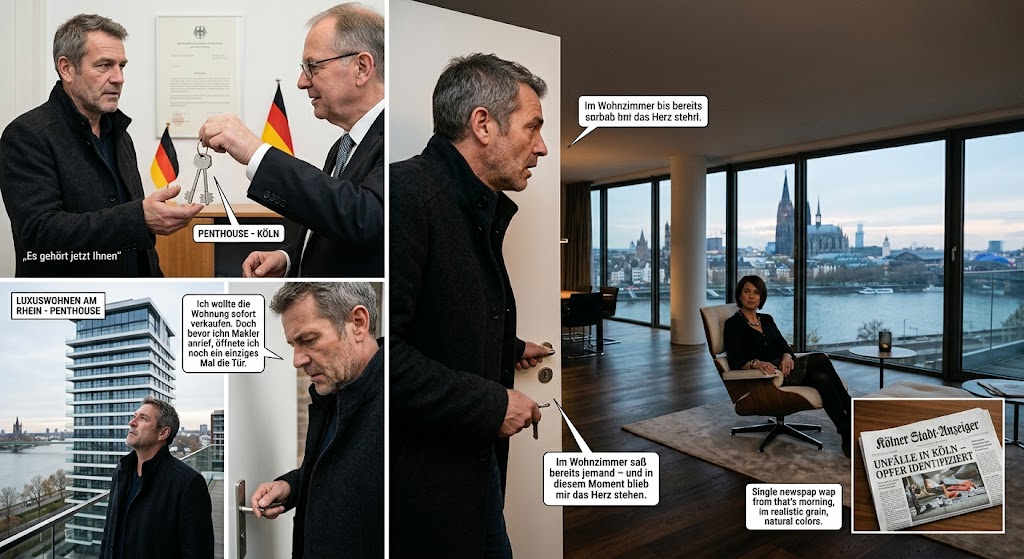
Am 23. September, neun Tage nach der Beerdigung, klingelte es morgens. Ein Notar stand vor der Tür. Victor Pollmann übergab mir einen Umschlag mit einem Schlüssel und einer Urkunde.
„Ihre Frau hat vor 14 Monaten verfügt, dass Ihnen dies innerhalb von zehn Tagen nach ihrem Tod persönlich übergeben wird. Es ist ein Penthouse im Spire Tower am Rhein, Köln. Vollständig auf Sie übertragen.“
Ich starrte auf den schwarzen Keycard mit der Aufschrift PH2. Ein Penthouse. Ich hatte nie davon gewusst.
Am nächsten Tag fuhr ich hin. Der Portier kannte Sandra als regelmäßige Bewohnerin. Im 42. Stock öffnete ich die Tür.
Das Penthouse war atemberaubend – zwei Etagen, riesige Fenster mit Rheinblick, elegante Einrichtung. Und auf dem Sofa saß eine Frau um die 60, mit silbernem Kurzhaarschnitt.
„Herr Berger? Ich bin Carla Brine. Ich war Sandras Geschäftspartnerin.“
In den folgenden Stunden erfuhr ich die Wahrheit: Sandra hatte 11 Jahre lang als hochbezahlte Unternehmensberaterin für Konzerne gearbeitet – diskrete Strategieberatung bei Krisen, Fusionen und Machtkämpfen. Sie war brillant darin. Das Penthouse war ihr neutraler, kontrollierter Arbeits- und Rückzugsort gewesen.
Sie hatte Millionen verdient. Alles legal, alles für uns. In einem Brief, den sie 14 Monate zuvor geschrieben hatte, stand:
„Ich habe das für uns aufgebaut, Kevin. Du warst immer mein Anker. Du bist der ehrlichste Mensch, den ich kenne. Das Penthouse gehört dir. Tu damit, was sich für dich richtig anfühlt.“
Es gab auch einen stillen Teilhaber, Gordon Hail, der später versuchte, Ansprüche geltend zu machen. Aber Sandra hatte alles wasserdicht dokumentiert. Ihr Anwalt erledigte es.
Heute lebe ich weiterhin in unserem Haus in Köln und unterrichte Geschichte. Das Penthouse habe ich behalten. Manchmal fahre ich hoch, setze mich ans Fenster und schaue auf den Rhein.
„Gut gemacht, Sandra“, sage ich dann leise. „Du hast immer mehr aus dem Leben geholt als ich dachte. Und du hast mich trotzdem jeden Tag gewählt.“
29 Jahre. Die interessanteste Frau, die ich kannte. Und selbst im Tod hat sie mich noch überrascht – mit Liebe, die größer war, als ich je geahnt hatte.


