Buddy Hackett, born Leonard Hacker in Brooklyn in 1924, was the kind of performer whose crooked smile and quick wit could make millions of people laugh, yet behind that humor was a man whose life had been shaped by hardship, perseverance, and unwavering loyalty to the one person who mattered most: his wife, Sherry. Growing up in a financially struggling family, Buddy faced adversity early on. As a child, he developed Bell’s palsy, which left one side of his face partially paralyzed, and he endured relentless teasing from his peers. But rather than allowing those challenges to define him, he discovered comedy—a refuge, a weapon, and ultimately the foundation of a career that would span decades. His voice, expressions, and unique timing turned perceived flaws into a trademark that Hollywood could not ignore.
After serving in World War II, Buddy honed his craft in small Catskills clubs, performing long nights for minimal pay, developing resilience that would later inform his stage persona. Gradually, his talent brought him to Broadway and then to Hollywood, with appearances in The Music Man and It’s a Mad, Mad, Mad, Mad World, securing his place as one of the most recognizable comedic actors of his generation. In addition to live-action roles, he became beloved as the voice of Scuttle in Disney’s The Little Mermaid, proving his versatility and cementing a legacy of entertainment that touched multiple generations.
Yet as his public success soared, it was his private life that would define him. Buddy met Sherry Cohen while performing in the Catskills. Unlike many drawn to Hollywood glamour, Sherry was grounded, hardworking, and pragmatic, working long hours while teaching dance in the evenings. Their courtship was not immediate, but Buddy’s persistence paid off, and they married in 1955. Their marriage would last nearly 48 years, a rare testament to commitment in an industry known for fleeting relationships. Friends consistently described their bond as private, deeply loyal, and marked by mutual respect, the kind of partnership where the world’s spotlight mattered little compared to personal devotion.
The couple’s later years were marked by escalating health struggles. Doctors diagnosed Buddy with severe coronary artery disease, and specialists advised bypass surgery. Ever the independent and stubborn man, Buddy initially declined major surgery, relying instead on medications and determination to continue performing. For a while, he managed to maintain appearances, appearing on television and in occasional stand-up performances. However, his health steadily deteriorated. Buddy also faced complications from diabetes, which gradually limited his mobility and stamina. By the mid-1990s, the energetic performer who had once owned every stage he stepped on found even simple tasks exhausting.
Despite the decline, Buddy and Sherry focused on meaningful pursuits together. They retreated to their Malibu home and poured themselves into rescuing abandoned animals, creating a sanctuary for dogs and cats. This project became their shared purpose and a way to channel energy into something positive amid declining health. Friends reported that Buddy took immense joy in this work, and Sherry remained his constant support, embodying a quiet, enduring love that became a defining feature of his later life.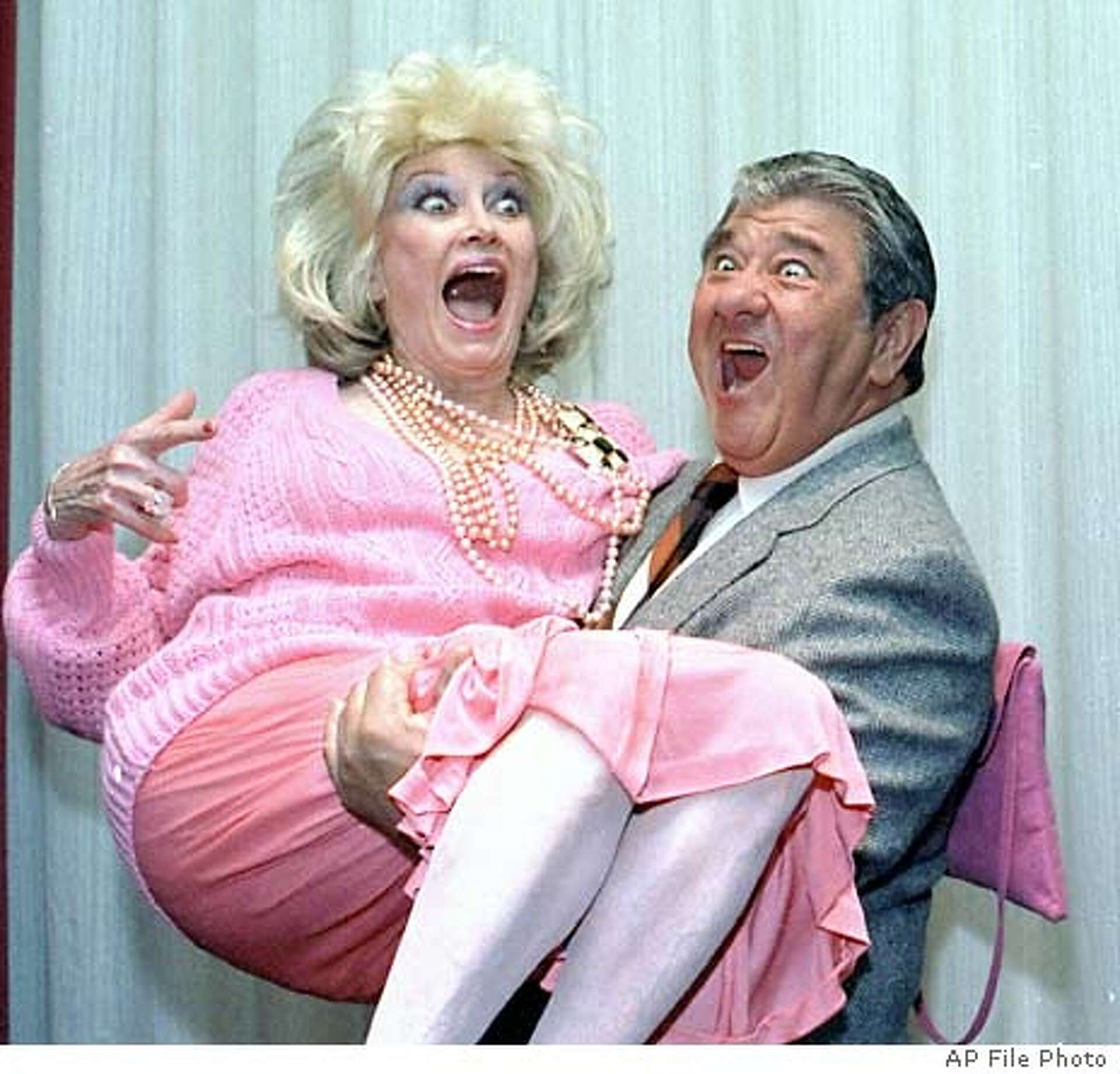
Tragically, in June 2003, Buddy Hackett suffered a stroke that ended his life at the age of 78. He passed away quietly at home, surrounded by the woman who had shared nearly half a century of his life. There were no cameras, no public farewells, only the silence of a home filled with the love of a devoted partnership. Sherry later spoke about the profound emptiness his death left, describing it as losing a part of herself. In the years that followed, she continued their work with rescued animals while fiercely protecting Buddy’s legacy from rumors and exaggerations that had circulated about his final years.
Buddy Hackett’s story is a reminder that behind the laughter and the fame lies a human life shaped by struggles, decisions, and relationships. His end was not the sensationalized finale of Hollywood gossip but a poignant testament to loyalty, love, and enduring partnership. He and Sherry remained a unit until the very end, illustrating that true devotion often exists quietly, away from the stage, screens, and flashing cameras. Their legacy is not merely the comedy that entertained millions but the profound example of a life lived with resilience, love, and dignity.