When Billy Bob Thornton married Angelina Jolie in May 2000, the world couldn’t look away.
The ceremony itself reflected their unconventional personalities. Married in a simple Las Vegas wedding while wearing jeans, the couple immediately became one of Hollywood’s most talked-about romances. Thornton was 44 years old, Jolie was 24, and together they challenged nearly every expectation of what a celebrity marriage should look like.
The media quickly embraced the image of a gothic fairy tale.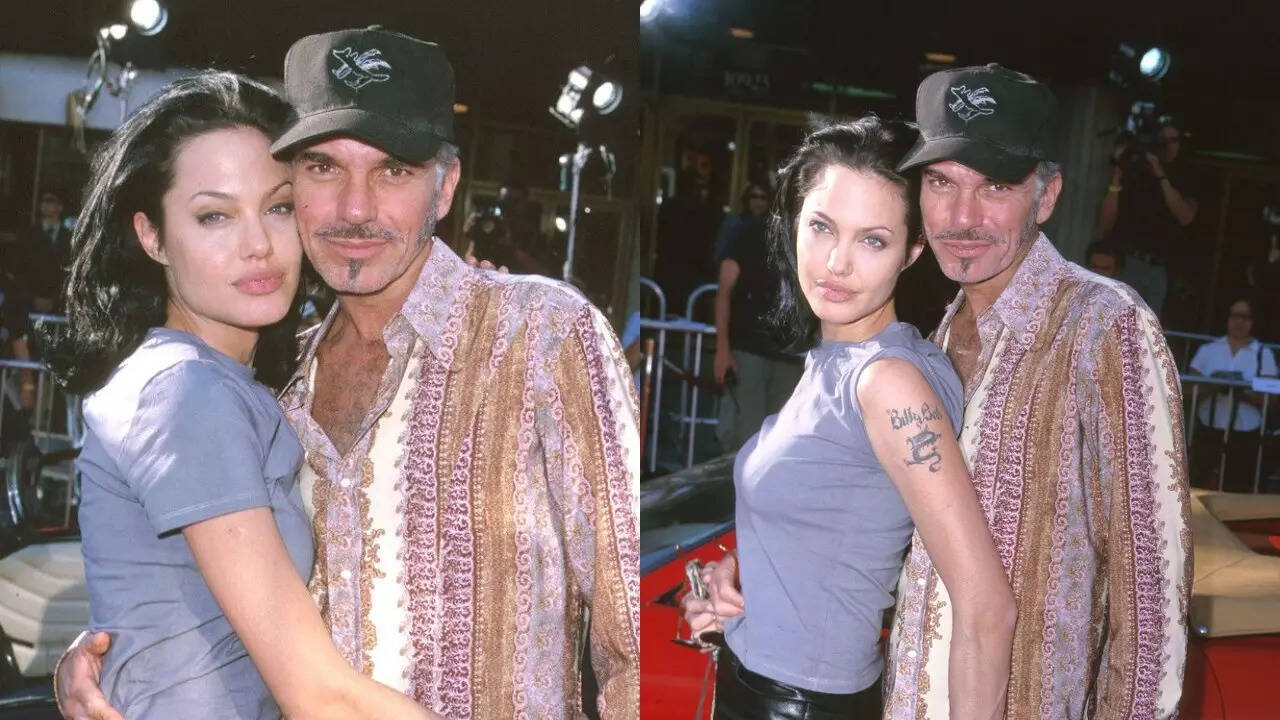
Photographs of passionate kisses, matching tattoos, and the small lockets reportedly containing a drop of each other’s blood dominated magazine covers around the world. Those headlines helped create one of the most memorable celebrity relationships of the early 2000s, but they also overshadowed the quieter realities both stars were experiencing away from the cameras.
To understand Thornton’s perspective, it helps to look at the life he lived before Hollywood success.
Born on August 4, 1955, in Hot Springs, Arkansas, Thornton grew up in difficult financial circumstances. He has spoken openly about a childhood marked by poverty, explaining that his family often lived without many basic comforts. Those early experiences shaped the way he viewed himself long before fame entered the picture.
Thornton has also discussed living with dyslexia, anxiety, obsessive tendencies, and persistent self-doubt. Rather than disappearing as his career flourished, those insecurities often remained with him, influencing the way he approached both his work and his personal relationships.
One of the most painful moments of his life came in 1988 when his younger brother, Jimmy Don, died unexpectedly at just 30 years old.
Thornton has described that loss as something he never fully recovered from. In later interviews, he reflected that part of him has always carried both happiness and sadness at the same time, suggesting that grief became a permanent companion rather than something that eventually faded away.
His path to Hollywood success was anything but easy.
After moving to Los Angeles with little money and enormous determination, Thornton endured years of financial hardship while pursuing acting and writing. He has recalled surviving on almost nothing during parts of the 1980s and even being hospitalized after a period of severe malnutrition while trying to establish his career.
Everything changed with Sling Blade.
Written by Thornton and starring him in the lead role, the modestly budgeted film became both a critical and commercial success. In 1997, he won the Academy Award for Best Adapted Screenplay, transforming overnight from a struggling actor into one of Hollywood’s most respected creative talents.
Just a few years later, he met Angelina Jolie while filming Pushing Tin.
Their connection was immediate.
Jolie herself was rapidly becoming one of the industry’s brightest stars, and in 2000 she won the Academy Award for Girl, Interrupted. Together, the couple projected an image of fearless individuality that fascinated both fans and the entertainment press.
Yet beneath the headlines, their priorities gradually began to diverge.
Around the time they were married, Jolie’s interests increasingly expanded beyond filmmaking. After being appointed a United Nations Goodwill Ambassador, she devoted significant time to humanitarian work, traveling extensively to refugee camps and regions affected by conflict.
Thornton, by contrast, has openly acknowledged that he is naturally more private and home-oriented.
He has spoken candidly about struggling with anxiety and feeling uncomfortable in situations that required constant travel or intense public attention. While Jolie embraced a rapidly expanding global role, Thornton preferred a quieter, more familiar environment.
Looking back years later, Thornton suggested that these differences created emotional distance between them.
In interviews, he explained that he sometimes felt he wasn’t “good enough” to stand beside Jolie as her international profile continued to grow. Rather than blaming her, he reflected on his own feelings of inadequacy, describing an internal struggle that became increasingly difficult to ignore.
Those comments surprised many fans.
Instead of pointing to dramatic arguments or betrayal, Thornton described a far more personal conflict—one rooted in self-perception. He suggested that loving someone deeply can become complicated when you begin believing they belong in a world from which you feel increasingly disconnected.
Another important turning point came in 2002.
While visiting Cambodia, Jolie met the child who would later become her adopted son, Maddox. She ultimately completed the adoption as a single parent, reflecting the reality that the couple’s relationship had already begun moving toward its conclusion.
By 2003, the marriage had ended.
Contrary to years of tabloid speculation, neither Thornton nor Jolie has publicly described the divorce as the result of explosive scandal or dramatic confrontation. Instead, both have generally spoken about the relationship with respect, acknowledging that they had simply reached different places in their lives.
Thornton, in particular, has repeatedly looked back on the marriage without bitterness.
He has described that chapter as one of the happiest periods of his life while also admitting that he believes his own insecurities played a significant role in its ending. Rather than criticizing Jolie, he has often accepted responsibility for the emotional distance he felt growing within himself.
His reflections offer a very different perspective from the sensational headlines that once dominated celebrity magazines.
The story isn’t primarily about tattoos, blood lockets, or shocking publicity stunts. Those moments may have captured public attention, but they reveal little about the challenges that actually shape a long-term relationship.
Instead, Thornton’s comments point toward something many people can recognize: the quiet fear of not measuring up, of feeling left behind, or of believing that the person you love deserves someone better than you.
Whether or not that perception reflects reality, it can profoundly influence the choices people make.
Today, both Thornton and Jolie have continued building successful careers while speaking respectfully about the years they shared together. Their marriage remains one of Hollywood’s most memorable relationships—not because it ended in scandal, but because its conclusion reminds us that even extraordinary love cannot always overcome deeply rooted self-doubt and different visions for the future.