For decades, Diane Lane has portrayed women caught between desire, responsibility, and the consequences of choices they never expected to make. Her performances have often felt so emotionally authentic that audiences began confusing the characters she played with the woman she was away from the cameras.
That confusion reached its peak with Unfaithful.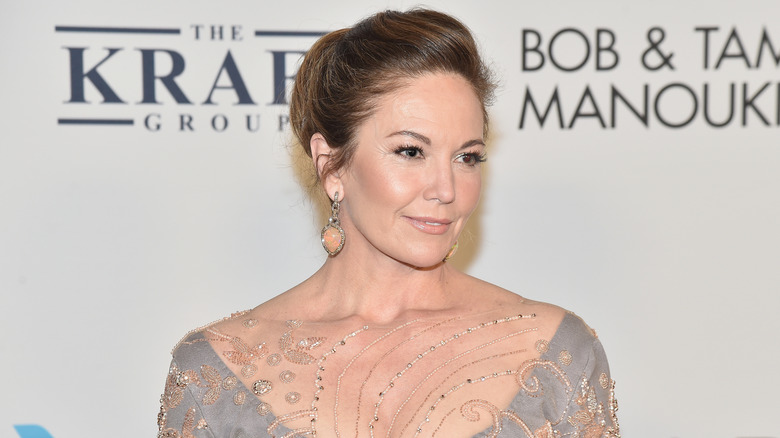
In the 2002 drama, Lane portrayed Connie Sumner, a married woman whose impulsive affair slowly destroys the life she thought was secure. Lane did not play the character as cruel or calculating. Instead, she revealed Connie’s fear, temptation, guilt, and emotional contradiction with such honesty that viewers were left deeply unsettled.
The performance earned Lane an Academy Award nomination.
It also created a public image that followed her for years.
Because she portrayed infidelity so convincingly, some people began assuming that her personal life must have been equally scandalous. Yet Lane’s real relationships tell a very different story—one shaped less by secret affairs than by emotional distance, difficult timing, and marriages that slowly became impossible to sustain.
Lane had already spent most of her life in front of audiences by the time Unfaithful transformed how the public saw her.
She began acting professionally as a child and received international attention at only 13 through A Little Romance. Roles in The Outsiders, Rumble Fish, and The Cotton Club later established her as one of the most recognizable actresses of her generation.
Her early fame came with enormous pressure.
She was praised as a future Hollywood legend before she had even reached adulthood, yet a series of disappointing films soon led the same industry to question whether her career was already over.
That pattern—admiration followed by judgment—would continue throughout her life.
Even the making of Unfaithful demanded more from her than audiences realized. During one physically demanding scene with Olivier Martinez, repeated takes reportedly left Lane with a serious neck injury. She later required medical attention and had to continue filming while managing the physical consequences.
The public remembered the sensuality of the performance.
Few remembered the pain required to create it.
The same tendency shaped how people interpreted her private relationships.
Lane’s first marriage was to French actor Christopher Lambert, best known for Highlander. The two originally met during the 1980s and later reconnected while working together. They married in 1988 and welcomed their daughter, Eleanor, several years later.
From the outside, they appeared to be an ideal international Hollywood couple.
Behind the image, the marriage was marked by long separations.
Both actors had demanding careers that required extensive travel, and Lane later described periods of profound loneliness while attempting to raise their daughter and maintain her own professional identity.
Years afterward, she reflected on the relationship with unusual honesty. She suggested that she had not chosen Lambert because the marriage offered everything she needed, but partly because the relationship allowed her to escape other fears and uncertainties in her life.
It was not a confession of betrayal.
It was an admission that people sometimes enter relationships for reasons they do not fully understand until much later.
The marriage ended in divorce in 1994.
There was no dramatic public scandal, no confirmed affair, and no single explosive event that explained the separation. Instead, the relationship appeared to dissolve under the strain of distance and emotional disconnection.
Nearly a decade later, Lane began a relationship with actor Josh Brolin.
They had met years earlier but reconnected after both had experienced previous marriages and were raising children. Their shared history seemed to create a sense of stability, and they married in 2004.
At first, the relationship appeared grounded and private.
Only months into the marriage, however, an argument at their home resulted in police being called and Brolin being arrested on a domestic battery allegation. Lane did not pursue charges, and representatives later characterized the incident as a misunderstanding.
The case was dropped.
Still, once the incident became public, it permanently changed how many people viewed the marriage.
Lane never offered a detailed public explanation of what happened that evening. She neither publicly accused Brolin nor attempted to transform the incident into a media campaign.
Her silence left space for speculation.
Over time, Brolin himself acknowledged that he had once been far more volatile and reactive than he later became, though he did not publicly provide a complete account of that particular event.
Despite the troubled beginning, Lane and Brolin remained married for nearly a decade.
They appeared together publicly, supported each other’s careers, and attempted to maintain a blended family. Yet the relationship ultimately ended in 2013, when Lane filed for divorce.
The separation was largely private.
Once again, the reality proved less sensational than the headlines suggested. There was no public confirmation of a scandalous affair. The marriage simply reached a point where continuing no longer appeared possible.
Several shorter relationships from Lane’s younger years also became exaggerated over time.
One involved musician Jon Bon Jovi. Their relationship was brief, but years later rumors claimed Lane had inspired one of his most famous songs. She denied that interpretation, yet the story continued circulating because it fit the romantic mythology surrounding both stars.
Other actors were linked to Lane simply because they had worked with her.
Hollywood gossip frequently connected her to male co-stars without meaningful evidence, turning ordinary professional relationships into supposed romances. The repetition of those rumors eventually created the illusion of a pattern that did not necessarily exist.
Even a youthful episode involving actor Christopher Atkins became part of the mythology surrounding her. Lane later described the decision to run away with him as reckless and immature rather than evidence of a sweeping secret romance.
These moments were not part of a hidden catalogue of affairs.
They were isolated experiences from a young woman growing up under extraordinary public attention.
The larger misunderstanding came from Lane’s work.
Her most memorable characters often existed in morally complicated worlds. They made impulsive decisions, challenged social expectations, and crossed boundaries that viewers found both unsettling and fascinating.
Because Lane portrayed those women without judgment, audiences sometimes projected their actions onto her.
That says more about the power of her acting than it does about her personal choices.
Lane has spent much of her career resisting simple definitions.
She was introduced as a child prodigy, dismissed as a fading young star, rediscovered as a serious dramatic actress, and eventually celebrated as one of the most emotionally intelligent performers of her generation.
Her personal life followed a similarly complicated path.
She experienced love, marriage, motherhood, loneliness, and divorce under the constant scrutiny of people who believed they knew her because they recognized her face.
At 60, Lane appears far less interested in correcting every rumor than in protecting the private life she has carefully rebuilt.
She has not delivered a dramatic confession about scandalous affairs because there may be no such confession to make.
What exists instead is a quieter and more human story.
Her marriages did not collapse because she lived like the women she portrayed on screen. They ended because relationships can fail through distance, incompatibility, emotional instability, and needs that remain unspoken for too long.
That reality may be less sensational than the mythology.
But it is far more honest.
Diane Lane’s story ultimately reveals how easily audiences confuse performance with identity. The better she became at portraying conflicted women, the more the public assumed she shared their secrets.
Yet her real life suggests something very different.
She was not the scandalous woman Hollywood imagined.
She was an actress trying to understand love while the world repeatedly mistook her greatest performances for personal confessions.