For more than fifty years, MASH* has remained one of the most beloved dramas in television history—not because it glorified war, but because it revealed the humanity hidden within it. At the center of that remarkable achievement stood Alan Alda, whose portrayal of Captain Benjamin Franklin “Hawkeye” Pierce transformed him into one of television’s most respected actors and storytellers.
Looking back on the series, Alda has often reflected not on awards or ratings, but on the creative choices that made MASH* feel painfully real.
Some of those decisions left audiences heartbroken.
Others left the cast just as shocked.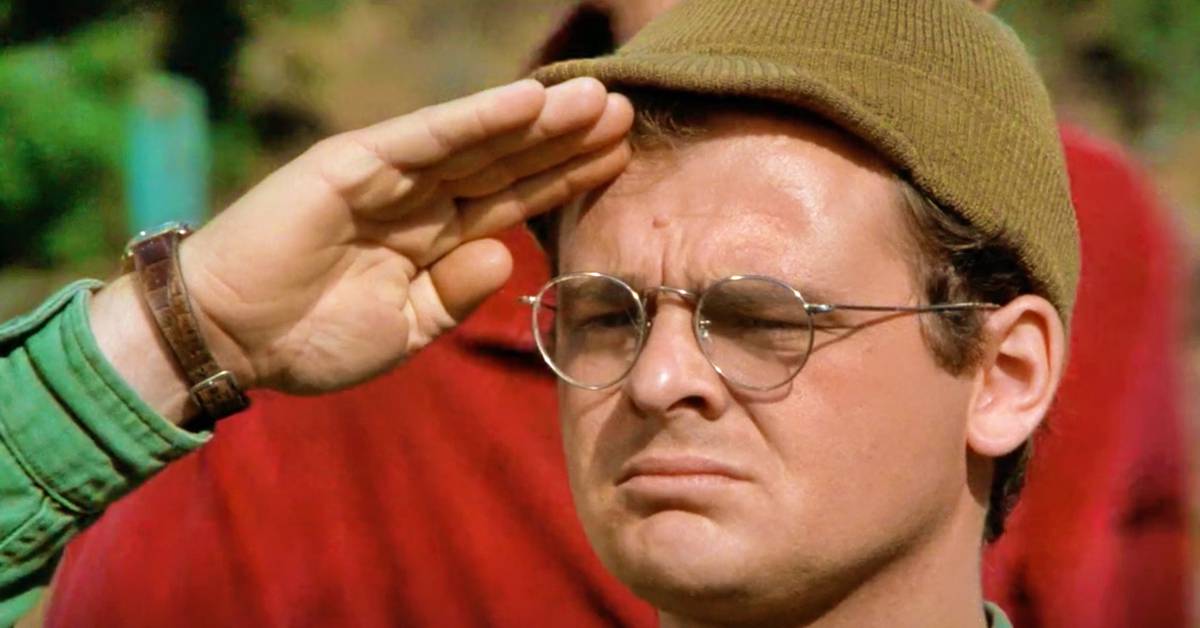
When MASH* premiered in 1972, it immediately distinguished itself from traditional sitcoms. Although filled with sharp humor and unforgettable characters, the series never allowed viewers to forget that its story unfolded during the Korean War.
Comedy and tragedy existed side by side.
That balance became the show’s greatest strength.
Alan Alda was more than its leading actor.
As the series evolved, he became one of its most influential creative voices, writing and directing many episodes while helping shape the emotional direction that eventually defined the program.
Rather than relying on predictable television formulas, Alda believed the series should reflect the uncertainty of real life.
One of the clearest examples came during the departure of Colonel Henry Blake.
McLean Stevenson, who portrayed the kind-hearted commanding officer, had decided to leave the series after its third season. Most television comedies of the era would have allowed the character a cheerful farewell, giving viewers closure before moving on.
MASH* chose a very different path.
In the episode’s closing moments, Radar O’Reilly enters the operating room with devastating news.
Henry Blake’s plane had been shot down.
“There were no survivors.”
The announcement lasts only seconds.
Its emotional impact has lasted for generations.
To preserve complete authenticity, only a handful of people involved in production knew exactly how the episode would end. Most of the cast learned of Blake’s fate only as Gary Burghoff, playing Radar, delivered the news during filming.
The stunned silence that followed was not carefully rehearsed.
It was genuine.
Alan Alda later explained that the producers wanted the actors to experience the same emotional shock their characters would have felt. War offers no opportunity to prepare for devastating news, and the series refused to soften that reality simply because audiences expected television to provide comfort.
The result became one of the most memorable scenes in television history.
Rather than manipulating viewers through dramatic music or lengthy speeches, the episode trusted quiet disbelief.
That honesty changed expectations for what a television comedy could accomplish.
The death of Henry Blake also established an important principle that guided MASH* for the remainder of its run.
No character was guaranteed safety simply because viewers loved them.
Life in wartime could change without warning.
The series wanted audiences to feel that uncertainty every week.
As Alda later reflected, the emotional power came not from surprising people for its own sake, but from portraying war with an honesty that respected those who had actually lived through it.
Throughout eleven seasons, MASH* continually balanced laughter with heartbreak.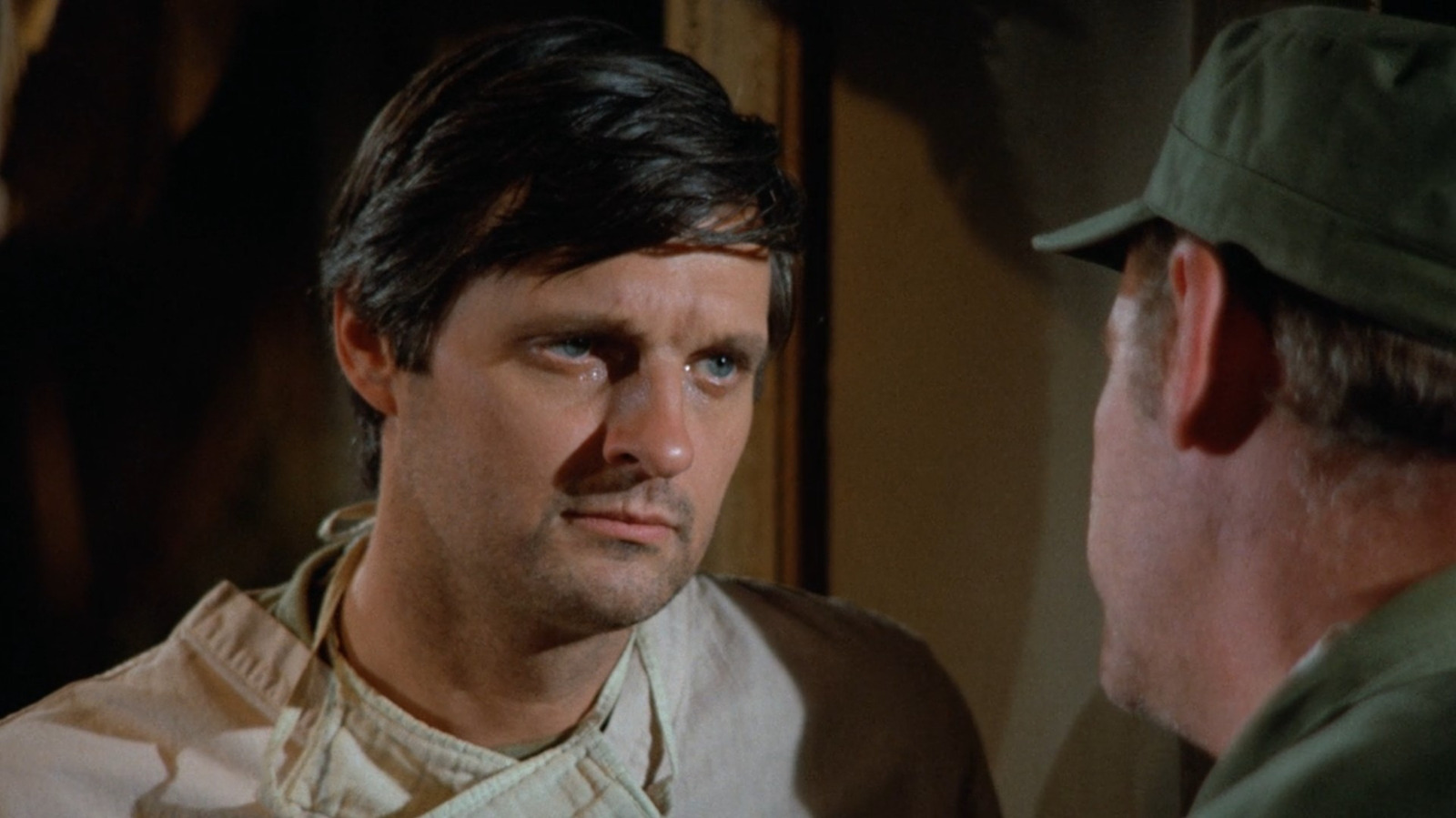
Its doctors joked to survive unbearable circumstances.
Its nurses found friendship amid constant tragedy.
Its characters celebrated small victories because tomorrow was never guaranteed.
That emotional realism helped transform the series from a successful comedy into a cultural landmark.
When the time finally came to conclude the show in 1983, Alan Alda again chose honesty over sentimentality.
Serving as writer and director of the series finale, he rejected the idea of giving every character a perfectly happy ending. Instead, he focused on something many veterans had described for years—the psychological burden that remains long after the fighting ends.
The two-and-a-half-hour finale, “Goodbye, Farewell and Amen,” became the most-watched television broadcast in American history at the time.
Rather than presenting war as something characters simply left behind, the episode acknowledged that its emotional scars often lasted a lifetime.
Even the production itself faced unexpected challenges.
During filming, a wildfire destroyed much of the outdoor set used throughout the series. Instead of viewing the disaster purely as a setback, the creative team adapted, incorporating the changing landscape into the production and continuing to complete the finale despite the disruption.
It reflected the same resilience that had defined the characters themselves.
Long after MASH* ended, Alda continued building a distinguished career in film, television, theater, and science communication. Yet he has frequently returned to the lessons the series taught him about empathy, resilience, and the importance of listening to other people’s experiences.
In recent years, Alda has also spoken candidly about his own health.
In 2018, he publicly revealed that he had been living with Parkinson’s disease for several years. Rather than allowing the diagnosis to define him, he explained that he preferred to focus on adapting to each new challenge one day at a time.
He has also discussed living with prosopagnosia, often called face blindness, a condition that can make recognizing people difficult.
True to the outlook that shaped MASH*, Alda approaches these realities with curiosity, humor, and determination rather than despair.
He has often encouraged others facing illness to concentrate not on everything they have lost, but on what they are still able to do.
That perspective echoes the philosophy Hawkeye Pierce carried through countless episodes.
The world cannot always be controlled.
Our response to it can.
Looking back today, Alan Alda’s greatest contribution may not simply be creating one of television’s most beloved characters.
It may be demonstrating that stories become unforgettable when they refuse to hide from uncomfortable truths.
MASH* made audiences laugh.
It made them grieve.
Most importantly, it reminded them that compassion often matters most when life becomes unpredictable.
That message remains just as powerful today as it was more than fifty years ago.