I Never Got Married Because I Spent My Life Raising My Brother’s Twin Sons
I never got married because I spent my life raising my brother’s twin sons.
When I was 26, my brother Daniel and his wife Elena died in a car accident on a rainy Tuesday night. They left behind two frightened five-year-old boys — Mason and Noah — identical twins with the same dark eyes as their father and the same stubborn chin as their mother.
Everyone promised to help. Aunts, uncles, grandparents, cousins — they all stood in the funeral home with wet eyes and firm handshakes and said the same words: “We’re here for you. Whatever you need.”
One by one, they disappeared.
Some moved away. Some got “busy.” Some decided that two little boys were more than they could handle. Within six months, the only person left was me.
So I became their guardian.
What was supposed to be temporary turned into thirteen years.
I worked double shifts at the hospital. I paid the mortgage on my brother’s small house so the boys wouldn’t have to leave their bedrooms. I attended every parent-teacher conference, every soccer game, every science fair, every late-night fever. I learned how to braid hair for school plays. I learned how to fix a broken bicycle chain at 11 p.m. I learned how to answer the question “Why did Mom and Dad leave?” without falling apart in front of them.
Dating stopped. My social life vanished. Friends stopped inviting me because I always said no. The boys always came first.
I never regretted it. Not once.
Then their 18th birthday arrived.
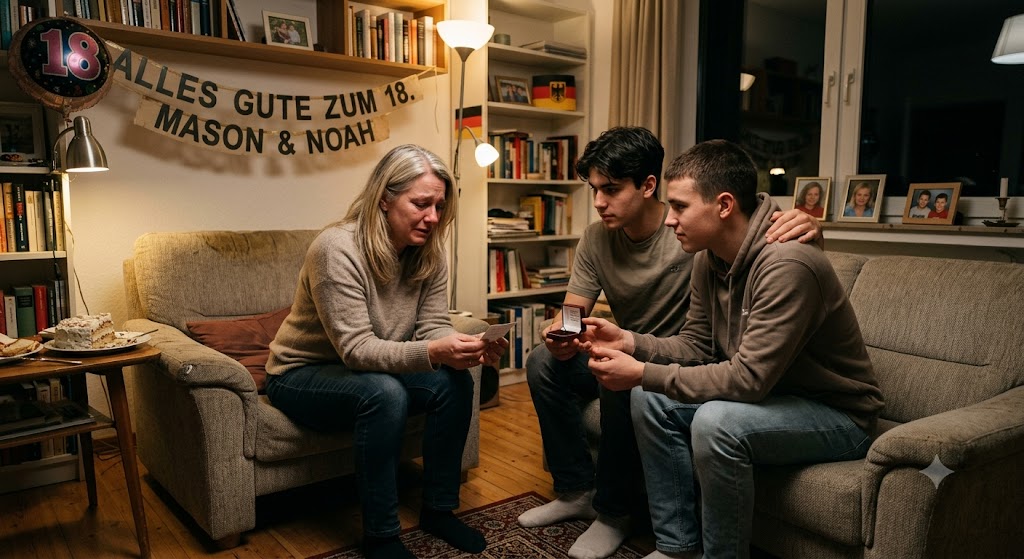
The party was loud and happy. Balloons, a sheet cake with both their names, a few remaining relatives who suddenly remembered they had nephews. Mason and Noah laughed, opened gifts, took photos. When the last guest left and the house grew quiet, they asked me to sit down at the kitchen table.
I thought they wanted to thank me.
Mason spoke first. His voice was careful, almost rehearsed.
“Aunt Claire… we need to talk about the house.”
Noah nodded. “And the money.”
I felt something cold settle in my chest.
They told me, gently at first, that they had decided to sell the house. The house I had kept afloat for thirteen years with overtime and skipped vacations. The house where I had painted their rooms, fixed the leaky roof, and sat through every nightmare.
They said they needed the money for college. For “their future.” They said I could stay for a few months while I “figured things out.”
Then Mason said the words that still sit in my throat like broken glass:
“You’ve done a lot for us. But we’re adults now. We don’t need a babysitter anymore.”
Noah looked at the floor. “You never got married or had your own kids. Maybe it’s time you… lived your own life.”
I sat there in the same kitchen where I had packed their lunches for over a decade and realized something I had never allowed myself to think:
They saw me as temporary.
Just like everyone else had.
I didn’t cry. I didn’t argue. I simply stood up, walked to the hallway closet, and took out the box I had kept sealed for thirteen years. Inside were every receipt, every bank statement, every overtime slip, every legal document that proved I had spent nearly $300,000 of my own money keeping them fed, housed, clothed, and safe.
I placed the box on the table between them.
“You can sell the house,” I said quietly. “But the equity that belongs to me will be calculated first. Every dollar I put in. Every year I gave up. Documented. Signed. Legal.”
Mason’s face changed. Noah’s mouth opened, then closed.
I continued, voice steady:
“I never asked for thanks. I never asked for repayment. But I will not be erased. Not after thirteen years of putting you first while everyone else walked away.”
I left the kitchen, went upstairs, and packed a single suitcase. The next morning I moved into a small apartment near the hospital. I took the night shifts again — not because I had to, but because the quiet felt honest.
Three months later the house sold. My share of the equity arrived in a certified check. I deposited it without opening the accompanying letter from the boys.
Six months after that, Mason showed up at my door. He looked thinner. Older. He held a folded piece of paper.
“We found Dad’s will,” he said. “The real one. The one the family never showed us.”
Daniel had left everything to me — the house, the savings, the life insurance — with one condition: that I raise the boys until they turned eighteen. The relatives had quietly ignored it. The boys had never known.
Mason’s voice broke. “We thought you were just… staying. We didn’t know you gave up everything legally too.”
I looked at the young man who had once been a terrified five-year-old clinging to my hand at a graveside.
“I never needed the will,” I said. “I only needed you two to be okay.”
He cried then. So did Noah when he arrived later that night. They apologized — not with the polished words of the birthday conversation, but with the messy, real kind that comes when the truth finally lands.
I didn’t move back in with them. I didn’t need to. The years of sacrifice had already shaped all three of us.
I still work the night shifts sometimes. I still keep the receipts. But now, when the boys call, it isn’t to ask for money or permission. It’s to ask if I’m free for dinner.
And sometimes, late at night, I look at the quiet apartment that is finally only mine and feel something I hadn’t allowed myself in thirteen years:
Peace.
Not the peace of having been thanked. The peace of knowing I did the right thing — and that, in the end, the right thing was enough.