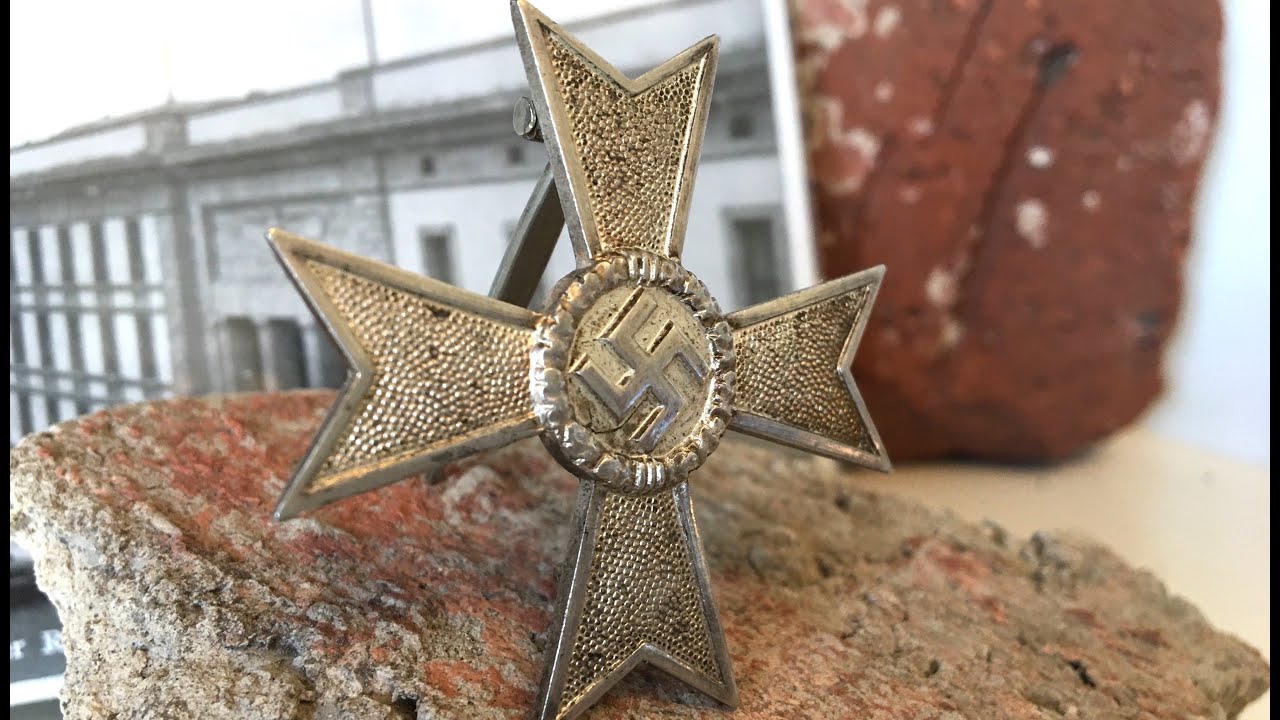
In a stunning revelation, Allied troops seized vast troves of Nazi relics from the ruined Reich Chancellery in Berlin in 1945, uncovering an astonishing cache of medals, decorations, and artifacts amidst the rubble. These spoils, once symbols of the crumbling Third Reich, now serve as silent witnesses to history’s darkest hours.
As Soviet forces marched into Berlin in early May 1945, they encountered the shattered remains of the Reich Chancellery, Hitler’s nerve center. Within its ruins lay mountains of documents, furniture, statues, and countless unissued Nazi medals scattered across floors and stairwells, a haunting testament to the regime’s collapse.
While Soviet soldiers focused primarily on tangible valuables like gold, silver, and jewelry, they largely disregarded Nazi memorabilia. This neglect left enormous caches of medals, badges, and other martial paraphernalia to be discovered by Western Allied troops who arrived months later, eager for mementos from the fallen enemy.
Among the most prized finds were decorations stored painstakingly in the Chancellery’s vaults: Iron Crosses, War Merit Crosses, wound badges, and rare awards reserved for Nazi heroes. These items represented the entire spectrum of Nazi military and civil honors, preserved in varying states of decay amid the rubble.
One remarkable item recently surfaced—a War Merit Cross First Class without swords, retrieved by Corporal Ernest Pickup of the British Army. His personal account reveals how he and a comrade clandestinely entered the Soviet-occupied zone and scrambled through the wreckage, pockets overflowing with Nazi relics, including this prestigious medal.
Pickup recounted the devastation of Berlin in vivid detail, describing streets blocked by rubble and bodies, the overwhelming destruction impossible to grasp without witnessing firsthand. The soldiers’ lootings extended into the Reich Chancellery’s underground vaults, once shelters for Hitler’s staff, where signs of recent habitation merged with piles of war trophies.
In these shadowy corridors, Pickup discovered not only medals but poignant personal artifacts such as diaries bearing infamous Nazi names. Such finds offer rare glimpses into the personnel interwoven with Hitler’s inner circle, highlighting the tangled web of relationships that sustained the Third Reich to its bitter end.
Meanwhile, American soldiers also engaged in trophy hunting; notably, Larry Hersbach found an ultra-rare 20th of July wound badge awarded to officers injured during the failed assassination attempt on Hitler. Only 24 such badges were ever bestowed, making this discovery one of the most coveted Nazi relics uncovered from the Chancellery’s depths.
These once-secret decorations, now displayed in museums from London to New Orleans, serve as tangible links to the cataclysmic events enveloping Europe in the war’s final chapter. Their presence in Allied hands underscores both the scale of Nazi defeat and the enduring quest to understand history through material culture.
The Allied plundering of the Reich Chancellery was more than mere souvenir hunting. It was a profound reclaiming of symbols that embodied a fallen despotic regime, stripped from the hands of its creators and dispersed as solemn trophies, silently enshrined as relics of a vanished era.
This mass retrieval of Nazi medals reveals not only the spoils of victory but also the emotional and psychological resonance these artifacts held for soldiers confronting the aftermath of the Third Reich’s ruin. Each medal represented a story of conflict, duty, and the tragic legacy of war.
Among these relics, the War Merit Crosses stand out for their rarity and connection to Nazi propaganda and military hierarchy. Instituted at Hitler’s behest, the awards recognized both frontline courage and civilian contributions, blurring the lines between military valor and ideological commitment.
The discovery and preservation of these medals offer scholars and the public an unvarnished window into the Nazi state’s inner workings and its final desperate defense. They embody the twisted valor championed by the regime, now scattered and retrieved as tokens of a past that must never be forgotten.
Collectively, these artifacts offer invaluable insight into the collapse of Hitler’s regime, shedding light on the intricate systems of reward and recognition that underpinned Nazi Germany. Their journey from symbol of oppression to museum piece charts a critical narrative of remembrance and reckoning.
The story of Corporal Pickup’s find, coupled with other documented recoveries, highlights an often overlooked chapter of the post-war occupation period. Allied soldiers traversed dangerous zones, risking much to claim concrete proof of victory in the form of war trophies that carry profound historical weight.
The retrieval of these relics was facilitated by the fluid occupation zones around Berlin in the immediate post-war years, allowing Western troops limited access to Soviet-held territories. This unique situation enabled them to capture items from the “holiest of holies” of Nazi power, preserving them for posterity.
As decades pass, each medal and badge becomes a critical artifact bearing witness to one of history’s darkest epochs. Through careful conservation and display, museums worldwide continue to educate generations about the brutal realities of war and the fragile triumph of peace.
The Reich Chancellery relics, plucked from destruction’s jaws, endure as powerful symbols. They embody both the horrors wrought by fascism and the indomitable resolve of those who defeated it. Their stories compel reflection on the cost of tyranny and the imperative to resist its return.
This extraordinary collection of trophies, unearthed amidst immense devastation, underscores the chaotic, often improvisational nature of victory’s aftermath. In their hands, Allied soldiers transformed the remnants of hate into objects of historical importance, preserving the memory of a world forever altered.
Now exhibited in institutions like the Imperial War Museum and the National World War II Museum, these items function as silent sentinels guarding the truth of conflict. They invite critical engagement with history, reminding us where unchecked power can lead and why vigilance is essential.
The war’s end did not just mark a political shift; it sparked a profound cultural reckoning manifest in the dispersion and remembrance of artifacts once emblematic of ruthless ideology. The Allied reclamation of these relics symbolized the dismantling of Nazi mythos and the triumph of democratic values.
As fresh discoveries continue to emerge from the ruins of Berlin, the importance of preserving this heritage grows ever more urgent. These relics form the raw material of collective memory, demanding both respect for the victims and a sober reckoning with the past.
In sum, the Allied troops’ seizure of Reich Chancellery trophies represents a defining moment in the war’s aftermath—one filled with potent symbolism and historical gravity. These artifacts remain indispensable to our understanding of World War II’s devastating legacy and the enduring human cost of tyranny.


