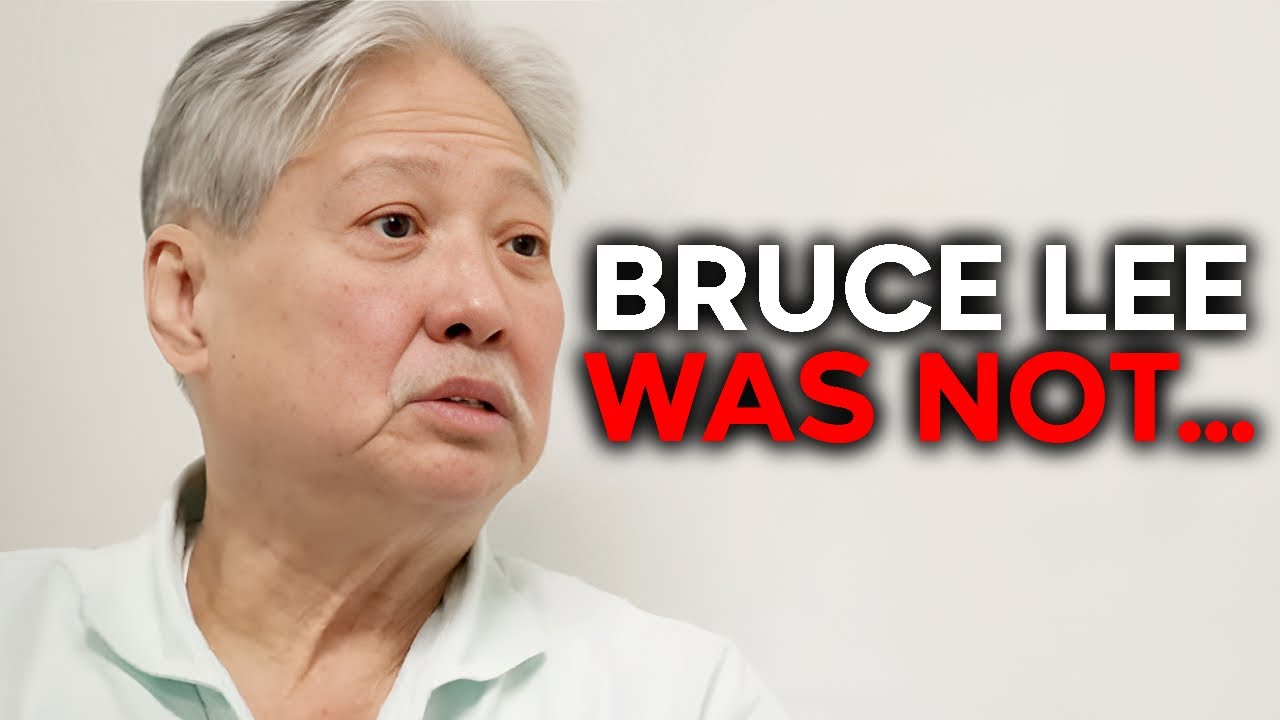
For decades, the martial arts world has waited, listening through whispers and secondhand accounts for a firsthand memory of the man who changed everything. Now, at 72 years old, Sammo Hung has broken his silence on Bruce Lee, delivering an intimate and startling account of their time together. In an exclusive and deeply personal statement, the legendary Hong Kong action star revealed a moment that has defined his understanding of speed, power, and humility: a single, lightning-fast kick from Lee that nearly connected with his own face.
The admission, made public for the first time, sheds new light on the relationship between two titans of martial arts cinema.
 Hung’s revelation came as part of a broader career retrospective, but it was the specific memory of Bruce Lee that electrified fans and historians alike. He recounted a moment on set when he dared to test Lee’s legendary quickness. “When I tried to kick him, I just put halfway,” Hung said, his voice carrying the weight of 50 years.
“He fit in my face and they stopped there.” The story is both a confession of a friendly challenge and a testament to Lee’s almost supernatural reflexes. Hung, himself a master of combat choreography, admitted that the experience left an indelible mark.
The context of this confession is crucial. Hung and Lee first crossed paths in the early 1970s, working together on the set of “Fist of Fury.” Hung was a rising stuntman and fight choreographer, already carving a name for himself in the hyper-competitive Hong Kong film industry.
Lee, by then, was a global phenomenon, redefining what a martial arts star could be. Their professional relationship deepened on the 1973 blockbuster “Enter the Dragon,” where Hung played a sparring partner who is decisively beaten by Lee’s character in the iconic opening fight sequence. For Hung, that role was more than a career highlight; it was a classroom.
Hung described Lee’s professionalism and dedication as transformative. He noted that Lee was not merely a colleague but a hero and a profound source of inspiration. “He was very fast,” Hung said, emphasizing the awe that remained undimmed by time.
The encounter where Hung attempted to deliver a kick but was intercepted mid-motion encapsulates the chasm between elite martial artists and a once-in-a-generation genius. Hung’s honesty about the moment’s humbling nature resonates deeply with those who have trained in the arts.
Born on January 7, 1952, in Hong Kong, Sammo Hung came from a family steeped in cinema. His grandparents were industry veterans, and at age nine, he entered the China Drama Academy, a grueling Peking opera school where he trained alongside future stars like Jackie Chan. His career took off after he appeared as a stuntman in “Enter the Dragon,” and he became a defining force in action cinema, blending martial arts with comedy.
 His physical challenges, including a severe leg injury during adolescence, shaped his resilience and the roles he eventually played. Yet for all his own achievements, Hung never forgot the lesson Bruce Lee taught him.
The anecdote Hung shared is not just a casual memory. It is a window into the fierce competitiveness and mutual respect that existed between Hong Kong’s top action performers. At the time, Hung was already a formidable fighter, yet Lee’s kick stopped mid-air, hanging inches from Hung’s face.
The fight was called off. That single exchange became a touchstone for Hung’s own career philosophy. He realized that speed and precision were not just physical attributes but mental disciplines.
“He was more than a colleague,” Hung said. “He was a hero.”
Bruce Lee’s influence on Hung extended beyond combat. Lee’s philosophy of Jeet Kune Do, which rejected rigid forms in favor of adaptability and directness, resonated with Hung’s own approach to choreography. Hung incorporated efficiency and realism into his fight scenes, a direct lineage from Lee’s groundbreaking work.
The loss of Lee on July 20, 1973, from a cerebral edema, shocked the world. Hung has spoken about his heartbreak, not just for the friend lost but for the future collaborations that were stolen. That void, he says, never fully healed.
 Now, at 72, Hung’s decision to finally speak on the record comes as a gift to a new generation of martial arts enthusiasts. He is one of the last living witnesses to Lee’s prime, a man who shared a screen and a sparring session with the legend. The revelation has already sparked intense discussion online, with fans analyzing every detail of the kick story.
Some have pointed out that Hung’s description of Lee’s foot stopping “in my face” suggests a level of control that borders on the supernatural. It is a moment that confirms the myths.
Hung’s own career has been a testament to perseverance. He endured a leg injury that left him bedridden for two months, gained weight, and was typecast as villains or comedic sidekicks. Yet he reinvented himself as a director, producer, and mentor.
His resurgence in the late 1990s with the TV series “Martial Law” introduced him to Western audiences. Earlier this decade, he returned to directing with “The Bodyguard” and continued acting, proving that his charisma and skill remain undimmed. But through all those highs and lows, Bruce Lee remained a constant reference point.
In sharing this story, Hung is also fulfilling a role as a historian. He is correcting the record, offering a personal perspective that no biography could capture. The exact location of the kick incident is not specified in the transcript, but Hung noted it happened during their early collaboration, likely on the set of “Fist of Fury” or “Enter the Dragon.”
The fact that it took him half a century to speak publicly about it adds gravity to the admission. It suggests a respect for Lee’s privacy and a desire to ensure the memory is preserved accurately.
 Hung’s reflection on Lee’s legacy is not just nostalgic. He actively works to continue the spirit of martial arts that Lee championed. Through his own productions, Hung emphasizes authenticity, discipline, and innovation.
He has trained generations of stunt performers and actors, passing on the lessons he learned from Lee. The urgency of his statement today is partly driven by the desire to set the record straight before time erases these firsthand accounts.
The reaction from the martial arts community has been swift. Fans and historians are calling this the most significant Lee-related testimony in decades. Social media posts quote Hung’s line about Lee’s kick, and many are revisiting the fight scenes involving both men.
The tale has become a symbol of the rawness of that era, when action stars risked real injury to achieve authenticity. Hung’s willingness to admit he was caught off guard only elevates his own reputation for honesty and humility.
Bruce Lee’s daughter, Shannon Lee, who has preserved her father’s legacy through projects like the TV series “Warrior,” has not yet commented on Hung’s revelation. But the resonance is clear: Lee’s influence continues to ripple through the industry. Hung’s testimony adds a human dimension to the icon, showing that even the greatest champions were once just two men in a room, testing each other’s limits.
As the news spreads, the question arises: what else might Sammo Hung reveal? He has promised no further statements at this time, but the door is now open. For fans who have waited decades for a first-person account of Bruce Lee’s raw power, Hung’s words are a treasure.
They remind us that behind every legend is a moment of truth, a kick that almost hit the target, a hand that stopped just short. And that memory, finally broken open, belongs to the world.