For years, Lee Majors and Farrah Fawcett were considered one of Hollywood’s golden couples.
He was television’s rugged action hero from The Six Million Dollar Man.
She became an international sensation through Charlie’s Angels and one of the most recognizable faces of the 1970s.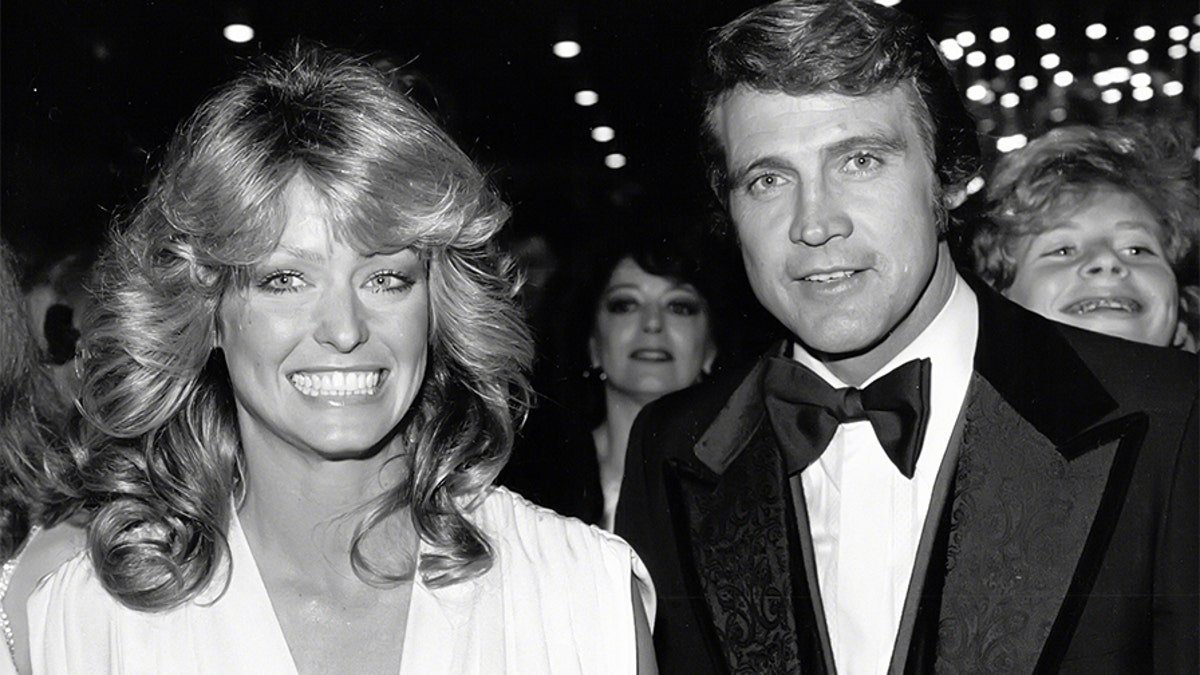
Because of their high-profile marriage and eventual divorce, headlines have often claimed that Lee Majors finally confirmed what everyone suspected about Farrah Fawcett.
The truth is considerably less sensational.
Lee Majors has never publicly revealed a shocking secret about Farrah Fawcett. Instead, in interviews over the years, he has consistently described their marriage as one that gradually unraveled under the extraordinary pressures of fame, demanding careers, and constant public attention—not because of a single dramatic betrayal or hidden scandal.
Lee Majors and Farrah Fawcett married in 1973, just as both careers were beginning to accelerate.
Majors had already become a household name thanks to The Six Million Dollar Man, one of television’s biggest hits of the decade. Fawcett, meanwhile, was still building her career, taking guest roles in television and films while supporting her husband’s increasingly busy schedule.
According to both actors’ later recollections, their early years together were relatively traditional.
Fawcett often prioritized their home life while continuing to pursue acting opportunities, and the couple hoped to balance marriage with careers in the entertainment industry.
Everything changed in 1976.
That year, Fawcett was cast as Jill Munroe in Charlie’s Angels, a series that became an instant cultural phenomenon. At almost the same time, her famous red swimsuit poster sold millions of copies, turning her into one of the biggest celebrities in the world virtually overnight.
With unprecedented fame came enormous demands.
Magazine covers, television appearances, endorsement opportunities, and international attention transformed Fawcett’s daily life. At the same time, Majors continued leading his own successful television series, leaving both actors with demanding schedules that often kept them apart for extended periods.
Years later, Lee Majors reflected on this period with notable honesty.
Rather than blaming a single event or person, he suggested that success itself became the greatest challenge. Both were working constantly, traveling frequently, and living under relentless media scrutiny. The simple routines that sustain many marriages—shared dinners, weekends together, and private family time—became increasingly difficult to maintain.
Majors has repeatedly emphasized that there was no single moment that destroyed the marriage.
Instead, he described a gradual drifting apart as two enormously successful careers moved in different directions.
The intense media attention surrounding their relationship only made matters worse.
Throughout the late 1970s, tabloids speculated constantly about their marriage, often publishing rumors that neither actor publicly endorsed. Like many celebrity couples of the era, they found themselves living under a level of public scrutiny that left little room for privacy.
After several years of separation, the couple officially divorced in 1982.
Despite the end of their marriage, Majors has generally spoken about Fawcett with warmth and respect.
He has acknowledged her extraordinary talent, admired her determination to challenge herself as an actress, and recognized the courage she showed in refusing to be defined solely by her glamorous public image.
Fawcett proved that determination throughout the following decades.
She deliberately sought demanding dramatic roles in productions such as The Burning Bed, Extremities, and Small Sacrifices, earning critical acclaim and multiple award nominations. Those performances demonstrated that she was far more than a television star or pop-culture icon.
Majors, meanwhile, continued building a successful television career with series including The Fall Guy, remaining one of television’s most recognizable leading men.
Perhaps most remarkably, both eventually found a comfortable friendship.
Although they had built separate lives, Majors spoke publicly after Fawcett’s death in 2009, expressing deep sadness and remembering her as a wonderful person who had remained an important part of his life. His comments reflected compassion rather than resentment, suggesting that time had replaced disappointment with appreciation for the years they shared.
Looking back, their story is less about scandal than about the extraordinary pressures that fame can place on even the strongest relationships.
Both entered marriage before either could fully anticipate the level of celebrity they would experience.
Within only a few years, they had become two of the most recognizable faces in America, with careers that demanded nearly constant travel, promotion, and public visibility.
Their experience serves as a reminder that success can create challenges every bit as difficult as failure.
The demands of Hollywood did not erase the affection they once shared, but they made preserving an ordinary marriage increasingly difficult.
Today, Lee Majors’ reflections reveal not hidden secrets, but perspective.
Rather than assigning blame, he has consistently described their relationship with honesty, respect, and gratitude—acknowledging that sometimes two good people can simply grow apart while pursuing extraordinary lives.
That may be the most enduring lesson of one of Hollywood’s most famous love stories.