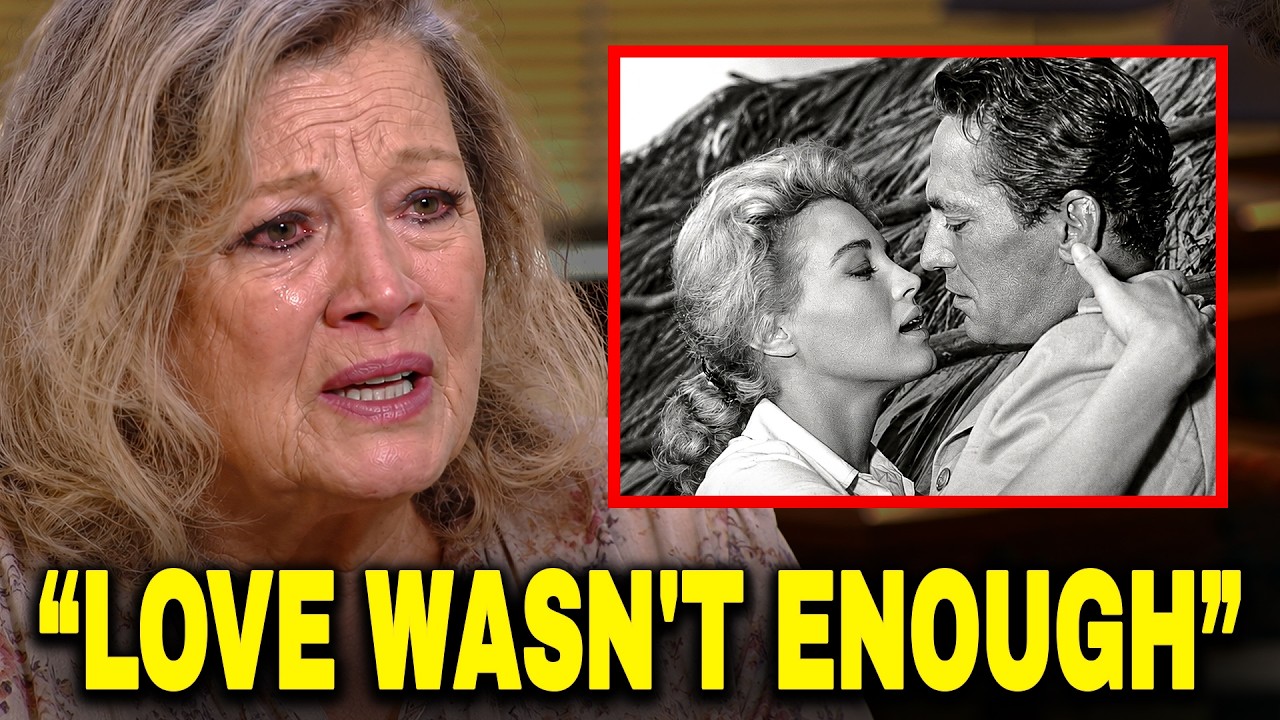
Angie Dickinson has finally broken her decades of silence, revealing the deeply personal reasons why she repeatedly turned down Frank Sinatra’s marriage proposals despite calling him the love of her life. The revelation comes as a shock to fans who spent years watching the two Hollywood icons navigate one of the entertainment industry’s most magnetic and enduring romances.
During Hollywood’s golden age, the connection between Angie Dickinson and Frank Sinatra was the stuff of legend. Their chemistry captivated the world, and on the surface, they appeared to be the ultimate power couple destined for a lifetime together. Old Blue Eyes himself was reportedly desperate to make her his wife, yet she consistently walked away from a life with the legendary crooner.
 The iconic actress, now looking back on her extraordinary life, has finally lifted the veil on the shocking truth behind her decision. Far from a lack of love, the answer lies in a side of Sinatra that she came to know better than almost anyone else, a lifestyle she realized she could never embrace. Her story reveals a woman who chose authenticity and self-awareness over the glitz of a fairytale marriage.
Long before she became one of Hollywood’s most desired leading ladies, Dickinson’s journey began in the tiny farming town of Kulm, North Dakota. Born Angeline Brown, she was the middle of three daughters in a close-knit family with strong German roots. Her father, Leo Henry Brown, was a prominent figure in the community, serving as the publisher and editor of the local newspapers and working as the projectionist at the town’s only movie theater.
Those cinematic screenings became magical windows into another world for young Angie, sparking a fascination with the larger-than-life stars flickering across the screen. The dream of Hollywood was temporarily interrupted when the theater burned down, but her imagination had already been captured. In 1942, the Brown family moved west to Burbank, California, placing her within touching distance of the movie industry she admired from afar.
This transition from a quiet North Dakota town to Southern California exposed her to a world filled with opportunity and ambition. Angie proved early on that beauty was only one part of who she was, excelling in school and graduating from high school at just 15 years old. Initially inspired by her father’s work in publishing, she imagined building a future with words, studying at Glendale Community College before earning a business degree from Immaculate Heart College.
Her life took a significant turn in 1952 when she married football player Gene Dickinson, adopting the surname that would soon become famous. Unaware that her life was about to change forever, she soon found herself on the path to stardom. It was during these early years that she met Frank Sinatra for the first time, forming a friendship that would last for decades and eventually blossom into one of Hollywood’s most talked-about romances.
 Her official acting debut came on New Year’s Eve in 1954, opening doors to a seemingly endless list of popular television shows and leading roles. Legendary director Howard Hawks eventually cast her in Rio Bravo, a role that became her breakthrough and elevated her to international stardom alongside John Wayne and Dean Martin. She quickly became one of the industry’s most recognizable leading ladies, starring opposite an extraordinary lineup of actors.
By the early 1970s, Dickinson reinvented herself as Sergeant Pepper Anderson in Police Woman, becoming one of television’s biggest stars. The groundbreaking series dominated ratings, earned her a Golden Globe, and changed television forever. Yet, while her career reached extraordinary heights, her private life, especially concerning Frank Sinatra, was becoming far more complicated than the public ever realized.
In 2023, Angie finally confirmed what many had suspected for decades, revealing that she and Sinatra had shared an on-and-off love affair that lasted nearly 20 years. She described Frank as the love of her life and called him one of the most charismatic men that ever was. This confession raised an even bigger question: if his feelings were every bit as strong, why did she repeatedly refuse to become his wife?
During a revealing interview, Angie finally offered the explanation that had eluded fans for decades. When asked about marrying Sinatra, she made a frank admission about the realities of his world. The answer wasn’t rooted in a lack of love, but rather in the overwhelming challenge of what his lifestyle would demand of her.
 She knew that becoming Mrs. Sinatra would mean stepping into a whirlwind that never seemed to slow down.
Frank Sinatra thrived at night. His world revolved around late-night dinners, endless parties, performances that stretched into the early hours, and a non-stop social life filled with celebrities and politicians. That lifestyle energized him, but Angie realized it wasn’t the life she wanted for herself.
She admitted that she simply wasn’t prepared to take on that challenge, understanding that loving someone and building a life with them were not always the same thing.
Rather than convincing herself she could adapt to a world of constant chaos, she made the painful decision to be honest about what she wanted. There was another reason that revealed even more about Angie’s character: her deep admiration for Frank’s former wife, Nancy Sinatra Sr. Instead of viewing her as a rival, Angie described Nancy as gracious, warm, and remarkably kind, a woman she adored and respected too much to disrupt.
 “I adored his wife, Nancy. She was so wonderful and so gracious,” Dickinson later admitted. For her, marrying Frank meant stepping into a family dynamic she didn’t want to destabilize.
Not long after deciding against marriage with Sinatra, she married legendary composer Burt Bacharach in 1965. Their marriage lasted 16 years, producing both unforgettable memories and heartbreak before ending in divorce in 1981.
Even as life took them in different directions, Frank never completely disappeared from Angie’s heart. Their friendship endured through the decades, proving that some relationships don’t need marriage to remain meaningful. She never spoke about Sinatra with bitterness or regret, accepting that their love was real but that their lives were never meant to follow the same path.
Sometimes the hardest decision isn’t walking away from someone you don’t love, but walking away from the person you love most because you know it’s the only choice you can live with.