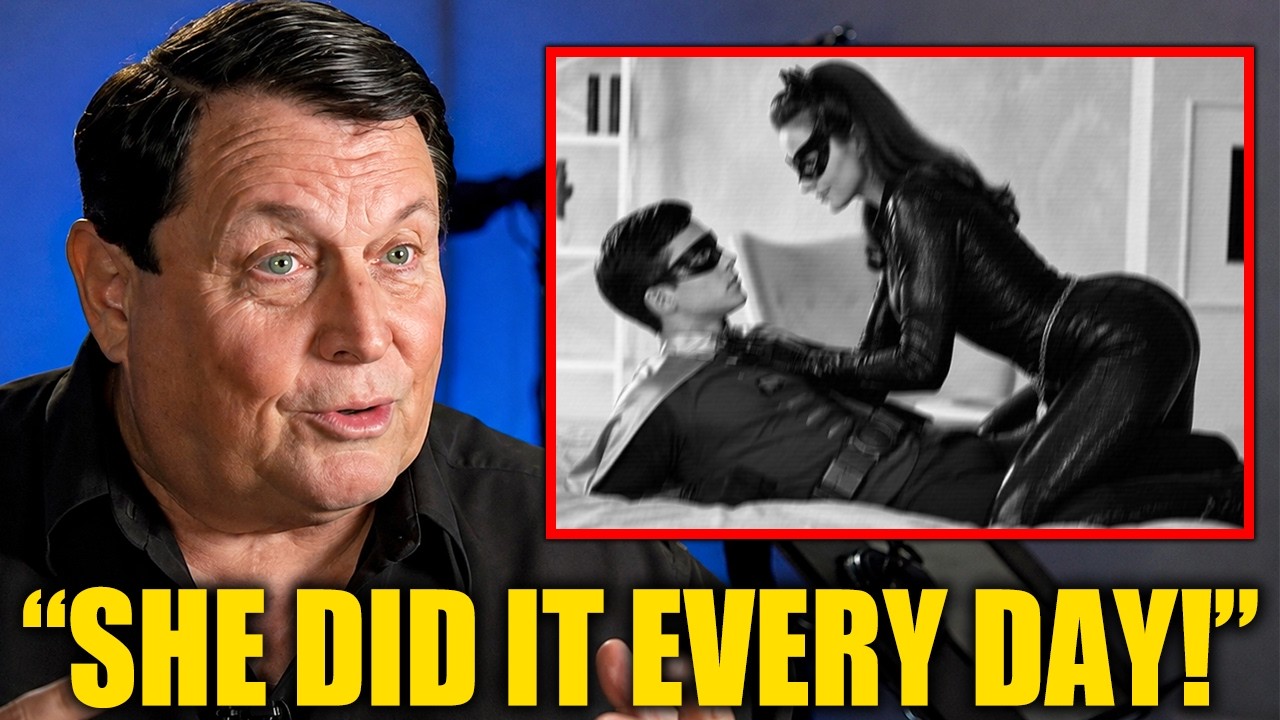
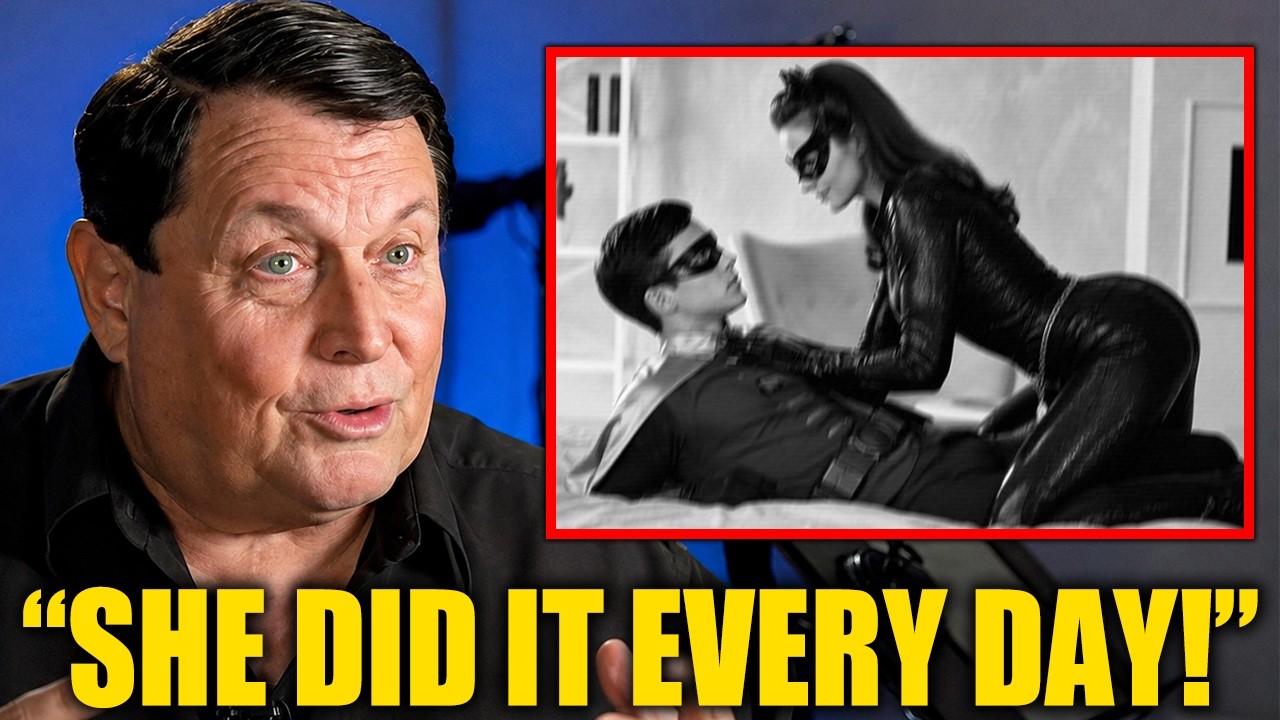
LOS ANGELES — Burt Ward, the actor who immortalized Robin in the iconic 1966 “Batman” television series, has spent decades pulling back the curtain on a Hollywood experience that was far stranger than any scripted villain’s scheme, and the stories he has shared paint a picture of sudden fame, deadly danger, and friendships that defied all expectations.
From a hotel-room escape in his underwear to a prank orchestrated by Bruce Lee, Ward’s revelations have transformed how fans view the campy, colorful world of Gotham City. What happened behind the cameras was often more unbelievable than anything the Dynamic Duo faced on screen, and now, decades later, the full scope of those wild years is coming into sharper focus.
 Long before millions knew him as the Boy Wonder, Ward was simply Bert John Jervis Jr., a young boy from Los Angeles with an extraordinary childhood. Born on July 6, 1945, he grew up in a family that encouraged ambition and adventure, a trait that would define his entire life.
His father owned a traveling ice show called “Rhapsody on Ice,” a unique family business that gave young Bert an opportunity few children ever experienced. At just two years old, he became a professional ice skater, performing at an age when most children were still learning to walk with confidence.
His talent was so striking that he was featured in “Strange as It Seems,” a magazine that highlighted unusual stories from around the world. During this period, he earned the nickname “Sparky” for a dazzling trick: clicking his skates together in a darkened rink to create bright, visible sparks that audiences never forgot.
Away from the ice, another passion was shaping his future. Like countless children of the 1950s, Ward collected comic books, trading them with friends and losing himself in the adventures of Superman and Superboy, his enduring favorites. He watched “The Adventures of Superman” starring George Reeves on television, never imagining he would one day wear the cape and mask of a superhero himself.
His athleticism grew through high school, where he excelled in track, football, and wrestling. Around the same time, he discovered martial arts, taking karate classes before focusing on taekwondo, eventually earning a brown belt. These skills would later become the primary reason he stood out during one of television’s most famous auditions.
After graduating high school, Ward enrolled in college and earned his real estate license with plans to join his father’s business. Acting was nowhere on his radar. He had zero experience, no training, and no ambition to perform.
But fate intervened in the form of a neighbor in his Los Angeles apartment building.
That neighbor was a young martial artist named Bruce Lee. Neither man was famous yet, but they bonded over a shared love of martial arts. They spent time exploring Chinatown, sharing meals, and enjoying each other’s company.
Bruce even invited Bert to dinner, where he met Bruce’s wife and infant son, Brandon Lee.
Everything changed in 1965 when Ward overheard other aspiring actors discussing auditions for a new television series based on Batman. He loved comic books and was immediately intrigued. The problem?
He had no agent and no acting experience. Rather than giving up, he simply walked into a talent agency and asked to audition.
Staff were stunned by his boldness. Ward admitted he had never acted before, yet the agency eventually directed him to the audition location. On the paperwork, under special skills, he listed football, wrestling, and taekwondo.
His first audition went well enough to earn a callback, then another to demonstrate stunt work.
Determined to make the strongest impression, Ward brought a friend to spar with and a wooden board to break with his bare hand. His confidence and athleticism impressed producer William Dozier, who immediately recognized the youthful enthusiasm they wanted for Robin. After multiple rounds of testing, Ward narrowly won the role.
Adam West was cast as Batman, and before the series premiered, Ward made a final change. He altered the spelling of his first name from Bert to Burt, believing it looked better on screen, and replaced his surname Jervis with Ward, his mother’s maiden name, after people frequently mispronounced it.
 When “Batman” premiered in January 1966, it became an instant phenomenon. The studio launched one of the biggest promotional campaigns television had ever seen. Overnight, Ward went from an unknown young man to one of the most recognizable faces in America, and the excitement was overwhelming.
The show appealed to everyone. Children loved the colorful adventures, adults appreciated the campy humor, and teenagers embraced the exaggerated action and playful dialogue. With audiences from nearly every age group tuning in, the series became one of the biggest television successes of the decade.
But that success came with an exhausting price.
Once each season finished filming, Ward and West traveled across nearly every state on promotional tours. The studio organized everything: travel, hotels, and events. They visited television stations, appeared at schools in full costume, and attended parades, shopping center openings, and department store events.
Enormous crowds gathered everywhere they went.
At just 20 years old, Ward suddenly lived a life no one could prepare for. One moment he was a college student planning a real estate career; the next, he was recognized everywhere. Every public appearance demanded a smiling, energetic Robin, even when exhaustion or personal problems threatened to break through the facade.
Those personal struggles arrived quickly. During the height of the show’s success, Ward’s first marriage to Bonnie Lindsay fell apart. The couple had welcomed a daughter, Lisa, but the pressures of his demanding schedule placed enormous strain on their relationship.
Only months after their daughter was born, they filed for divorce.
Behind the cheerful smiles he showed fans, Ward was dealing with deep heartbreak. Instead of stepping away, he accepted as many promotional events as possible, keeping his schedule full as a way to cope. The public never saw that side of his life, but behind the scenes, fame was proving to be as challenging as it was rewarding.
Then came the stories that sounded too unbelievable to be true. In 1995, Ward published his memoir, “My Life in Tights,” revealing behind-the-scenes secrets that had remained hidden for decades. Readers were shocked by just how wild his life had become once he and Adam West turned into household names.
Ward revealed that attention was not only focused on Batman. While Adam certainly had plenty of admirers, Ward realized Robin had developed a massive following of his own. Many women wanted autographs or photos, but others were far more direct.
Ward noted that many of these admirers were older than he was, often in their 30s or 40s.
Some women got creative, slipping handwritten notes into his hands during public appearances or finding ways to pass him phone numbers. Ward admitted he began responding the same way, keeping notes with him and arranging meetings after the day’s events ended. He was young, newly famous, and caught up in the excitement.
One story from those years became unforgettable. During a promotional tour, Ward invited a woman to his hotel room. Everything seemed normal until a violent pounding on the door began.
 An angry man outside was shouting threats, convinced his wife was inside. Ward looked through the peephole and saw only the chest of a very large man.
Ward asked the woman if she was married. She insisted she was not and claimed no idea who the man was. The pounding grew more violent.
Ward called Adam West in the next room, who jokingly replied, “Don’t worry, Robin. Batman will save you.” West opened his door, saw the enormous man, and quickly slammed it shut.
West returned to the phone, his confidence gone, and told Ward to escape as fast as possible. The furious husband kicked the hotel room door so hard it nearly gave way. Ward pulled on his underwear while the woman grabbed her clothes.
They rushed through the sliding glass door opening onto a ground-floor courtyard.
As another powerful kick forced the door open, the chase began. The woman ran one direction, Ward the other. Wearing nothing but underwear, he sprinted across the hotel grounds, through the parking lot, and into nearby streets with the furious husband in pursuit.
Hotel guests noticed the commotion, and staff called police.
When officers arrived, they found Ward running through the area in his underwear and placed him in a police car while sorting things out. The truth was stranger than anyone expected. The husband had not caught Ward with his wife that night.
He had met the same woman in a different city the previous week, and she later admitted it during an argument.
The husband tracked the promotional tour to its next stop, located Ward’s hotel, and confronted him. After everything calmed down, West teased Ward mercilessly, joking he should always check for a wedding ring or at least look for the mark where one had recently been removed. Ward later laughed at the story but admitted it changed how he viewed fame.
Another unforgettable chapter involved Ward’s reunion with his old friend Bruce Lee during the famous “Batman” and “The Green Hornet” crossover. Publicity materials had mistakenly described Ward as a martial arts black belt, stretching the truth about his actual brown belt rank in taekwondo. The crossover brought the two friends back together on set.
Bruce Lee objected to the original script, which had Robin defeating Kato. Bruce believed Kato should not lose outright, especially since audiences knew him as an exceptionally skilled martial artist. He insisted the fight end in a draw.
Standing up to producers showed how strongly he believed in protecting his character’s credibility.
As filming approached, Ward noticed something unusual. Bruce refused to acknowledge him on set, showing no smile, no greeting, no conversation. Bruce looked at him with obvious anger.
 Ward worried that the false publicity about his martial arts background had damaged their friendship. He feared Bruce thought he had personally claimed to be a world-class martial artist.
When filming began, Bruce charged straight toward Ward with complete intensity. Ward instinctively stepped backward, and a crew member jokingly shouted that Robin looked like he was running away. At that exact moment, Bruce stopped and burst into laughter.
The serious expression and cold behavior had all been a practical joke.
Bruce admitted crew members had encouraged him to pretend he was upset just to see Ward’s reaction. The prank instantly broke the tension. The two old friends laughed together, marveling that only a few years earlier they had been neighbors practicing martial arts on apartment balconies, and now they were starring in national television series.
The fight scene was carefully staged to satisfy both shows, allowing each character to remain believable without clearly losing. It became one of the most famous crossover moments in television history. Ward often said the experience reminded him of Bruce’s true character: confident and protective of his craft, but also warm, loyal, and playful.
Ward’s personal life continued its rapid pace during the show’s second season. He met actress Kathy Kersh, who appeared in two episodes, and their romance moved fast. They married, reflecting the breakneck speed of his life at the time.
Both even released music recordings, with Ward’s “Boy Wonder, I Love You” written by Frank Zappa.
The marriage did not last. By 1969, the same year “Batman” ended, they divorced. It was another difficult chapter in a life that already included two failed marriages before his mid-20s.
The show’s cancellation marked the end of one of television’s biggest pop culture sensations, with declining ratings and rising production costs.
For Ward, the biggest challenge came after the cameras stopped. Typecasting became a wall he could not break through. To audiences worldwide, he was Robin, and casting directors struggled to picture him as anyone else.
Major roles dried up, and he accepted work wherever he could find it.
Throughout the 1970s and 1980s, Ward appeared in dozens of low-budget horror, science fiction, and independent films. Some were serious, others embraced over-the-top stories. Although these films never reached the popularity of “Batman,” they allowed him to keep working as an actor during an incredibly difficult period.
Today, Ward’s stories from the “Batman ’66” era remain a treasured piece of television history. His willingness to share the unfiltered truth about sudden fame, dangerous encounters, and lifelong friendships has given fans an unprecedented look at what really happened behind the cape and mask. The wild stories, it turns out, were never fiction at all.