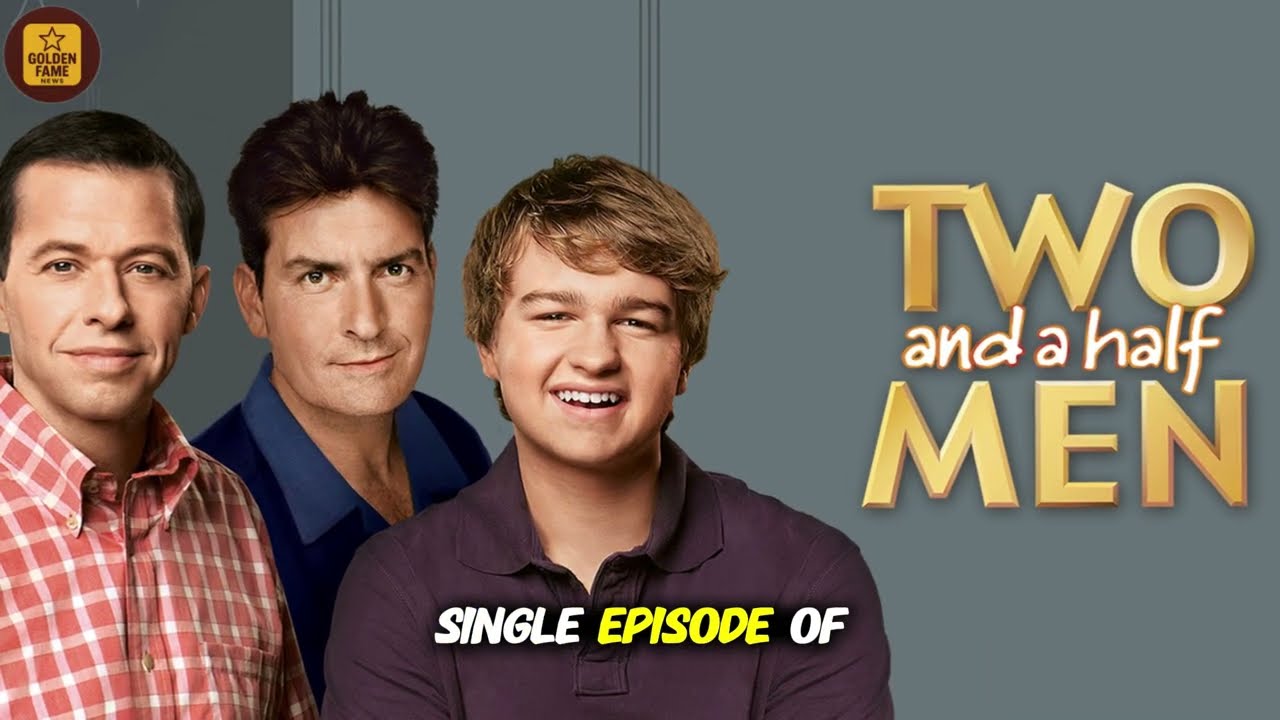
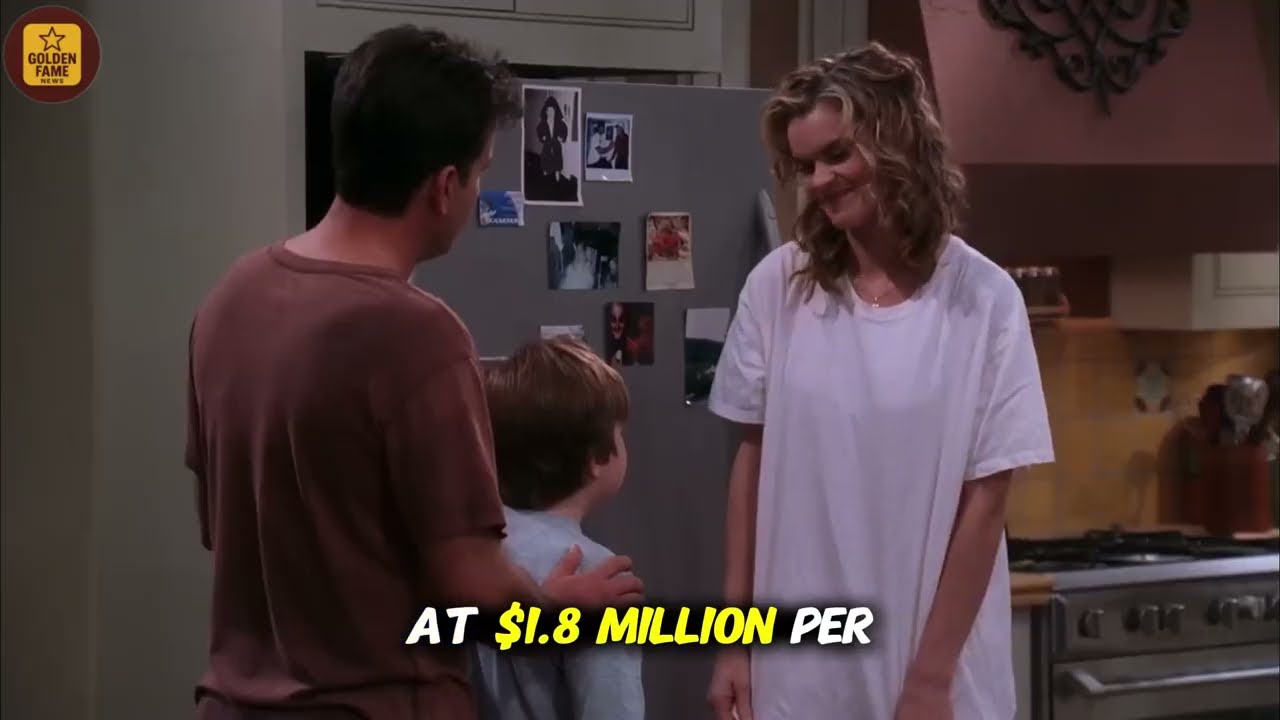
He was the highest-paid actor in American television history, pulling in $1. 8 million for every single episode of a sitcom where he performed himself so convincingly that audiences stopped seeing the line between fiction and reality. He stood in the mud and fire of Oliver Stone’s Platoon, helping that film secure the Academy Award for Best Picture, and he held his own against Michael Douglas in Wall Street.
His name was Charlie Sheen, and for one extraordinary window, he seemed untouchable.
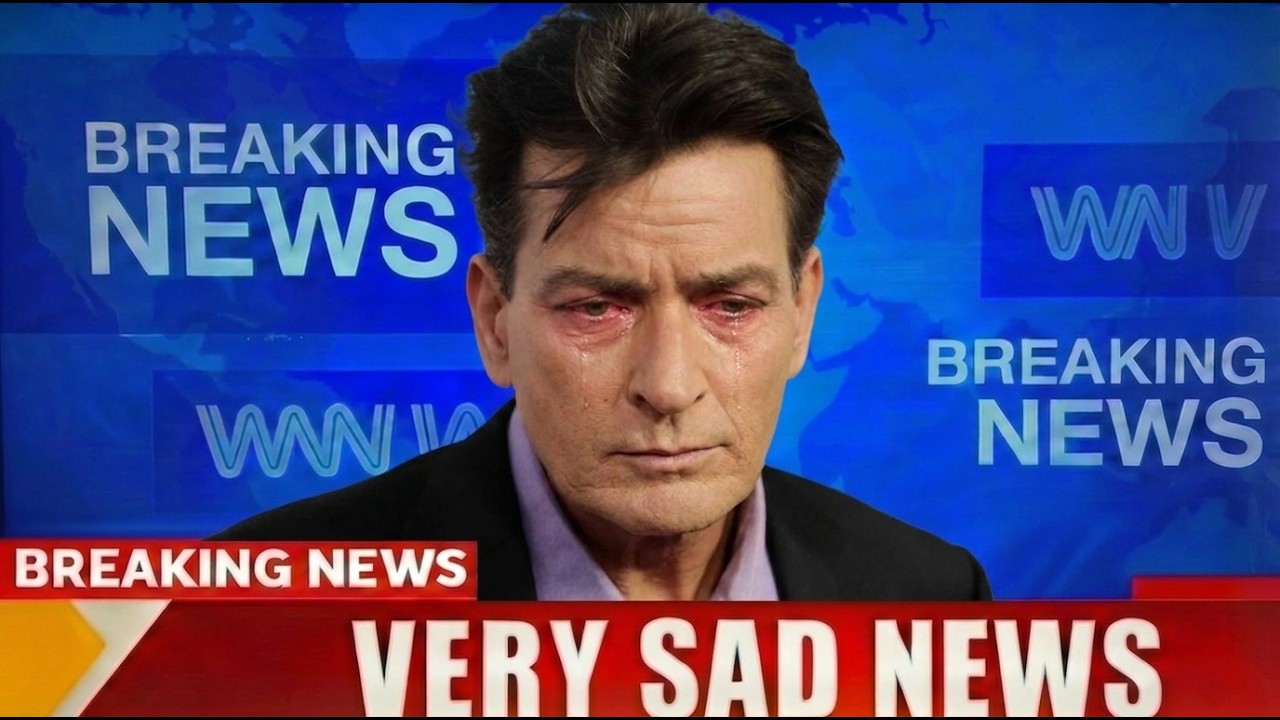 That window closed violently, publicly, and in a way that produced some of the most bizarre cultural artifacts of the 2010s. But now, at 60 years old, Charlie Sheen has done something that very few in his position ever manage. He is still standing.
He is sober. And he is not calling it a comeback.
The man born Carlos Irwin Estevez celebrated his 60th birthday in September 2025, the same month Netflix released a two-part documentary titled AKA Charlie Sheen, directed by Andrew Rossi. The film walked through seven documented family interventions, multiple divorces, a medical diagnosis that reframed everything, and a public meltdown that became a global phenomenon. Critics were divided.
The Guardian noted that Sheen appeared to show no genuine remorse for some of the most serious things he had done, while others argued the documentary was too gentle, too willing to let the man bask in his own mythology without reckoning with those he had hurt.
Those criticisms are fair. They are part of the story. But so is this: a man who was fired from the most lucrative job in television history, who spent years as the most mocked and discussed celebrity in America, sat down at 60 and said something that carried real weight.
“I am not calling all of this a comeback,” he said. “I am calling it a reset.”
That word matters. A comeback implies a return to something that existed before. A reset acknowledges that what came before is gone, and what remains is the question of what you choose to build in its place.
The peak of the story is almost impossible to overstate. Two and a Half Men was the most-watched comedy on American television for most of its run. Sheen was the reason people tuned in, earning a salary that insulated him from consequence in ways that proved genuinely dangerous for someone already struggling with impulse and appetite.
His personal life during those years was chaotic by any measure: a marriage to Denise Richards that ended in a painful public divorce, a marriage to Brooke Mueller that ended in even messier circumstances, and a repeating cycle of rehabilitation visits that had become a pattern rather than an exception.
Then came January 2011. Production was suspended. Sheen entered rehab again.
 But when the show returned, he did not. What followed was one of the most extraordinary public unravelings in the history of American celebrity. He called Chuck Lorre a “contaminated little maggot.”
He declared he had “tiger blood” and “Adonis DNA.” He launched a live tour called the Torpedo of Truth, standing on stages in front of paying audiences to perform his own chaos at maximum volume. “Winning” became the word that defined the moment.
He was fired in March 2011. Ashton Kutcher replaced him. The tour was a critical and commercial disaster.
The world laughed, shared the clips, repeated the catchphrases, and watched a man come apart in real time.
But there was something the world did not know. Something he carried alone for four years. On November 17, 2015, sitting across from Matt Lauer on the Today show, Charlie Sheen said five words that changed the entire narrative: “I am, in fact, HIV positive.”
He had known since approximately 2011, through the meltdown, through the tour, through every single word of “winning.” He described the diagnosis as “the most upsetting and just devastating and life-altering moment that one could have.” He had paid enormous sums to keep it private, describing the payments as shakedowns, money going out the door with absolutely no return.
His physician confirmed the diagnosis and confirmed that antiretroviral medication kept his 𝓿𝒾𝓇𝒶𝓁 load at undetectable levels. The prognosis was not the death sentence the word HIV once carried. But the revelation brought complications.
Multiple women came forward with legal claims. In August 2022, Sheen paid a $120,000 settlement to a former girlfriend who alleged he had deliberately 𝓮𝔁𝓹𝓸𝓼𝓮𝓭 her to the virus without her knowledge. He did not admit responsibility.
There were other settlements, other proceedings, other legal actions whose terms remained private.
 These facts sit alongside the rest. They complicate the redemption arc but do not erase what happened next.
In December 2017, quietly, without cameras or announcements, Charlie Sheen got sober. Not a temporary correction, but something that has held for more than eight years. He has described it with the language of someone who understands what the rooms of Alcoholics Anonymous can and cannot do.
“When I finally decided that I was going to make AA a place that I passed through and not wound up in,” he said, “that is when I felt like I was the captain of my own ship.”
Sobriety did not repair everything. Court documents from July 2026 confirmed he agreed to pay his former wife Brooke Mueller $500,000 in owed child support for their twin sons, covering obligations from 2011 through 2026. His relationship with Jon Cryer, the man who spent eight seasons beside him on Two and a Half Men, remains fractured.
Cryer has revealed they have not spoken in years.
The children spread across four decades of his life are a record of every chapter. His daughters Sam and Lola are 21 and 20. The twins are 16.
His eldest child is in her 40s. His daughter Sami has spoken emotionally about learning the real reason her father got sober.
His father, Martin Sheen, is still alive at 84, one of the people who showed up for seven documented interventions and kept showing up even when nothing worked. That durability may be the most remarkable element of this entire story.
Charlie Sheen is 60 years old. He is sober. He manages his HIV daily with medication that keeps the virus undetectable.
 He has financial obligations that his most spectacular earning years could not fully absorb. He has made a documentary that divided critics and written a memoir. He has said the word “reset” in public and appears to mean it.
Asked in April 2026 about his health and finances, he offered a phrase that carried the old wit: “My presence answers.” He was there. He was standing.
Given the trajectory of the previous 15 years, that was not guaranteed.
He said something else in September 2025 that landed differently than the “winning” vocabulary of 2011. “I am just living for the next moment, whatever that turns out to be.” For a man who spent years at a speed that made the present moment impossible to inhabit, that is a genuine shift in orientation.
Not toward the past, where the accounting remains unfinished. Not toward a performed future. Toward the next moment, unglamorous and uncertain.
The courage of the spectacular comeback is easy to photograph. The courage of a very consistent lifestyle does not announce itself. It simply continues, day after day, in the quiet and difficult way recovery actually works for people who are doing it rather than performing it.
He earned $1. 8 million per episode. He stood in Oliver Stone’s fire.
He made 30 million people laugh every week. He lost nearly everything, including, in ways not always visible, himself. Then he stopped.
He stayed stopped. And at 60 years old, Charlie Sheen is still here, still taking the medication, still navigating the distances and the silences that sobriety alone cannot dissolve.
That is not a small thing. It is, in the language of a man who has lived through all of it, everything.