14 August 2026
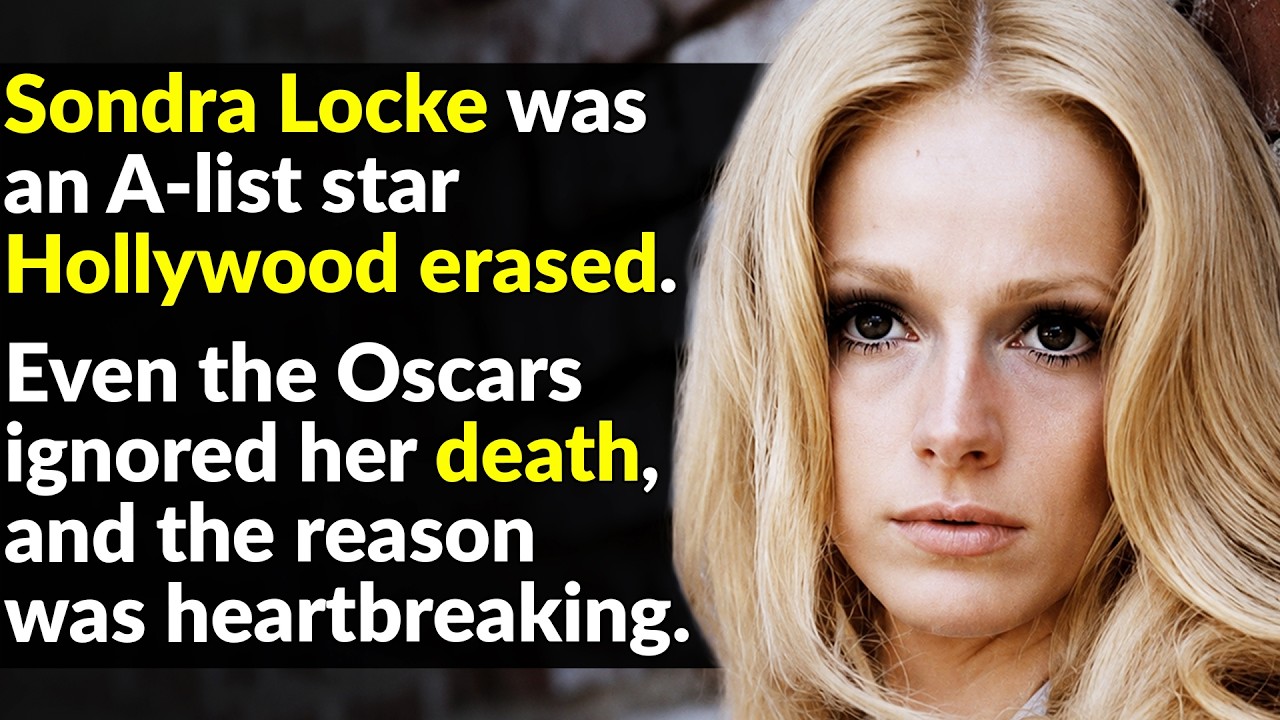
The final chapter of Sondra Locke’s life was written in silence, a deafening quiet that has shocked Hollywood to its core. The Academy Award-nominated actress, director, and former partner of Clint Eastwood died on November 3, 2018, at her home in Los Angeles from cardiac arrest following a 25-year battle with cancer. Yet, her passing was kept hidden from the world for more than a month, and when the news finally broke, it ignited a firestorm of questions about her tumultuous life, her legal war with one of the most powerful men in cinema, and whether her dying wish to control her own narrative was respected. The fact that Locke did not even receive a mention in the Oscars In Memoriam segment in 2019 has been called a final, heartbreaking act of erasure in a career that was deliberately dismantled. Born Sondra Louise Smith in Shelbyville, Tennessee, on May 28, 1944, Locke’s life was defined by secrets from the very beginning. Her father abandoned the family before she was born, and she and her brother took the surname of a stepfather whom her mother later married. But the first great lie of her life was born out of ambition. In 1967, she auditioned for the film “The Heart is a Lonely Hunter” and won the role of a teenager despite being 23 years old. To secure the part, she cut six years off her age, claiming she was 17. It was a fabrication she would carry for the rest of her life, a shadow that loomed over every subsequent success and failure. Locke’s performance in that debut film earned her critical acclaim and a nomination for Best Supporting Actress at both the Academy Awards and the Golden Globes. She had beaten out nearly 600 other actors for the role, a stunning achievement that seemed to promise a glittering future. But the lie about her age forced her to obscure her past. Publicity materials for the film removed any mention of her college education at Middle Tennessee State University or her work in Nashville radio and television. She was presented as a fresh-faced ingenue who had been discovered right out of high school, a fiction that required constant maintenance. At the height of this early success, Locke made a decision that would baffle observers for decades. She married her longtime friend and confidant, Gordon Anderson. The timing was strange—she was in the middle of filming one of the most important projects of her career—but Locke had an ulterior motive. Rumors of a “nasty” reputation from her time at a Nashville TV station threatened to surface. She believed that being married would protect her reputation if she became famous. It was a cynical calculation, but it worked. The marriage, however, was a sham. Locke and Anderson never consummated their relationship. Anderson was gay, and he would remain Locke’s husband for the rest of her life, acting as her manager, confidant, and closest friend. Locke’s career after the initial success was a series of missed opportunities and questionable choices. She turned down roles in “True Grit,” “Zabriskie Point,” “Last Summer,” and “My Sweet Charlie,” the last of which earned Patty Duke an Emmy Award. She also passed on “They Shoot Horses, Don’t They?” which received nine Academy Award nominations. Instead, she made “Cover Me Babe,” a critical and financial disaster. During that film, she began an affair with co-star Robert Fields, initiating a pattern of on-set romances that defied her marital status. She had flings with Paul Sand, David Soul, and Bo Hopkins, all while still legally married to Anderson. Her desperation for a hit led her to a film that would change her life forever. Locke took a $18,000 pay cut to star in “The Outlaw Josey Wales” opposite Clint Eastwood. She was the female lead, but she was not the star. Eastwood was. The chemistry between them was instant and explosive. Eastwood, the director and star of the film, was married to Maggie Johnson. Locke was married to Anderson. None of that mattered. Eastwood had the film’s original director, Phil Kaufman, fired after Kaufman expressed interest in Locke. Eastwood took over the directing duties himself, ensuring he had unfettered access to his leading lady. The romance between Locke and Eastwood was intense and, by all accounts, genuine. Locke later said that despite their respective marriages, it was the first time either of them had experienced true love. Eastwood, famous for his womanizing and history of out-of-wedlock children, wrote a song for her titled “She Made Me Monogamous.” The film was a massive success, grossing over $30 million on a budget of less than $4 million. Locke and Eastwood became a couple in the public eye, though they never married. They lived together, and Eastwood promised her a future. But the fairy tale had a dark underbelly. Eastwood insisted that Locke make films only with him, effectively isolating her from other opportunities. He did not like the idea of her being away from him. Their collaborations included “The Gauntlet,” “Every Which Way But Loose,” and “Bronco Billy.” However, Locke’s name was gradually pushed down on the posters, and in one case, she was replaced on the promotional material by an orangutan named Manis. Eastwood later called the ape one of the most natural actors he had ever worked with. The casual cruelty of that comment was a sign of things to come. The most painful chapter of their relationship involved the issue of children. Locke became pregnant twice by Eastwood and terminated both pregnancies. She said that Eastwood found her IUD uncomfortable and she removed it.…