For decades, Kim Novak represented one of the most mysterious and unforgettable faces of Hollywood’s Golden Age.
The beauty.
The elegance.
The quiet intensity that made her performances impossible to forget.
She became a star during an era when studios controlled nearly every aspect of an actor’s life. But unlike many performers who accepted that system, Novak fought to maintain her independence.
Behind the glamorous image was a woman determined to remain true to herself.
And now, looking back at her extraordinary journey, Kim Novak has reflected on the people who shaped her life—including fellow Hollywood star Tony Curtis.
Their connection has long been surrounded by curiosity and speculation.
But according to Novak, the truth was not a dramatic Hollywood scandal.
It was simply a story of two very different people who wanted completely different lives.
Kim Novak was born Marilyn Pauline Novak in Chicago in 1933.
Before becoming a Hollywood icon, she lived a relatively ordinary life and studied art before entering the entertainment industry.
Her first step toward fame came through modeling.
Her striking appearance quickly attracted attention, and she eventually moved to Hollywood, where Columbia Pictures signed her to a studio contract.
But becoming a star came with pressure.
During the 1950s, Hollywood studios controlled their actors’ careers, appearances, and public images.
Studio executives often decided what stars should wear, how they should behave, and even how they should present themselves to the public.
Columbia Pictures president Harry Cohn was known for his powerful influence, and Novak often resisted being shaped into a manufactured Hollywood image.
She wanted to be recognized for more than her appearance.
She wanted artistic respect.
That determination helped define her career.
Novak quickly became one of Hollywood’s most recognizable actresses, starring in films such as Picnic, Vertigo, and Bell, Book and Candle.
Her performance in Alfred Hitchcock’s Vertigo later became considered one of the greatest roles in cinematic history.
But fame also brought challenges.
The public was fascinated by her personal life, and Hollywood often treated celebrity relationships as part of the entertainment business.
One of the most painful examples involved her relationship with Sammy Davis Jr.
Their romance attracted enormous attention during a time when interracial relationships faced intense social pressure.
According to accounts from the era, studio executives strongly opposed the relationship, and Novak faced pressure because of how it could affect her career and public image.
It was a difficult reminder that even successful stars were not always free to make personal choices.
Then came the fascination surrounding Tony Curtis.
Curtis was one of Hollywood’s biggest leading men.
He was handsome.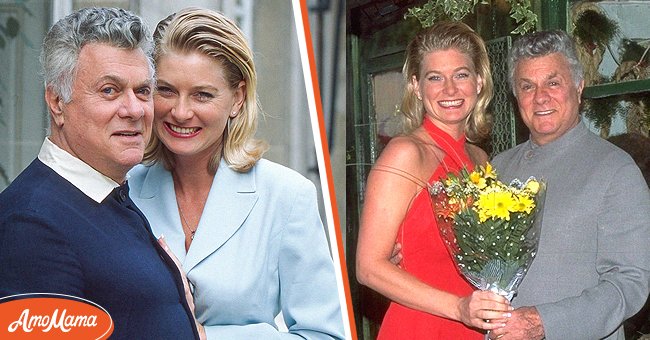
Charismatic.
And famous for his roles in films like Some Like It Hot and The Defiant Ones.
To audiences, he represented the classic movie star.
Someone who seemed completely confident and comfortable in the spotlight.
But Novak saw a different side.
Looking back, she described Curtis as a talented and magnetic person, but also someone whose personality differed greatly from her own.
Curtis loved attention.
He enjoyed the energy of fame.
He thrived in the Hollywood environment.
Novak was different.
She valued privacy.
She wanted authenticity.
She was never comfortable with the constant performance that came with celebrity culture.
Their differences created a natural distance.
It was not necessarily about betrayal or wrongdoing.
It was about two people who approached life in completely different ways.
Tony Curtis sought the excitement of the spotlight.
Kim Novak searched for a quieter existence away from it.
As years passed, Novak gradually stepped away from Hollywood.
Unlike many stars who spent their entire lives chasing fame, she chose a different path.
She moved away from the industry and focused on art, animals, and a more peaceful lifestyle.
Some people viewed her decision as unusual.
But for Novak, it was a choice that allowed her to protect the person she was beyond the Hollywood image.
At 92, she looks back on her past without bitterness.
The relationships.
The struggles.
The pressures.
The difficult choices.
She sees them as experiences that shaped her rather than wounds that define her.
Her story is not about resentment.
It is about understanding.
Kim Novak survived an era when Hollywood often tried to create identities for its stars.
But she refused to lose herself.
She became famous because of her beauty, but she remained respected because of her independence.
And her reflections on Tony Curtis reveal a deeper lesson about relationships.
Sometimes two people can admire each other and still be unable to truly fit together.
Sometimes the strongest choice is accepting those differences.