Nicole Kidman walked into that interview carrying a weight that most people in the room could not see, but when she spoke, the air shifted and the silence that followed was not awkward, it was stunned. The year had already been brutal, a divorce finalized just weeks earlier, custody terms laid bare in court documents, and the end of a 19-year marriage to Keith Urban that she never wanted to end. But here she was at 58, fresh from a Christmas celebration in Sydney with her two daughters, curls natural and face relaxed in photos that surfaced on social media, and instead of offering a soft retreat into grief, she declared that 2026 was her year.
The line landed like a crack of thunder in a room that expected rain.
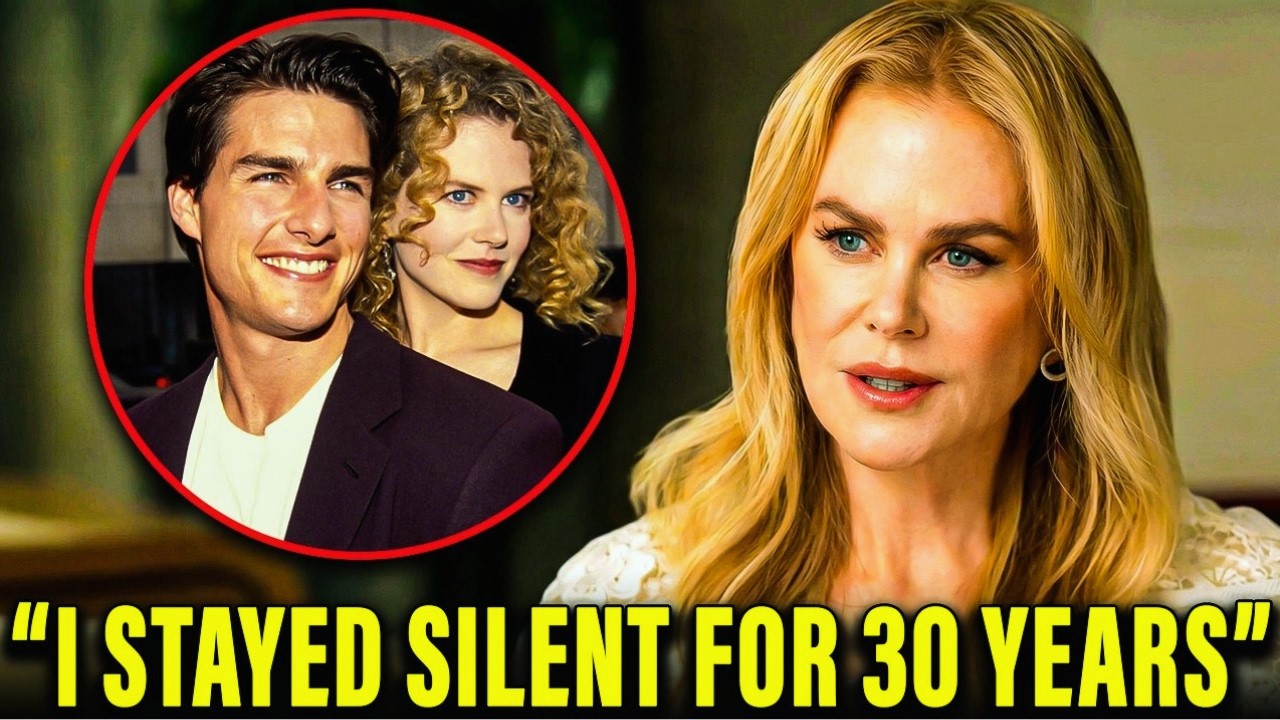 The woman who nearly quit a major biopic after online death threats, who shaved her eyebrows and stayed in character for months, who sat through a divorce she fought to avoid, is not slowing down. She is accelerating, and the announcement was not dramatic, it was matter-of-fact, but it stopped the room cold.
Let us go back to where this resilience was forged, because understanding Nicole Kidman means understanding the crucible. She was born in Honolulu, Hawaii on June 20th, 1967, while her Australian parents were in the United States on student visas at the University of Hawaii. Her father Anthony was studying biochemistry, and the family never planned to stay in America for long.
Yet her birthplace carried a lifelong gift, automatic US citizenship, which she inherited alongside her Australian citizenship from her parents. From the beginning, she belonged to two countries at once, even if she would grow up with Australia in her voice and in her bones.
But the atmosphere around her was anything but quiet. Her parents became active in anti-Vietnam war protests, marching through the streets of Washington D. C.
, demanding peace. Nicole was only a baby, but she was often carried along in her mother’s arms while chants rose and signs lifted. That early contrast settled into her story, surrounded by loud public conviction, yet later she would be known for craving privacy as if she spent years trying to find a calm place after beginning in a storm.
When she was around three, the family returned to Australia and settled in Longueville, a leafy suburb on Sydney’s North Shore.
Teachers saw an intensity that did not fit her age. She was reading the room more than she was trying to lead it. While other kids argued and rushed, she listened and watched, tracking moods and small shifts in expression as if feelings were something you could study and map.
That way of watching people connected easily to the first place she found a stage. From the age of three, she was in ballet, learning control and posture before she even knew what acting could be. Then, when she was six, a simple school Christmas pageant gave her a role that sounds funny now, but mattered a lot then.
She was cast as a sheep and had to shuffle across the stage and bleat in front of a crowd. Instead of freezing, she felt a rush.
At home, there was another influence shaping her, and it was deeper than applause. Her father was not only a scientist, but also a clinical psychologist and a mental health researcher in Australia. He wrote and spoke about anxiety, depression, and cognitive behavioral therapy, pushing for early support for young people struggling with mental health.
Her childhood conversations were often about what people carry inside, about fear, trauma, and the way the mind can twist reality. Without trying to, she was being trained to notice what others hide. Then, when she was 14, life pressed hard on her family.
Her mother Janelle was diagnosed with breast cancer. Nicole dropped parts of her usual routine and focused on helping at home, even learning massage techniques at a local institute so she could bring her mother some physical relief.
 By 16, she was working in a way that hinted at the force she would become. In 1983, she appeared in the family adventure film Bush Christmas, playing Helen Thompson, a stubborn farm girl who refuses to wait for adults to fix things. The film was shot deep in Queensland, far from city comfort, with real trails, real heat, long days, and pressure that did not care how young she was.
It was a harsh first test, teaching her early that acting was not only a pretty dream. A few years later, the shift was dramatic because the roles stopped being warm and safe. In 1989, she starred in Dead Calm, playing a grieving woman whose marriage is cracking after the loss of a child.
Director Phillip Noyce later spoke about how fearless she was in those tight scenes.
That same year, she also filmed the TV mini-series Bangkok Hilton, playing Kat Stanton, a young Australian woman tricked into carrying heroin who ends up trapped in a Thai prison known for cruelty. Australian audiences were pulled in, and the performance traveled beyond Australia as well. By then, Hollywood attention started circling.
A powerful New York agent saw Dead Calm and reportedly flew to Australia because he believed she was a rare kind of talent. Suddenly, she was not only a promising actress, she was a name that executives whispered about as if they had discovered something first.
That moment came when Phillip Noyce recommended her to Tom Cruise for Days of Thunder, the 1990 racing blockbuster about a cocky NASCAR driver. Cruise watched Dead Calm at Noyce’s urging and pushed for her to be cast. It became her first major Hollywood lead, forcing Los Angeles to see her as more than an interesting discovery from Australia.
From there, the public story turned into a romance story that moved fast enough to feel unreal. In 1990, just months after Days of Thunder, they married on Christmas Eve in a civil ceremony in Telluride, Colorado. Then the private pain arrived.
Nicole suffered an ectopic pregnancy, a life-threatening condition that required emergency surgery, leaving her grieving and frightened.
In the years that followed, they adopted two children, Isabella in 1992 and Connor in 1995. When the marriage ended in 2001, the split did not just break a relationship, it shook her whole identity. She was 33, 10 years into a life where her name was often attached to his, and then suddenly she was alone in the spotlight.
She described feeling both freed and devastated at the same time. Some people in Hollywood seemed to pull away as if divorce made her contagious. Yet what she did next is where the story turned sharp.
Because she did not fade. She sprinted.
 That same year, she made Moulin Rouge, playing Satine, a glamorous courtesan in 1899 Paris, living inside glitter and love songs while dying of tuberculosis. Then she starred in The Others, filmed in Spain as a mother living in a foggy mansion after World War II. Released in the same year as Moulin Rouge, it showed her range in a way that silenced anyone who thought she only had one lane.
Then she went even further, choosing roles that erased glamour and demanded transformation. In The Hours, she disappeared into Virginia Woolf with a prosthetic nose, weight gain, and a severe look that made her almost unrecognizable. The performance won her the biggest awards, including the Oscar.
Around this time, another pain sat quietly in the background. After the divorce, the kids were raised closely within Cruise’s world, and Scientology’s role in their family became part of the public narrative. Nicole has spoken cautiously and rarely about the situation, but when she does, the emotion is clear.
It is the kind of loss that does not get solved by success. Even when her career hit rough patches, she kept moving. In Dogville, directed by Lars von Trier, she performed on a bare sound stage marked like a map, pushing emotion to a breaking point again and again.
In Cold Mountain, she committed to the harshness of survival.
Then she stepped into Nine Perfect Strangers as Masha, a Russian wellness guru with a calm voice and a sharp edge. Nicole shaved her eyebrows, committed to the accent, and stayed in character so deeply that she reportedly kept a cold distance on set to protect the mood. When she was cast as Lucille Ball in Being the Ricardos in 2021, the backlash hit before the film even arrived.
Social media exploded with complaints, petitions circulated, and the anger turned ugly enough that Nicole nearly quit. Director Aaron Sorkin begged her to stay. By the end, the performance earned her another Oscar nomination.
Then in 2024, she delivered Baby Girl, playing a powerful New York CEO whose controlled life begins to crack when a young intern challenges everything she thought she had locked away. Nicole admitted at Venice that the intensity affected her physically, that there were moments when she felt overwhelmed, even burned out by the work. The quote went 𝓿𝒾𝓇𝒶𝓁 overnight.
And then came 2025, when the public story of her marriage began to change again. In late September, major outlets reported that Nicole Kidman and Keith Urban had separated after 19 years together. The actress filed for divorce from the country star.
Their divorce was finalized on January 6th, 2026, with Kidman granted custody for 306 days out of the year, and Urban granted 59 days. What made it feel even sharper was how quickly the legal steps followed. Nicole spent her first Christmas since the split in familiar surroundings, celebrating Christmas Eve in her native Sydney with her two girls.
Photos from the holiday showed her relaxed and smiling, wearing her natural curls as she embraced a lower-key celebration. Then came the first time Nicole spoke in a way that felt like an answer, even though she avoided giving one.
 In a cover story for Variety, the Oscar legend admitted that the deeply personal situation forced her into a kind of retreat. She said she was moving toward what was good, described her gratitude for her family, and drew a clean line, saying she does not discuss everything else out of respect. Then she said something that nobody expected from a woman in the middle of public grief and private chaos.
She declared that 2026 was her year. The room went quiet for a moment because the message was not just about movies. It was a woman at 58, fresh out of a marriage she didn’t want to end, with two teenage daughters and the world watching, and instead of retreating, she was accelerating.
She can currently be seen in the new Amazon Prime Video series Scarpetta, where she stars alongside Jamie Lee Curtis. She also recently completed work on a sequel to Practical Magic with Sandra Bullock and is set to reprise her role as Celeste Wright in the third season of Big Little Lies. Her upcoming slate also includes Lioness season 3, Margo’s Got Money Troubles, Girls and Their Horses, and Discretion.
That is not a woman slowing down. That is a woman who has decided the next chapter will not be defined by what she lost.
She centered her daughters in every answer, repeating a line that sounded like the only thing she wanted the world to hear, that they are a family and they will continue to be one. It landed because it was simple and because it was clearly a boundary. She called them her beautiful girls, her darlings who are suddenly women.
In that same stretch, she hinted at how hard the previous year had been, describing a version of herself that pulled inward while the cameras stayed outside. While discussing her role as forensic pathologist Dr. Kay Scarpetta, Nicole even hinted that she used her real-life grief and loss to help convey emotion in the role.
That is the thing about her that has never changed across four decades. She does not waste the pain. She puts it somewhere it can be felt by strangers.
In the nearly 25 years since she won the Oscar for The Hours, Kidman has become Hollywood’s preeminent worker bee, and 2026 will be another banner year. The message felt clear without being cruel. She was not disappearing, and she was not waiting to be rescued by a new chapter.
She was writing it herself, with her daughters close and a slate of work that would exhaust someone half her age. At 58, Nicole Kidman is not in a quiet corner somewhere processing her losses in private. She is on set, in character, pushing herself past the edge again because that is the only way she has ever known how to move forward.
Nobody was prepared for what came next, but she was. She always is.


