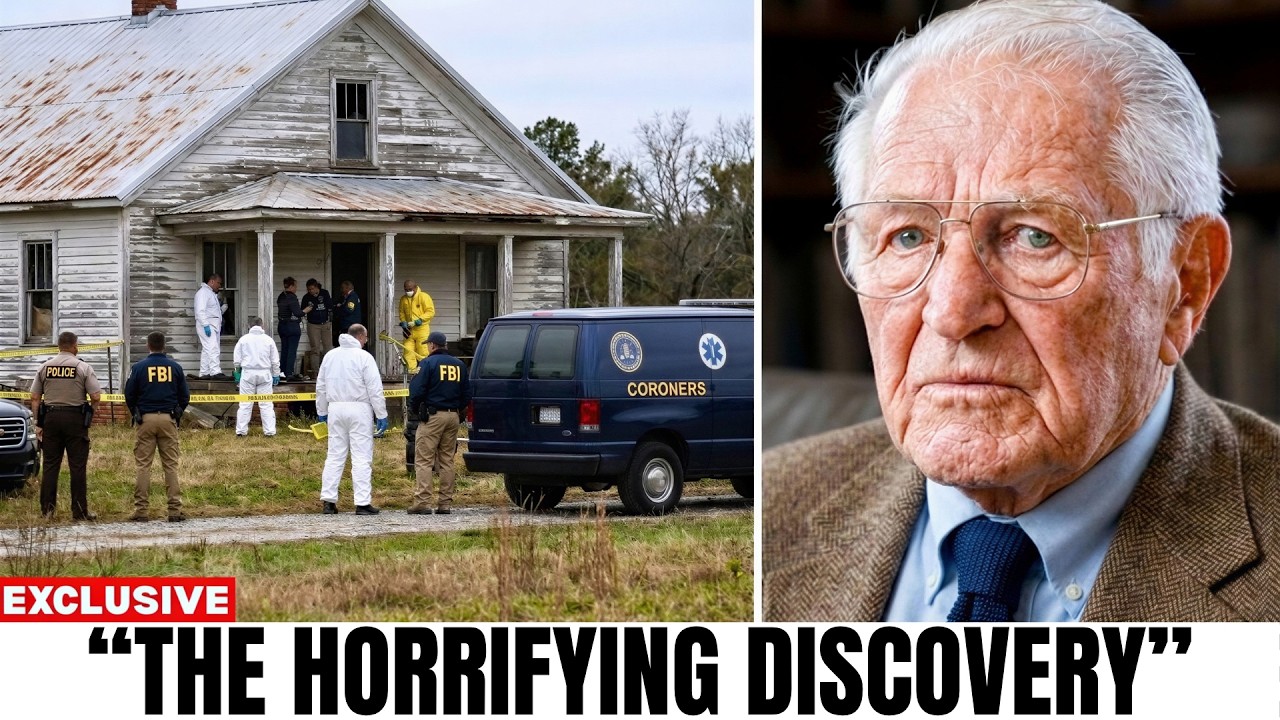
Historians and family members who entered the quiet farmhouse of Richard “Dick” Winters in Hershey, Pennsylvania, after his death in 2011 expected to find the modest belongings of a retired farmer and businessman. What they uncovered instead has left the military history community stunned: a trove of handwritten notes, wartime letters, and personal mementos that quietly reveal the full, untold story of one of the most respected soldiers of the 20th century.
The discovery came as researchers began sorting through decades of accumulated possessions inside the unassuming property that Winters called home for much of his later life. There were no signs, no plaques, no tour buses marking the site. Yet inside those walls lay a deeply personal record of a man who led Easy Company through some of the deadliest combat of World War II, then returned to Pennsylvania to live a life so ordinary that even his neighbors had no idea of his heroism.
 Winters, who died on January 2, 2011, at age 92, had always shunned the spotlight. After the war, he married his wife Ethel and built a livestock feed business, eventually settling into a farmhouse near Hershey. He rarely spoke of his wartime experiences unless asked directly.
But the items left behind tell a different story: letters from fellow veterans, detailed notes he used while working with historian Stephen Ambrose, and personal reflections written in his later years.
The most striking find is a collection of handwritten notes that Winters used during his collaboration with Ambrose, who wrote the book “Band of Brothers” after meeting Winters at a veterans reunion in 1988. These notes include tactical diagrams, personal observations about his men, and candid assessments of the battles that defined his career, including the legendary assault on Brécourt Manor on D-Day. Historians say these documents offer an unprecedented look into the mind of a leader who never sought fame.
Also discovered were hundreds of letters from fans who wrote to Winters after the HBO mini-series “Band of Brothers” aired in 2001, making him a household name overnight. He answered many of them personally, often using the same humble phrase: “I’m not a hero, but I served in a company of heroes.” The letters show a man grappling with sudden fame while trying to maintain the quiet life he had built for decades.
The farmhouse itself was never intended as a museum. Winters purchased the 300-acre property in the 1950s and built a home there, raising his family and running his business. He lived there until his final years, when he moved to a hospice care center.
 After his death, his wife Ethel passed away in 2012, and the task of sorting through their belongings fell to family members and local historians.
What they found was not a hidden treasure or 𝓈𝒽𝓸𝒸𝓀𝒾𝓃𝑔 secret, but something arguably more valuable: a complete, intimate archive of a man who shaped history and then chose to disappear from it. The collection includes wartime mementos, photographs, and personal effects from every stage of his life, from his childhood on a Pennsylvania farm to his years as a paratrooper to his unexpected fame in retirement.
Two years before his death, an exhibit dedicated to Winters had already been opened at the Hershey Derry Township Historical Society. But the full extent of his personal archive was not known until after his passing. The items were eventually donated to Gettysburg and the Hershey Derry Township Historical Society, ensuring they would be preserved for future generations.
Historians say the discovery is significant because it fills gaps in the public record of Winters’ life. While the mini-series and book told the story of Easy Company, they did not capture the private man who came home and refused to be defined by war. The farmhouse archive reveals a person who struggled with the weight of his experiences, who found peace in farmland and family, and who never stopped reflecting on the men he led.
 “This is not just a collection of war memorabilia,” said one historian involved in the cataloging process. “It’s a window into the soul of a man who carried the burden of leadership for the rest of his life, yet never asked for recognition. It’s humbling to see how ordinary his life was, and how extraordinary his actions were.”
The farmhouse itself remains a quiet stretch of land near Hershey, with cornfields rolling toward the horizon and roads winding past old barns. There are still no signs, no plaques, no tour buses. But for those who know what was found inside, the property now holds a deeper meaning.
It stands as a testament to the private life of a public hero, a man who chose silence over celebration and left behind a legacy that speaks for itself.
The discovery has reignited interest in Winters’ story, with historians calling for more research into the documents and letters. Some have suggested that the archive could lead to new books or documentaries, offering a more complete picture of the man behind the legend. For now, the items are being carefully preserved and studied, with plans for future public exhibitions.
 Winters once said that he was not a hero, but that he served in a company of heroes. The items found in his farmhouse prove that he was wrong. They show a leader who inspired loyalty through quiet competence, who made split-second decisions that saved lives, and who carried the memories of those he lost for the rest of his days.
The farmhouse archive is not just a collection of old papers and photographs. It is the story of a man who never wanted to be a hero, but became one anyway.
As researchers continue to analyze the materials, one thing is clear: the world is only now beginning to understand the full depth of Richard Winters’ character. And what was found in his farmhouse has left everyone speechless.