The cheerful, dimpled smile of a 13-year-old girl, frozen in a frame of 1969 television history, has become a weapon she refuses to face again. Maureen McCormick, the actress immortalized as Marcia Brady, has drawn a hard line in the sand regarding one specific episode of The Brady Bunch: “Is There a Doctor in the House?” The episode, which aired during the holiday season of 1969, features a plot where all six Brady children contract the measles.
It was a standard, low-stakes sitcom premise designed to generate laughs and warm family moments. However, the legacy of that 22-minute production has been so thoroughly corrupted by modern internet culture that McCormick has locked the vault on that piece of her past, vowing never to watch it again.
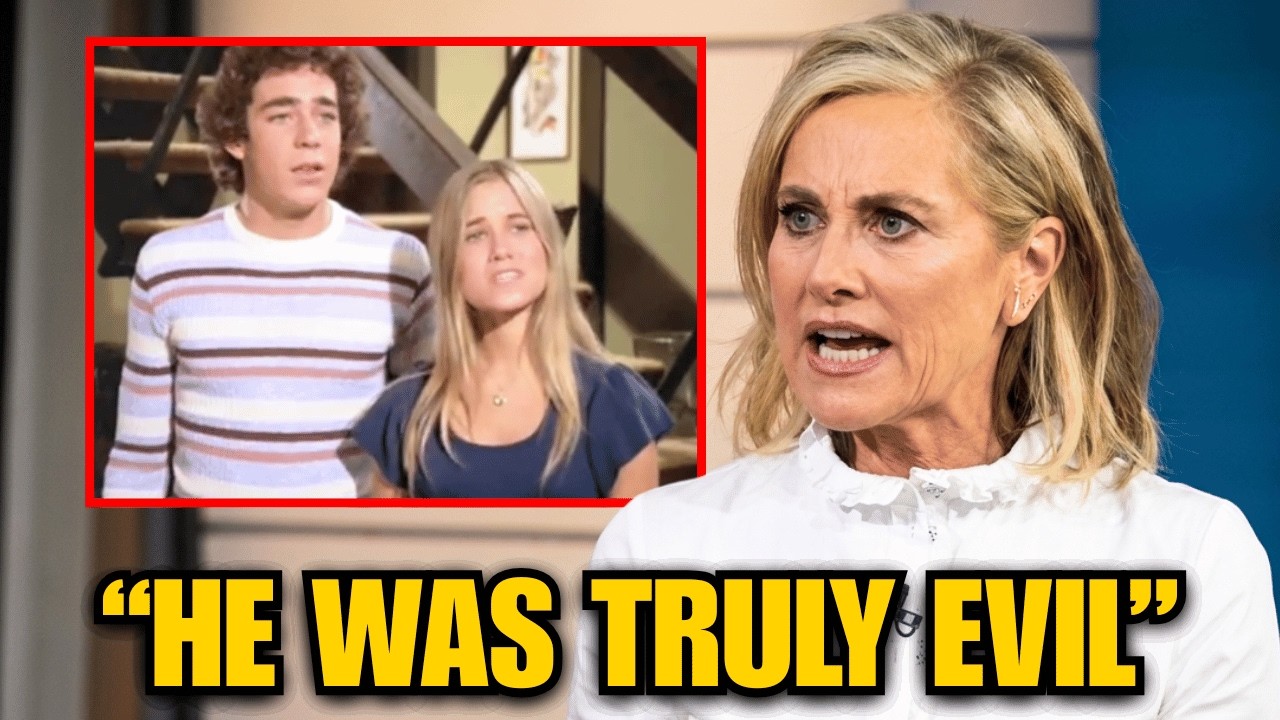 The source of her distress is a single, seemingly innocuous line delivered by her character. Propped up in a bed wearing pastel pajamas, surrounded by her fictional siblings playing board games, Marcia Brady looks into the camera and delivers the scripted quip: “If you have to get sick, sure can’t beat the measles.” At the time, it was a throwaway joke, a bit of dialogue written to fill space and reassure audiences that the crisis of the week was entirely manageable.
The studio audience laughed on cue, the director called cut, and the crew moved on. But in the decades since, that line has been ripped from its comedic context and repurposed by anti-vaccination activists as a form of cultural propaganda, transforming McCormick’s childhood performance into a modern public health liability.
The transformation of this episode from harmless nostalgia into a toxic artifact is a stark illustration of how the digital age can weaponize the past. In the late 1960s, television was an escape hatch. While the evening news delivered graphic coverage of the Vietnam War, civil rights protests, and political assassinations, The Brady Bunch offered a sanitized, Technicolor alternative.
The set on Paramount Stage 5 was a bubble of perfection, insulated from the chaos of the outside world. Illness, in this universe, was not a medical emergency but a plot device for a slumber party. The writers stripped the measles of its danger, its pain, and its potential for long-term harm, presenting it instead as a cozy excuse for Monopoly games and soup trays.
It was comfort food for a fractured nation, but it was also a lie.
For McCormick, the personal stakes of this sanitized fiction are profound. The actress has been open about her harrowing journey through addiction and mental health struggles that followed the show’s cancellation. She has spoken candidly about the crushing pressure of being typecast as the perfect teenager, a role that suffocated her own identity.
 But the specific pain tied to episode 13 is rooted in a stark contrast between fiction and reality. Unlike the cozy quarantine depicted on screen, McCormick’s real-life experience with the measles was a brutal, frightening ordeal. She suffered through burning fevers, severe body aches, and debilitating photophobia that forced her to sit alone in a dark room for days.
She knows the disease is not a joke, which makes the 𝓿𝒾𝓇𝒶𝓁 memes featuring her 13-year-old face all the more infuriating.
The memes began circulating years ago, gaining traction on social media platforms as part of a broader anti-vaccine narrative. Activists seized upon the image of Marcia Brady smiling in bed, using her iconic status as a symbol of wholesome American innocence to lend credibility to their claims. The message was insidious: look how harmless the measles used to be.
The posts ignored the reality that television scripts are written by comedy writers, not doctors, and that real-world measles outbreaks before widespread vaccination caused hundreds of deaths and thousands of hospitalizations annually. Instead, they used McCormick’s image as a weapon, stripping her of her agency and dragging her into an ideological war she never asked to join.
When McCormick became aware of the extent of the misuse, she was horrified. Friends and family began sending her links to the memes, which had been shared tens of thousands of times. She saw her own childhood face being co-opted to promote a message that directly contradicted medical science and her own personal beliefs.
 The actress, who had spent decades trying to separate her real identity from the character of Marcia Brady, was suddenly being pulled back into the fictional skin of that teenager. The experience was a profound violation, a digital hijacking that erased her lived experience in favor of a corporate fantasy. It was the moment she realized that staying silent was no longer an option, and she stepped into the public eye to dismantle the fiction she had helped create.
In a series of forceful public statements, McCormick made her position unmistakably clear. She expressed her fury that her image was being used without consent to promote anti-vaccination narratives. She affirmed her complete trust in medical science and revealed that she had fully vaccinated her own daughter.
She urged the public to recognize the difference between television fiction and real-life medicine, emphasizing that the 1969 episode was a scripted comedy, not a public health document. To underscore her point, she contrasted the warm, cozy slumber party on Stage 5 with her own agonizing, real-life bout with the measles, a disease that left her confined to a dark room, suffering from a burning fever and severe light sensitivity. The contrast was stark, and her pushback was effective.
The actress’s public stance forced a reckoning online. News outlets picked up her story, exposing the deceptive nature of the memes and forcing social media platforms to address the misuse of vintage clips. By speaking out, McCormick effectively stripped the anti-vaccine campaigns of their most potent pop culture shield.
She refused to let her childhood image be used as passive propaganda, proving that the real woman behind Marcia Brady possessed a strength that far outshone any scripted character. However, the emotional toll of the ordeal left a permanent mark on her relationship with her own past. The experience of seeing episode 13 dragged into modern ideological warfare forever altered how she views that specific slice of her youth, tainting it with controversy and distress.
 It is for this reason that McCormick maintains an unwavering boundary today: she refuses to ever watch that 1969 episode again. Watching herself giggle in bed and deliver that cheerful line is no longer a neutral trip down memory lane. It is a painful reminder of how easily innocence can be distorted, how corporate media sanitizes reality, and how a throwaway line from a sound stage can linger for decades to haunt the person who spoke it.
Her refusal is not an act of denial but a deliberate act of self-preservation. It is a way of reclaiming ownership of her narrative, a declaration that she is defined by who she is today, not by the fictional ghost of a teenager preserved in celluloid.
Beyond her specific refusal to watch episode 13, McCormick’s choice reflects a broader philosophy toward her past. She has often shared that she simply does not watch The Brady Bunch reruns in general. While she holds deep, lasting affection for her former castmates, whom she considers a second family, she feels no desire to repeatedly relive her adolescent years on screen.
As she has succinctly put it, “If I’ve seen it once, I’ve seen it, and I want to move on.” By locking that vault and refusing to indulge in self-directed nostalgia, McCormick has reclaimed complete ownership of her life. The girl in the pastel pajamas on Stage 5 may always belong to television history, but the woman who stood up to reclaim her voice belongs entirely to herself.
Today, Maureen McCormick is not looking back. Having long made peace with her television roots, she has shifted her focus toward passion projects that reflect her authentic personality. She has successfully transitioned into the world of home renovation and lifestyle television, captivating audiences on HGTV’s A Very Brady Renovation and the home makeover series Frozen in Time.
She remains an active public advocate for mental health awareness, addiction recovery, and animal welfare, frequently using her platform to support causes close to her heart. She lives a quiet, fulfilled life in Southern California with her husband, continuing to explore new creative ventures on her own terms. Maureen McCormick proved that while you cannot control the past, you hold absolute authority over your future, a narrative defined not by a scripted character from 1969, but by an enduring, independent woman.


