She was the most photographed woman in America, married to one of the most powerful men in Hollywood, and fresh off a role that made her the face of romance for an entire generation. Then Steve McQueen walked onto a film set in Texas, and everything she had built came apart within a year.
Ali MacGraw turned 88 this past April, marking the occasion quietly with old friends, far from the cameras that once tracked her every move. But the story of how her life unraveled — and why she says her relationship with McQueen was doomed from the very first date — has resurfaced with striking clarity as those close to her reflect on her legacy.
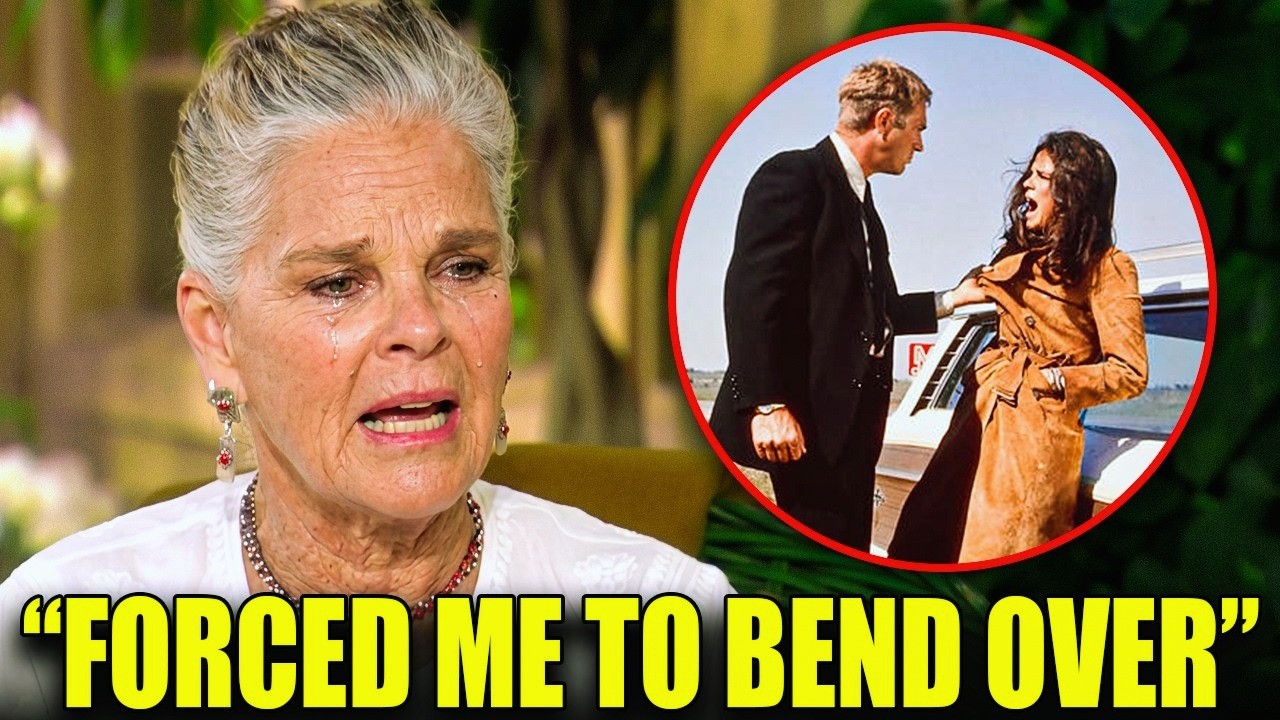 Decades after the 𝒔𝒄𝒂𝓃𝒹𝒶𝓁 that shocked Hollywood, MacGraw has offered a devastatingly honest explanation for what she felt for McQueen. It was never really love at all, she has said. It was something far more dangerous — something she now describes as closer to addiction.
To understand why it all happened so fast, you have to go back to where she came from. She was born Elizabeth Alice MacGraw on April 1st, 1939, in Pound Ridge, New York, to artist parents whose creative household projected an enviable polish.
Beneath that surface, things were far less comfortable. Money was tight, and her father carried unresolved anger from his own hard upbringing in an orphanage — anger that occasionally spilled into the household in ways she has since described as tense and, at times, frightening.
There was another quiet secret, too. Her mother’s Jewish heritage was something the family did not openly discuss while MacGraw was growing up, adding another layer of concealment to a childhood already defined by keeping up appearances.
Long before Hollywood, she had learned a skill that would define her adult life: how to look composed on the outside while something harder was happening underneath. That gap between image and reality would become the central pattern of her existence.
She earned a scholarship to Rosemary Hall in Connecticut and went on to Wellesley College, graduating in 1960 with a degree in art history. That June, at 21, she arrived in New York with almost no money and landed a job at Harper’s Bazaar as an assistant to the legendary Diana Vreeland.
It was an unglamorous, demanding job — steaming couture gowns, running proofs to the printer, absorbing how an editor could turn a photograph into a piece of theater. She was not in front of the camera; she was learning, piece by piece, exactly how the illusion of beauty gets built.
That education continued at Vogue and then for roughly six years in photographer Melvin Sokolsky’s studio, where fashion imagery was becoming more surreal and ambitious. She managed brutal shoot schedules and watched the smallest imperfection get cut from a frame without mercy.
By the time she stepped in front of a lens herself — modeling, then appearing in television commercials — she already understood that the woman people admired in a photograph was never an accident. She had been arranged, corrected, and refined by dozens of hands.
Audiences saw her on screen selling products long before they knew her name. In a strange way, she became familiar to the country before she became famous, and that early visibility quietly built the foundation for everything that came next.
Her jump into film came almost out of nowhere. Producer Stanley Jaffe and director Larry Peerce cast her as the lead in Goodbye, Columbus opposite Richard Benjamin, based on the Philip Roth novella. Released in 1969, it landed well beyond expectations.
 She won the Golden Globe for New Star of the Year, and almost overnight she went from behind-the-scenes fashion work to being one of the industry’s most talked about new faces. The same period brought Robert Evans into her life.
Evans, the head of production at Paramount, had spotted her in Goodbye, Columbus and moved quickly, first with a three-picture deal, then with a marriage proposal. They wed on October 24th, 1969, in what looked like a dream Hollywood pairing.
Their son Josh was born in January 1971, deepening the fairy tale image. But privately, MacGraw was adjusting to sudden fame, new motherhood, and a marriage to a man consumed by his own ambitions, all at once. The gap between image and reality was opening up again.
Then came Love Story. She was cast as Jenny Cavalleri opposite Ryan O’Neal, a modest romance nobody expected to become a cultural event. Released in December 1970, it became one of the highest-grossing films in American history.
MacGraw earned an Academy Award nomination and a Golden Globe, and audiences didn’t just admire the performance — they fused her with the character. The public wanted her to be Jenny offscreen, too: loyal, tender, composed, with almost no room for anything messier or more human.
Her marriage to Evans was already fraying by the time she began filming The Getaway in early 1972, opposite Steve McQueen. She has said she hesitated before taking the role, unsure about another grueling location shoot and wary of director Sam Peckinpah’s reputation. She took it anyway.
What was supposed to be a three-month job in Texas ended her five-year marriage and reshaped the rest of her life. In her 1991 memoir, Moving Pictures, she described the attraction to McQueen as almost chemical — something she felt physically before she could explain it.
Crew members noticed how close the two stayed between takes, and it was not long before the rumors reached Hollywood columnists. Both were married when filming started. McQueen had been with Neile Adams since 1956, and they had two children together.
By 1972, MacGraw had separated from Evans, and McQueen’s first marriage was effectively finished, too. She never tried to dress up what had happened as something noble, describing it plainly as an 𝒶𝒻𝒻𝒶𝒾𝓇 born out of betrayal.
She later said both she and McQueen were, in their own ways, running from something — industry pressure, insecurity, addiction, old private wounds neither of them had dealt with. Her divorce from Evans was finalized on June 7th, 1973.
 Just over a month later, on July 12th, she married McQueen in Cheyenne, Wyoming. Looking back, she has suggested that calm never felt entirely real to her — intensity did. Even while the public saw her as the picture of grace, her private choices kept pulling her toward chaos.
The speed of that turnaround shocked people at the time. Within roughly 18 months, she had gone from being one of the most celebrated wives in Hollywood to the center of one of its messiest scandals, all while still riding the wave of the biggest film of her career.
The marriage did not go the way the tabloids suggested. MacGraw has said McQueen wanted a far more traditional arrangement than she expected — her at home in Malibu managing the household, while he kept racing, working, and moving through the world however he pleased.
Friends and biographers have described his mood swinging sharply between charm and rage, with jealousy that could turn ordinary moments into interrogations lasting hours. At the same time, accounts described him disappearing for days, drinking heavily, and returning without explanation.
MacGraw has summed up those years as marked by infidelity, suspicion, and emotional strain, with some retrospectives describing the conflict escalating into something closer to psychological warfare. A prenuptial agreement reportedly limited what she could seek if the marriage ended.
Her career all but disappeared during those years. She did not appear in another feature film until Convoy in 1978. When the marriage finally ended in 1977, with the divorce finalized in 1978, she had lost more than five years of momentum.
She has said that after The Getaway, she essentially stepped back from filmmaking to raise her son and hold her marriage together. By the time she was free to return to work, the industry had simply moved on without her.
She kept working through the following decade — Convoy with Kris Kristofferson, then Players and Just Tell Me What You Want, and later television roles in The Winds of War and the primetime soap Dynasty. None of it restored the position she had held at the start of the seventies.
Then, in November 1980, Steve McQueen died of cancer at 50. MacGraw has spoken since about a complicated grief, saying more than once that she wished the two of them could have grown old together, sober, in a version of the relationship without the addiction that consumed so much of it.
By the mid-1980s, the aftermath of the marriage, the stalled career, and a pattern she kept repeating with difficult men had pulled her into what she has since called a kind of quiet collapse. In Moving Pictures, she wrote with unusual honesty about alcoholism and a compulsive pull toward destructive relationships.
 She described blackouts and compulsive behavior during the years her career was falling apart, and the strange experience of being seen publicly as a graceful, composed icon while her private life felt like it was unraveling. She has traced much of that pattern back to an early, unmet hunger for approval.
She identifies 1985 as the real turning point — the year she entered the Betty Ford Center. At a time when rehab still carried real stigma for public figures, a doctor telling her plainly that she was not a social drinker but an alcoholic heading toward disaster finally broke through years of denial.
In treatment, she began connecting the chaos of her adult life to older emotional wounds and started to understand why she had stayed in relationships that were hurting her. Looking back on McQueen years later, she has never romanticized it away.
She still calls the connection chemical and describes how powerful it was, but she came to see that pull itself as a kind of addiction — surrender, danger, and the urge to lose herself in someone else. After that, her life took a genuinely different shape.
She moved to New Mexico, reconnected with old friendships going back to her years in New York fashion, and threw herself into animal rescue work, yoga, and meditation, describing early mornings, hatha yoga, and walking her dogs in the desert as a kind of steadiness she had never had before.
It is also impossible to talk about MacGraw in 2026 without noting the absence of Ryan O’Neal, her Love Story co-star, who died in 2023. In the years before his death, the two had reunited for a stage tour of Love Letters, a play about two lifelong friends.
MacGraw has since called that reunion a genuine privilege, given everything the two of them had shared since 1970. It is a fitting echo — the woman once frozen in the public imagination as the picture-perfect face of romantic tragedy, still finding real connection decades later on her own terms.
Just weeks before this year’s birthday tributes rolled in, longtime friend Dolores Robinson posted a warm photo marking their decades of friendship — a small, ordinary moment for a woman who spent most of her life being anything but ordinary in the public eye.
Ali MacGraw’s story was never really about one doomed romance. It was about a woman who spent her whole life learning to hold a beautiful image together while something harder happened underneath it — and who eventually stopped needing to hide the difference between the two.