9 September 2026
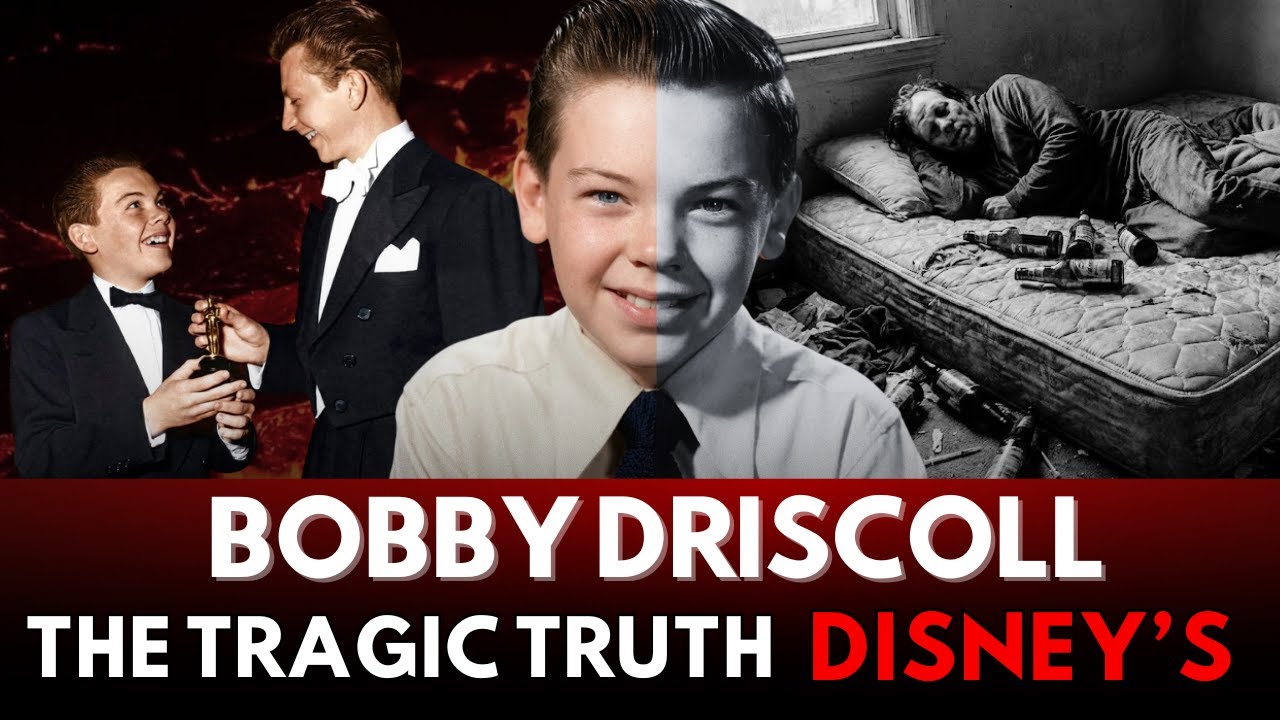
The faint scratching of a pen on paper, the desperate attempt to draw circles around a fragmented identity, is the only sound that lingers in the silence of Hart Island. It is the final, tragic echo of a life that was systematically dismantled by the very machinery that built it. The body of Bobby Driscoll, the original voice of Disney’s Peter Pan, was found rotting in a derelict Manhattan tenement, a nameless statistic in a city of millions. The circumstances of his death, discovered by children playing in an abandoned building at 371 East 10th Street on March 30, 1968, paint a portrait of absolute desolation. Surrounded by empty beer bottles, discarded needles, and scattered religious pamphlets, his face was so ravaged that police initially estimated his age as late 30s or 40s. He was 31 years old. The boy who once epitomized the bright, clean promise of Hollywood had been reduced to an anonymous John Doe, stripped of every marker of his former life, with no wallet, no identification, and no connection to the glittering world he had once conquered. The journey from the pinnacle of Disney’s Magic Kingdom to the morgue was a brutal one, marked by a calculated corporate discarding that began the moment his biology betrayed his contract. In 1946, the Walt Disney Company experimented with its first live-action flesh-and-blood asset in the form of young Bobby Driscoll. This was not merely a collaboration; it was a full-scale adoption. Walt Disney’s alleged affection, referred to as “Uncle Walt,” was a strategic grooming process. The love was conditional on the revenue. As long as the child smiled, sang, and captured the hearts of the American public, he was family. When that smile needed orthodontic work and his voice began to crack, the illusion shattered. The production of Peter Pan serves as a stark, chilling case study in the commodification of childhood. Bobby did not simply perform; he was a physical speculator, hoisted on primitive wire riggings, forced to dangle nearly 30 feet in the air for hours under baking thermal lights in a leather harness that cut into his ribs. Enduring severe cystic acne, he was subjected to hours of industrial-grade grease makeup. Under the intense heat, we forbid him to wipe the sweat or grimace in pain. The paint would melt, seep into his inflamed pores, and burn his skin underneath a manufactured porcelain shell. The cosmetic mask was a strain of torture that taught him his natural body, his human aging process, was a product defect. The final break was as abrupt as it was devastating. In 1953, driving up to the barricade of the studio where he had spent years, the security guard turned him away. His badge was revoked, his contract terminated early, the official reason listed was “severe acne.” He was told his product was no longer marketable. He was denied a meeting with the man he called “Uncle Walt.” The guards were the news: the adult structure of that father-figure was an administrative wall. This was not a firing; it was an erasure. A solo fully experienced internet column in a 24-hour period. In a world of capital, he was a defective asset. Cast out into the hallways of University High School, he was in a personal inferno. He, the star of his class, was a target. fellow students beat him, mock his voice, and detest his acne. School ‘s brutal culture gave way to the only thing that would stop the terror: a needle. He was 17 years old. Heroin wasn't a rebellion; it was an anesthesia. The tragic misunderstanding was portraying him as a hedonist; he was the opposite. He was a broken child hiding from the pain of being human. The narcotic provided the love and safety that his parents and Uncle Walt could not fake—a chemical replacement for the boyhood that had been stolen from him. His parents, Earl and Isabelle, did not rally to save him. They saw America, the reliagist social mores of the 1950s, and the shame of an addicted son; they washed their hands. The carpenter, the provider, had become the product, and when that product failed, the family structure disintegrated. He tried to escape the trap, embalming his soul in the counterculture art scene of New York City, making collages and poems of circular loops, desperate for a center that no longer existed. He sought authenticity in a world that fed him nothing but animation, but even the underground exploited him, looking for the fallen Disney boy, not the poet. He was a zoo animal in the East Village. The final fall was a slow, agonizing descent into the bitter winters of the Lower East Side. He was a truly transient, sleeping in squats with no heat, often looking barefoot in the snow, his body weakened by obliterative coronary atherosclerosis. The years of stress and systemic abuse had aged him into an old man. He was a living corpse. When he called for a friend at the time, he said, “I feel like I’m already dead, waiting for my body to catch up.” By March of 1968, the body had officially caught up. The NYC Department of Social Services took custody of the corpse. With no claims, he was shipped to Hart Island. He was buried in a pine box, a Potters field for the city’s unWhite. No headstone, no eulogy, just a cipher number. He weighed in an anonymous trench, layered with strangers, stacked with the same compactness as the data that the employees had harvested for their primitive computer. The quiet was the most damning part. For 19 months, the world had no idea he was gone. The corpse, marked “John Doe,” was only identified when his mother, Isabel Driscoll, contacted the FBI in 1969 as the studio was prepping a re-release of Song of the South but needed to find him for marketing. The fingerprints from his regular arrests matched the corpse. They finally connected the file to the body.…