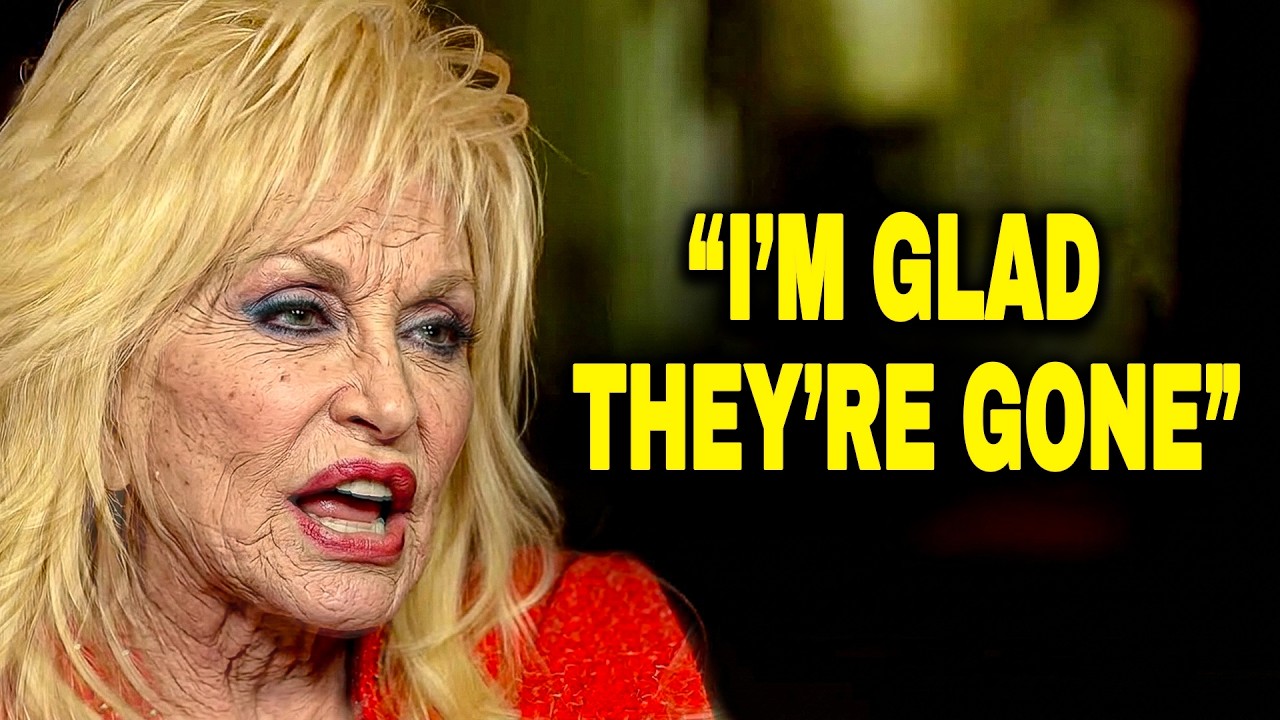
At 80 years old, Dolly Parton is not just a beloved icon but also a woman who has faced her share of battles in the entertainment industry. Known for her dazzling personality and heartfelt music, Dolly is now reflecting on the celebrities who tried to control her journey and the lessons she learned along the way.
Dolly Parton, often referred to as America’s sweetheart, has graced the music scene for over six decades. With her signature big hair and even bigger heart, she has charmed audiences while quietly navigating a complicated landscape filled with powerful men who underestimated her. Behind the glitz and glamour lies a story of resilience, defiance, and the fight for her own identity.
 Born in a one-room cabin in the Smoky Mountains of Tennessee in 1946, Dolly was the fourth of twelve children. Her humble beginnings as the daughter of a tobacco farmer who couldn’t read or write shaped her determination to succeed. By age ten, she was already making appearances on local television, and by thirteen, she had recorded her first single.
Her ambition led her to Nashville right after high school, where she quickly realized that the music industry was dominated by men who controlled the power and the purse strings.
Dolly’s early career was marked by writing songs for other artists, achieving her first hit with “Put It Off Until Tomorrow” in 1966. However, she soon discovered that the singers performing her songs were earning more than she was. When she signed with Monument Records, the label attempted to mold her into a pop star, but Dolly fought back, insisting on her country roots.
Her breakthrough came with “Dumb Blonde,” a song that boldly declared her independence.
 In 1968, she joined RCA Victor Records, where executives sought to soften her image. Yet, Dolly remained steadfast, understanding that her unique style was integral to her brand. She fought for ownership of her music, a decision that would prove crucial in her rise to fame and fortune.
By establishing her own publishing company in 1966, she secured her financial future, allowing her to amass a wealth that would enable her philanthropic endeavors, including the Imagination Library, which has donated over 200 million books to children worldwide.
Despite her sunny public persona, Dolly has had her share of conflicts with industry heavyweights. One of her most notable relationships was with Porter Wagoner, her mentor and duet partner. Their partnership, which lasted seven years, was fraught with tension as Porter sought to control her career.
 As Dolly’s star began to rise, she yearned for creative freedom and ultimately decided to leave the duo. In a poignant farewell, she penned “I Will Always Love You,” a song that would later become a global phenomenon thanks to Whitney Houston’s rendition.
However, their split was not without 𝒹𝓇𝒶𝓂𝒶. Years later, Porter sued Dolly, claiming she owed him money from their partnership. The legal battle highlighted the complexities of their relationship, turning them from collaborators into adversaries.
Yet, time healed their wounds, and they reconciled before Porter’s passing in 2007, with Dolly honoring him as one of country music’s greatest stars.
 Dolly also faced a significant crossroads when Elvis Presley expressed interest in recording “I Will Always Love You.” While many would have jumped at the chance to collaborate with the King of Rock and Roll, Dolly famously declined the offer when Elvis’s manager demanded she relinquish half of her publishing rights. This decision, though heartbreaking, proved to be one of the smartest moves of her career, allowing her to retain the financial benefits of her work when Whitney Houston later made the song a worldwide hit.
Another complicated relationship in Dolly’s life was with Johnny Cash. While she admired him as a legend, she was not afraid to challenge him on his struggles with addiction. Their dynamic was one of mutual respect, with Dolly recognizing his genius while also acknowledging his flaws.
After Cash’s death in 2003, she paid tribute to him, celebrating his impact on country music without glossing over his imperfections.
Dolly Parton’s journey is a testament to her strength and resilience in a male-dominated industry. She has navigated feuds, faced down powerful figures, and emerged as a symbol of empowerment for women everywhere. As she reflects on her past, one question remains: how will Dolly continue to inspire future generations with her story of triumph and independence?