The Spanish Royal House is reeling from the revelation of a 16th-century tragedy that experts now say was a catastrophic consequence of centuries of royal inbreeding. Newly analyzed historical records paint a harrowing portrait of Don Carlos, Prince of Asturias, the only son of King Philip II, as a deeply unstable, physically deformed young man whose behavior grew so dangerous that his own father was forced to imprison him in a desperate act of state security.
Born on July 8, 1545, Don Carlos was the product of a marriage between first cousins so close that his parents, Philip II and Maria Manuel of Portugal, shared a quarter of their DNA, making them the biological equivalent of half-siblings. This extreme consanguinity, which reduced his number of great-great-grandparents from 16 to just six, is now being cited by geneticists as the likely root of his profound physical and mental afflictions.
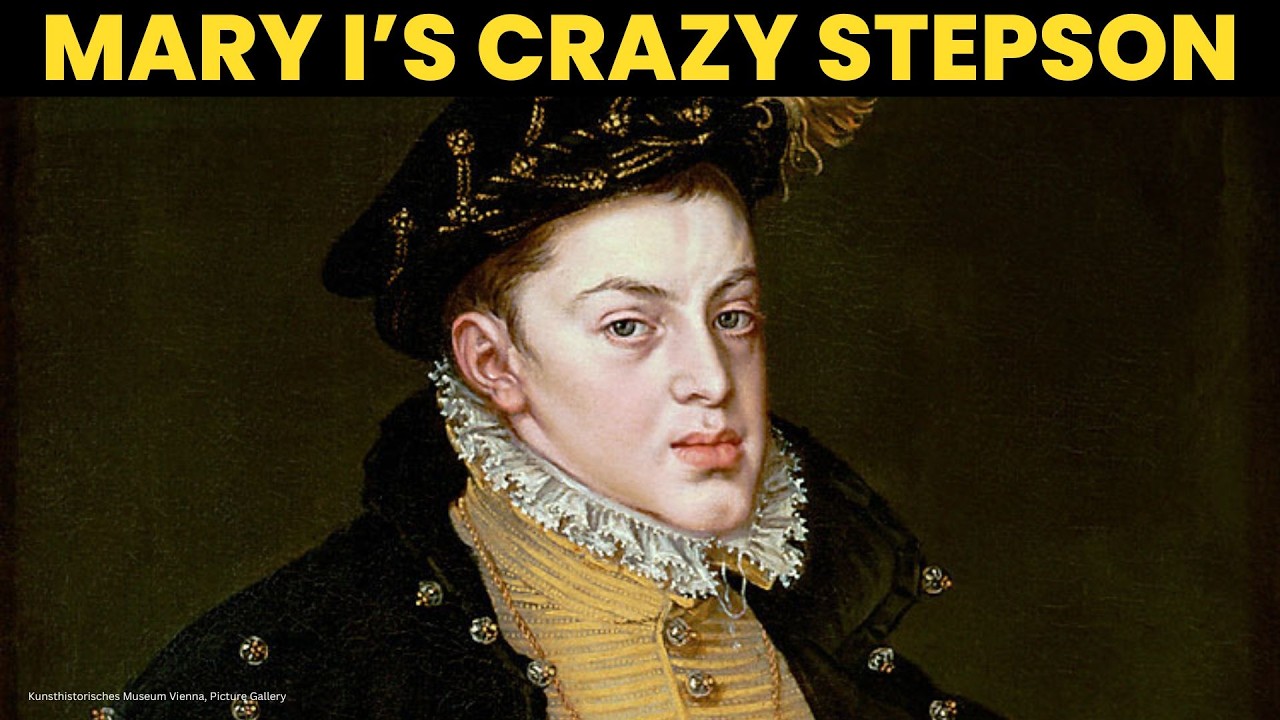 His mother died just four days after his birth from a massive hemorrhage, leaving the infant prince to be raised by a distant, often absent father. From the start, signs of trouble were unmistakable. Don Carlos had one leg shorter than the other, a sunken chest, a hunched back, and a weak, asymmetrical body.
Contemporary descriptions, such as that from Imperial Ambassador Adam von Dikstein in 1564, detail a young man with a harsh, sharp voice, difficulty speaking, and a deformed gait.
Mental instability manifested early. As a child, he displayed cruelty toward animals and humans alike, reportedly roasting creatures alive and forcing a shoemaker to eat a pair of shoes that did not fit. He was gluttonous, proud, and utterly unmanageable.
A Venetian observer noted that he wished neither to study nor to take physical exercise, but only to harm others. His behavior during a formal oath of allegiance in 1560 was an embarrassment, as he refused to let nobles kiss his hand until his father forced him.
Despite these red flags, King Philip II initially hoped his son would improve with age and education. Don Carlos was sent to the University of Alcalá de Henares with state counselors to instruct him. It was there, on April 19, 1562, that a catastrophic accident occurred that would worsen his condition dramatically.
While rushing to see a serving girl, he fell down a flight of stairs and struck his head against a closed door at the bottom.
The prince was knocked unconscious and soon developed severe fevers, partial paralysis, and slipped into a coma. His father rushed to his side. Doctors applied bleeding, cupping, balms, and even attempted trepanation, boring a hole into his skull, though they stopped when they saw the bone was solid.
 In a bizarre turn, the corpse of a long-dead Franciscan friar, known for its miraculous lack of decay, was laid against the unconscious prince. Shortly after, Carlos began to recover.
This apparent miracle led to the canonization of the friar as Saint Didacus of Alcalá, after whom the city of San Diego, California, is named. But the recovery was short-lived. Don Carlos emerged from his coma with his mental state even more volatile.
He remained subject to severe fevers, continued his violent outbursts, and developed an obsessive and inappropriate devotion to his young stepmother, Elizabeth of Valois, whom he had once been engaged to marry.
By 1565, the prince was desperate to leave Spain, either to go soldiering or to stir up discontent in the Low Countries against his father. When King Philip denied him command, Don Carlos flew into a rage and reportedly tried to 𝓀𝒾𝓁𝓁 the Duke of Alba with a knife. He began plotting to flee the country without permission, a move that would have sparked a political crisis and possibly war across the Spanish Empire.
Most chillingly, he strongly insinuated to his confessor that he planned to 𝓀𝒾𝓁𝓁 his own father.
At Christmas 1567, Philip learned through his illegitimate half-brother that the prince was planning to escape to Italy. The king realized drastic action was necessary. On the night of January 18, 1568, Philip, wearing armor and a helmet under his robes, crept into his son’s bedchamber with four ministers and guards.
 They silently removed all papers and weapons. When Don Carlos awoke, he was told he would not be killed but was placed under immediate house arrest.
The prince begged to be murdered rather than imprisoned. All heavy objects were removed from his cell, windows were nailed shut, and he was moved to an even more secure room. He would spend the rest of his life in solitary confinement, allowed only religious texts and occasional visits from a doctor or barber.
His father, who had no other living sons, faced the unimaginable decision to effectively end his own dynasty’s direct line.
Philip attempted to control the narrative, telling the Pope that his son was not a heretic or rebel but simply completely lacking in the capacity needed for ruling over states. To his sister, he admitted the action had greatly grieved him. But the imprisonment came at a terrible cost.
Don Carlos, already unstable, deteriorated rapidly. He went on hunger strikes, then gorged himself. He swallowed a diamond ring, hoping the stone would poison him.
He covered his bed in snow, determined to ruin his health.
 In July 1568, he fell fatally ill. King Philip visited one last time to give his blessing. On July 24, Don Carlos died at age 23.
He was buried with full royal honors, first in Madrid and later at El Escorial. The court went into official mourning for a year.
Rumors immediately circulated that the prince had been secretly murdered on his father’s orders, possibly by poison or even beheading. But historians note that motive does not equal evidence. If Philip had wanted him dead, there would have been no point in imprisoning him first; the deed could have been done quietly months earlier.
Don Carlos died professing the Catholic faith, surrounded by witnesses.
Yet the tragedy did not end with his death. Philip II later married his own niece, Anna of Austria, apparently still not having learned the dangers of incest. Only one of their children survived infancy, the future Philip III.
The Habsburg dynasty’s reliance on intra-family marriage would continue for generations, culminating in the severely disabled Charles II, whose genetic defects ultimately ended the Spanish line.
Experts now argue that the extreme inbreeding in Don Carlos’s family tree, with his parents being double first cousins and his great-grandmother Joanna the Mad still alive at his birth, was at least partly responsible for his mental and physical ailments. Added to this were the illnesses and head trauma he suffered, which likely compounded an already fragile constitution. His story stands as a grim cautionary tale about the perils of royal intermarriage, a practice driven by the desire to keep power and bloodlines pure, but which instead produced a prince who was a danger to himself and everyone around him.
The archives of the Spanish court, long sealed, continue to yield new details about this dark chapter. As historians piece together the full account, one thing is clear: the tragic life of Don Carlos of Spain is a stark illustration of the old adage that the sins of the fathers are visited upon the children, quite literally, in their very DNA. The city of San Diego, named after the saint whose mummified remains were placed beside the comatose prince, serves as an enduring, if ironic, monument to this extraordinary and troubling story.