For decades, the world adored Bing Crosby and Bob Hope as Hollywood’s closest comedy duo, their friendship believed unbreakable. New revelations now expose a long-hidden truth: their partnership masked deep personal resentments and opposing ambitions, kept secret to preserve a lucrative public image and Hollywood’s golden age charm.
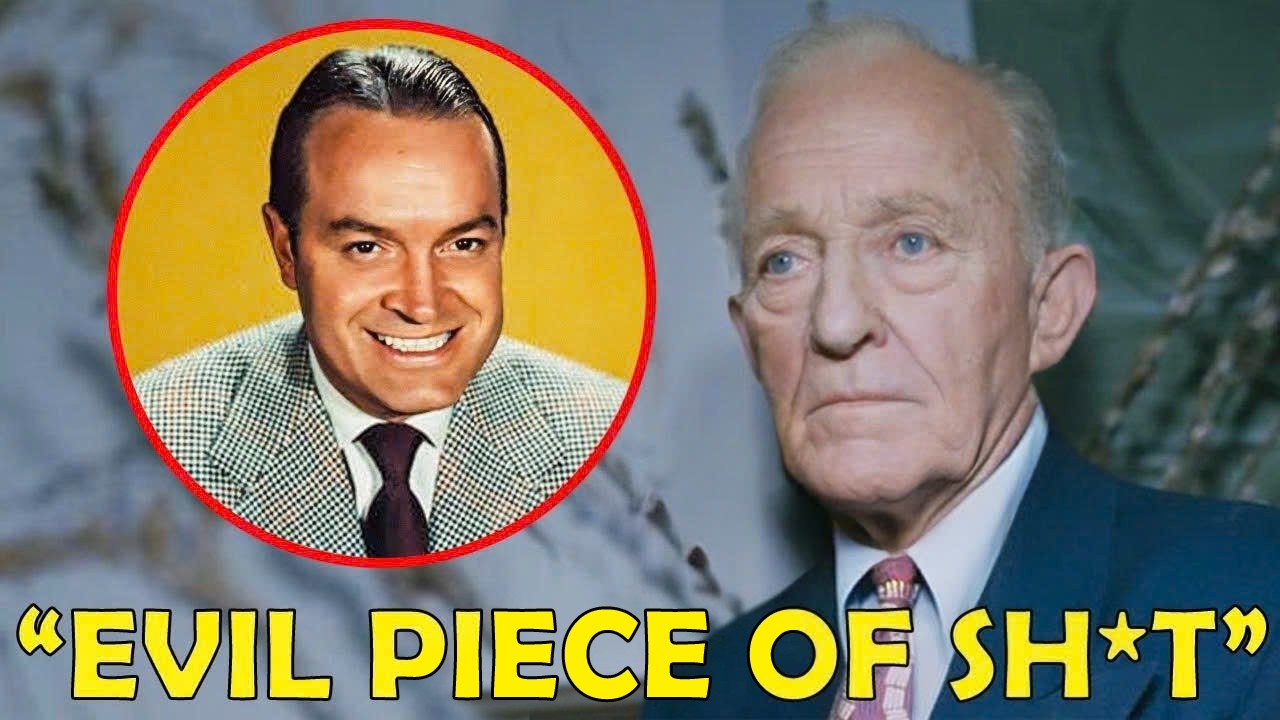
Bing Crosby and Bob Hope’s legendary Road movies created an illusion of effortless camaraderie that captivated audiences worldwide. Their on-screen chemistry seemed spontaneous and genuine, making them appear inseparable. However, behind the scenes, these performances concealed a chasm of irritation and conflicting personalities that neither man publicly acknowledged.
The origins of their partnership trace back to vaudeville, where both honed their craft with sharp timing and relentless improvisation. A mutual friend’s intuition that their contrasting characters would spark magic proved correct. Crosby’s laid-back charm counterbalanced Hope’s restless energy, producing dynamic routines that audiences loved for their electric tension.
Despite their seemingly perfect on-screen friendship, Crosby and Hope’s real relationship was marked by contrasting attitudes toward fame and success. Crosby, already a Hollywood titan, was cool, detached, and guarded his privacy fiercely. Hope, still climbing, was ambitious, craving constant attention and always networking to maintain his rising star status.

This fundamental clash fostered an unspoken rivalry. Crosby found Hope’s ingrained neediness for approval exhausting and sometimes reckless. Conversely, Hope perceived Crosby’s aloofness as arrogance. Between takes, Hope entertained crews and reporters while Crosby sought isolation, often quietly watching horse races or focusing on personal interests to avoid socializing.
Their differing approaches extended far beyond professional contexts. Crosby preferred selective appearances and comfort, indulging in golf and horse racing away from the public eye. Hope, meanwhile, chased every chance to remain visible—hosting award shows, television specials, USO tours, and political events—cementing his place in the public’s eye but fueling Crosby’s disdain.
World War II highlighted their divergent ways of connecting with audiences. Crosby’s heartfelt rendition of “White Christmas” emotionally reached soldiers yearning for home. Hope dedicated himself to the grueling task of entertaining troops worldwide, but Crosby privately questioned whether Hope’s military tours were driven more by personal publicity than pure patriotism.
Though their films ridiculed Hollywood and broke the fourth wall with clever humor, the partnership’s underlying tension never vanished. The public saw a harmonious duo, but behind closed doors, both men recognized flaws in each other that reflected parts of themselves—resentments and insecurities carefully masked for decades.

Hope’s well-known womanizing contrasted with Crosby’s stern insistence on privacy regarding personal indiscretions. Both men were unfaithful, but Crosby’s disdain grew as Hope’s scandals risked public exposure. Crosby viewed Hope’s relentless self-promotion as endangering their carefully maintained public images, feeding a growing rift between the two legends.
The peak of this tension surfaced when Crosby, despite a close professional bond, skipped a roast honoring Hope at the Friars Club in the 1940s, curtly remarking he “wasn’t hungry.” This icy dismissal encapsulated Crosby’s broader discomfort with the public demands Hope embraced as essential to success, deepening the divide.
As cultural tides shifted in the 1960s and ’70s, Hope’s increasingly outdated political and social views alienated younger audiences. Simultaneously, Crosby’s own legacy darkened after his son’s memoir revealed 𝒶𝓁𝓁𝑒𝑔𝒶𝓉𝒾𝓸𝓃𝓈 of severe 𝓪𝓫𝓾𝓼𝓮 and emotional cruelty, shattering the wholesome image audiences once trusted.
Their joint projects dwindled to nostalgic reunions, with another Road film planned but never realized due to Crosby’s sudden 1977 death. Hope’s public grief surprised many, revealing a rare moment of vulnerability and acknowledging Crosby’s monumental impact on his life and career despite their fraught history.
After Crosby’s passing, Hope continued to protect the public narrative of their friendship, preserving the fantasy that had benefited both throughout their careers. Behind the curtain, they were not best friends but complex partners bound by business necessity, mutual respect, and the comfortable illusion created by Hollywood’s golden machinery.
Their story dismantles the myth of effortless camaraderie, exposing the raw realities of ambition, ego, and contrasting temperaments. This revelation reshapes how their films are viewed, revealing that the natural spark audiences adored was fueled by a volatile, complicated relationship carefully concealed for decades.
The explosive insight into Crosby and Hope’s true dynamics serves as a stark reminder of the illusions Hollywood crafts. Beneath the laughs and iconic performances lay a simmering tension that challenged their public personas and defined one of the most remarkable yet conflicted partnerships in entertainment history.

As fans and historians reassess these revelations, the lasting legacy of Bing Crosby and Bob Hope is complicated by human frailty and professional rivalry. Their combined influence on comedy and entertainment endures—but the personal cost behind the curtain adds a somber dimension seldom acknowledged before now.
What remains undeniable is that their differences, though divisive, fueled a creative electricity that dazzled generations. The real story behind their legendary partnership is one of contrast, restraint, and the complicated dance between friendship and business that kept Hollywood’s golden light shining bright.


