Jeffrey Hunter, famed actor known for iconic roles in “The Searchers” and “King of Kings,” tragically died on May 27, 1969, at just 42. The untimely death followed a severe head injury suffered at his Van Nuys home, marking a heartbreaking end to a brilliant yet short career.
Born Henry Herman McKinnies Jr. on November 25, 1926, in New Orleans, Hunter’s early life was shaped by relocation to Milwaukee and exposure to the arts. His radio acting during high school blossomed into theater opportunities in Chicago, setting the stage for his future in film.
After serving in the U.S. Navy from 1945 to 1946, Hunter pursued theater studies at Northwestern University and UCLA. Hollywood quickly took notice, and 20th Century Fox signed him, launching a two-decade career filled with substantial roles and steady work.

Hunter gained fame starring or co-starring in classics such as “The Searchers,” “The Last Hurrah,” and “King of Kings.” His charismatic screen presence captivated audiences, solidifying his status as a leading man during Hollywood’s golden era.
In 1963, Hunter inked a two-year contract with Warner Brothers, headlining the western series “Temple Houston.” Despite its promising start, the show was cancelled in 1964, but Hunter’s career momentum continued with other notable projects.
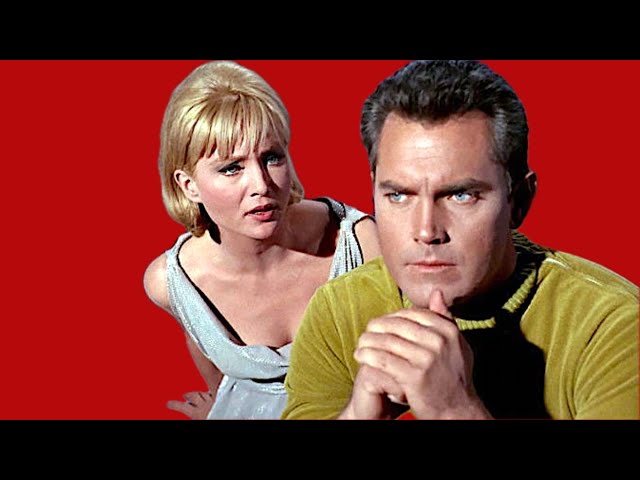
Perhaps most famously, Hunter portrayed Captain Christopher Pike in the original 1964 “Star Trek” pilot, “The Cage.” He chose to exit before the series launched, declining to film a second pilot, an unusual decision that profoundly impacted the iconic franchise’s future.
Had Hunter remained as Captain Pike, the legendary character would have become a household name under his portrayal, altering “Star Trek” history—and leaving William Shatner’s career trajectory vastly different from the one known today.
Following his departure from “Star Trek,” Hunter pursued film roles overseas, appearing in Europe and Asia, expanding his international appeal despite stepping back from the American television spotlight.

His personal life saw three marriages. His first, to actress Barbara Rush from 1950 to 1955, produced their son Christopher. Subsequent marriages included union with model Dusty Bartlett and later actress Emily Mlin, best known for “General Hospital.”
Tragedy struck in November 1968 while filming “Cry Chicago” in Spain. An on-set explosion led to a concussion and severe trauma when a rigged car window detonated inward, an accident that visibly deteriorated Hunter’s health and mobility.
Despite the concussion and a displaced vertebra, doctors initially reported no grave damage. Yet Hunter’s condition was grave; he endured shock and severe physical limitations immediately after the accident, signaling a critical turning point in his life.
On May 26, 1969, Hunter suffered a catastrophic fall at his Van Nuys home. Striking his head on a banister after tumbling down three steps, he fractured his skull—a fatal injury that claimed his life the following day after emergency brain surgery.
Hunter’s death sent shockwaves through Hollywood, where his talent and charisma had long been admired. His funeral at St. Mark’s Episcopal Church and burial at Glen Haven Memorial Park marked a somber farewell to a once-rising star.
His demise echoes the dangers involved in film and television production, reminiscent of other tragic losses on set—underscoring a relentless risk that actors and crew alike sometimes face in the pursuit of entertainment.

The life and sad ending of Jeffrey Hunter remind us of a gifted actor whose vibrant career was prematurely curtailed by misfortune. His legacy persists in the films and shows that continue to captivate fans across generations.
As the entertainment world reflects on Hunter’s legacy, his story serves as a solemn warning and a tribute—to artistic brilliance shadowed by tragedy, and a life snatched away too soon from the spotlight it so deserved.