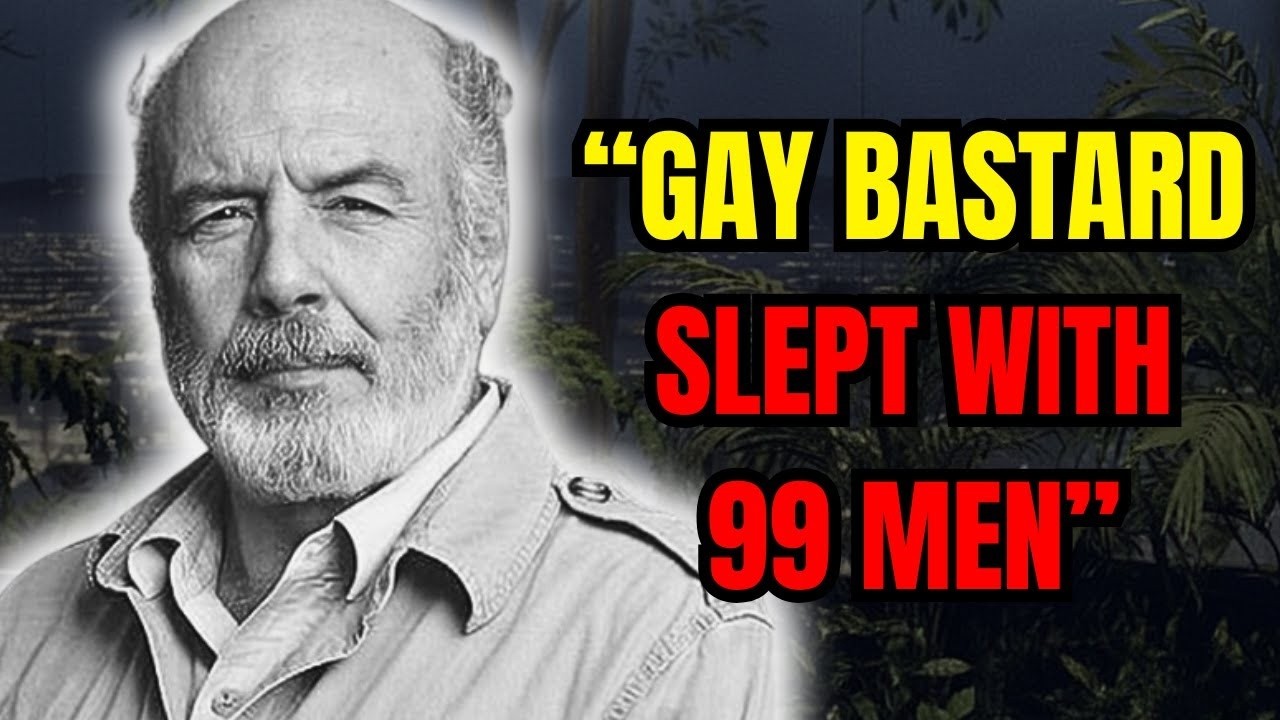
Pernell Roberts was a Hollywood enigma, a man whose on-screen calm masked a turbulent inner life. Best known for his role as Adam Cartwright on the iconic series Bonanza, he was a figure of strength and authority, yet his off-screen persona was anything but simple. Driven by unwavering principles, Roberts was willing to sacrifice fame and fortune for the sake of integrity, making him one of the most respected—and misunderstood—figures in the entertainment industry.
What many fans might not realize is that Roberts harbored a list of actors he could not abide. These weren’t mere grudges born of jealousy; they stemmed from profound ideological clashes. There were five names on that list, each representing a facet of classic Hollywood that often remained hidden beneath a polished surface.
 Born on May 18, 1928, in Waycross, Georgia, Roberts grew up in a modest household during the Great Depression. His father worked as a Dr. Pepper sales manager, while his mother nurtured his creative inclinations.
Unlike many boys his age, who were drawn to sports, Roberts found solace in music and performance. He played in the school band and participated in church events, which ignited a passion that would eventually lead him to Hollywood.
After high school, Roberts initially pursued a degree in engineering at Georgia Tech, but soon realized the path didn’t ignite his passion. In 1946, he enlisted in the United States Marine Corps, where he continued to explore his artistic side by playing in a Marine band. Following his service, he enrolled at the University of Maryland, where his involvement in theater solidified his commitment to acting.
He made the bold decision to leave college and pursue a career in New York City, armed with little more than determination.
By the early 1950s, Roberts was studying at the American Academy of Dramatic Arts and taking on odd jobs to make ends meet. His perseverance paid off when he landed his first stage role in The Man Who Came to Dinner in 1952. This marked the beginning of a career that would prioritize authenticity over fame.
He quickly gained recognition for his powerful performances in classical theater, eventually catching Hollywood’s eye.
 In 1958, Roberts made his film debut in Desire Under the Elms alongside Sophia Loren. He soon transitioned to television, appearing in popular westerns like Gunsmoke. But it was 1959 that would change everything; he was cast as Adam Cartwright in NBC’s Bonanza.
The show became an instant hit, making him a household name. Yet, beneath the surface, Roberts felt increasingly stifled by the simplistic scripts and moral lessons that he believed lacked depth.
Roberts was not one to shy away from confrontation. He often clashed with producers over the quality of writing and the portrayal of Native American characters, which he found disrespectful. In 1965, at the height of his fame, he made a 𝓈𝒽𝓸𝒸𝓀𝒾𝓃𝑔 decision to leave Bonanza, choosing to return to theater and rebuild his career on his own terms.
This bold move stunned Hollywood, but it ultimately led him to renewed success in the late 1970s with Trapper John, MD.
Yet, the list of actors he couldn’t stand lingered in the background. The first was Michael Landon, who initially seemed like a friend. As Bonanza gained popularity, Landon’s ambition began to overshadow their camaraderie.
 Roberts felt that Landon was more focused on elevating his own status than improving the show. Their friendship deteriorated after a confrontation, leaving Roberts bitter about Landon’s carefully crafted public persona.
The second name was Dan Blocker, who had once shared a deep bond with Roberts. Both men valued storytelling, but when Roberts became increasingly vocal about his concerns, Blocker chose to be the peacemaker. To Roberts, this felt like a betrayal, and their friendship faded into polite distance.
Chuck Connors, the star of The Rifleman, was the third name on Roberts’ list. Their conflict arose during a charity event where Connors’ behavior struck Roberts as self-serving and arrogant. After an intense exchange, their relationship soured, with Roberts describing Connors as lacking genuine substance.
James Drury, known for The Virginian, represented the ideological divide that troubled Roberts deeply. Their heated debate during a televised panel discussion showcased their opposing views on the role of entertainment in addressing social issues. Roberts believed in using his platform for activism, while Drury preferred to keep entertainment free of political messages.
This clash solidified their animosity.
 Roberts’ personal life was equally complex. He married four times, with his first marriage to theater professor Vera producing his only child, Jonathan. The pressures of fame and his restless spirit strained his relationships, leading to multiple divorces.
The tragic loss of Jonathan in a motorcycle accident in 1989 left a profound mark on Roberts, a grief that would shadow him for the rest of his life.
In his later years, Roberts distanced himself from Hollywood’s social scene, focusing on music, activism, and his loved ones. He battled pancreatic cancer privately, demonstrating the same quiet strength that defined his life. On January 24, 2010, he passed away at his Malibu home, leaving behind a legacy that transcended his roles as Adam Cartwright and Dr.
John McIntyre.
Pernell Roberts could have easily remained in the limelight, but he chose a path of integrity and purpose instead. His story raises questions about the true cost of fame and the courage it takes to stand by one’s principles. What other hidden stories lie beneath the surface of Hollywood’s golden age?