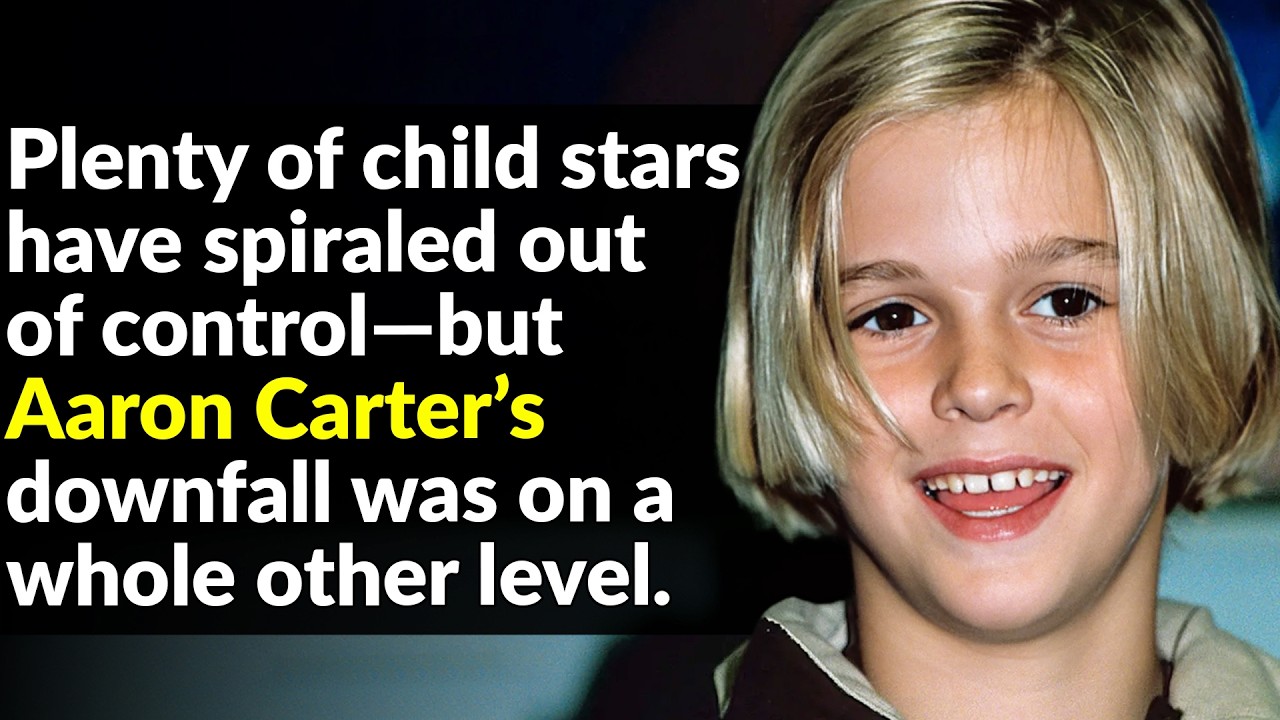
The final gasp of Aaron Carter’s troubled life was not a dramatic confrontation or a public meltdown, but a silent, solitary tragedy inside a bathtub, with a can of compressed air and a bottle of pills nearby. The coroner’s report, released five months after his body was discovered by his housekeeper, confirmed what many who loved him feared most: the 34-year-old former pop sensation died from the very demons he had battled publicly for decades. The official cause was accidental drowning, complicated by the effects of difluoroethane—a propellant found in common household cleaning products that Carter had admitted to huffing—and the anti-anxiety medication Xanax.
It was a clinical end to a life that had been anything but clinical, a life marked by staggering highs, devastating lows, and a family saga that reads more like a Greek tragedy than a Hollywood fairy tale.
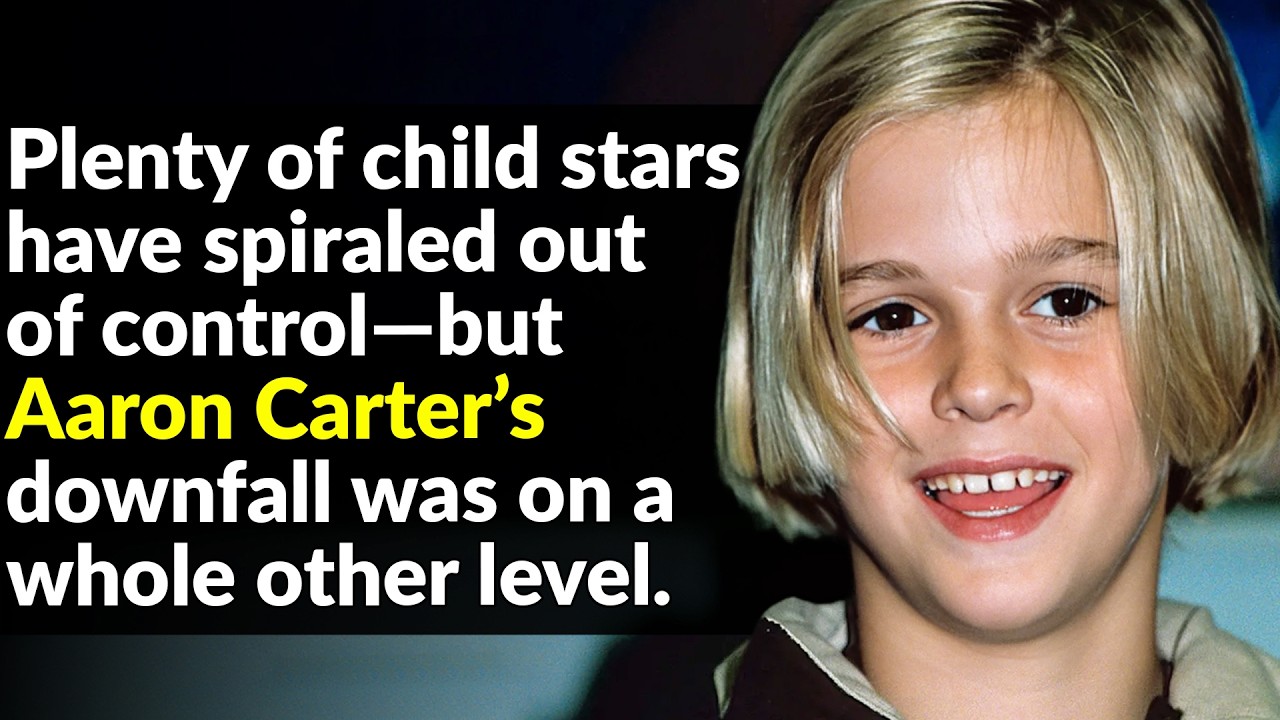 The story of Aaron Carter begins not with a silver spoon, but with a van. Born on December 7, 1987, to Jane and Robert Carter, the family was destitute, living out of a vehicle at their lowest point. Yet, from this crushing poverty emerged not one, but two child stars.
Aaron’s older brother, Nick, found fame as a member of the Backstreet Boys, and at just nine years old, Aaron was thrust into the spotlight as his opening act. The response was immediate and overwhelming. His self-titled debut album sold a million copies worldwide, and his follow-up, “Aaron’s Party (Come Get It),” exploded with three million sales in the US alone.
He was a global phenomenon, a pint-sized heartthrob with a grin that launched a thousand magazine covers, but the cost of that fame was his childhood. The cameras, the screaming fans, and the relentless schedule replaced playgrounds and school days, setting the stage for a psychological fracture that would never fully heal.
As his star rose, so did the vultures. The most notorious was Lou Pearlman, the mastermind behind the Backstreet Boys and NSYNC, who managed Carter’s early career. The Carters would later sue Pearlman for failing to pay hundreds of thousands of dollars in royalties, a case that was settled out of court.
Pearlman’s eventual downfall—a 25-year prison sentence for running one of the largest Ponzi schemes in American history—revealed that Carter was one of his earliest victims. But the exploitation didn’t stop with a crooked manager. The most devastating betrayal came from within his own home.
After turning 18, Carter discovered that his parents, who were supposed to safeguard his earnings, had squandered his fortune. Instead of the millions he should have had, he found a bank account with just $2 million and a staggering $4 million tax bill. The childhood he had sacrificed to support his family had been traded away, leaving him with a financial albatross that would haunt him for the rest of his life.
The personal turmoil of Carter’s teen years was equally chaotic. His romance with Hilary Duff, the “Lizzie McGuire” star, was a tabloid staple, but it ended in heartbreak when Carter admitted to cheating on her with her best friend, Lindsay Lohan. This betrayal ignited a years-long feud between Duff and Lohan, a public spectacle that Carter watched from the sidelines.
 His own family life was crumbling as well. He learned of his parents’ divorce an hour before filming an episode of “MTV Cribs,” forced to maintain a brave face for the cameras while his world fell apart. By 19, he was engaged to adult model Keri Ann Peniche, a proposal he made on stage in Las Vegas, only to call it off six days later, admitting it was an impulsive mistake.
The pattern was set: a desperate search for stability and love, followed by self-sabotage and chaos.
The legal troubles began in earnest in February 2008, when police pulled him over for speeding and discovered illicit substances in his possession. It was the first of many encounters with law enforcement. In 2011, he entered rehab, initially citing “emotional and spiritual issues,” but a source soon revealed the truth: he was battling addiction.
While he completed treatment, the demons remained. The release of Hilary Duff’s pregnancy news sent him into a public spiral, declaring he would “spend the rest of my life trying to better myself to get back with her.” Duff, now married and a mother, was clearly uncomfortable with the attention, stating they “didn’t even really know each other.”
His career, which had peaked in childhood, was in freefall. He tried reality TV, a stint on “Dancing with the Stars,” and a grueling 150-show tour, but nothing could dent the massive tax debt that loomed over him, forcing him to declare bankruptcy in 2013.
It was during this period that Carter began to reveal the horrifying extent of his family’s dysfunction. He claimed his parents used his childhood earnings to buy 15 houses and 30 cars, while failing to set aside the required 15% for him. In a shocking interview, he alleged that his father, in a fit of rage over a refused check, fired a .
 44 magnum next to his ear, causing 70% deafness in that ear. The image of a father terrorizing his own son with a gun is a stark illustration of the violence that permeated Carter’s upbringing. His mental health deteriorated further.
In 2017, he was arrested for impaired driving and substances, pleading guilty and receiving probation. A month later, he made a surprise confession on Twitter, revealing that he was attracted to both men and women, a statement that was met with an outpouring of support but also highlighted his ongoing struggle for identity.
The final years of Carter’s life were a blur of bizarre incidents, public breakdowns, and desperate pleas for help. In 2019, he was granted a temporary restraining order against his ex-girlfriend, Lina Valentina, claiming she threatened him with a knife. He also sparked outrage by offering to sell a rescue dog for $3,500, which he insisted was a joke, but which raised serious concerns about his state of mind.
That same year, he revealed on television that he had been diagnosed with schizophrenia, bipolar disorder, manic depression, and anxiety, and admitted to a huffing addiction. The family drama reached a fever pitch when he accused his siblings, including Nick, of inappropriate behavior. The accusations led to Nick and his sister Angel obtaining restraining orders against him, after Carter allegedly confessed to hearing voices telling him to harm Nick’s pregnant wife.
The Carter family was shattered beyond repair.
In the midst of this chaos, Carter found a new partner, Melanie Martin, a bartender and adult entertainer. Their relationship was a volatile rollercoaster. He tattooed her name on his forehead, they announced a pregnancy, suffered a miscarriage, and then welcomed a son, Prince Lyric, in November 2021.
 But the cycle of abuse and addiction continued. Martin filed for a restraining order in February 2022, accusing him of breaking her ribs in a jealous rage. Both lost custody of their son to Martin’s mother.
Carter checked into rehab, and in a glimmer of hope, he reached out to his estranged brother Nick, who planned to get in touch after his tour. That conversation never happened. On November 5, 2022, Aaron Carter was found dead in his bathtub.
The world was shocked, but not surprised. His was a tragedy that had been unfolding in public for years, a slow-motion car crash that no one seemed able to stop.
The aftermath was as complicated as his life. Just two days after his passing, producers released his final album, “Blacklisted,” a month early, a move his own management called “disrespectful and greedy.” It was a final, cynical exploitation of a man who had been exploited his entire life.
Yet, in a surprising turn, his family showed a rare moment of unity. With no will and an estate valued at $550,000, they agreed that everything should go to his son, Prince Lyric. Nick Carter, still on tour, performed the next night and shared a heartfelt tribute, acknowledging their “complicated relationship” but insisting that his love for his brother never faded.
He blamed “addiction and mental illness” as the real villains, a sentiment that rings tragically true. Aaron Carter’s story is a cautionary tale about the corrosive nature of fame, the devastating impact of parental betrayal, and the relentless, often fatal, grip of mental illness and addiction. He was a victim of a system that chewed him up and spat him out, and his story serves as a grim reminder of the human cost behind the glittering facade of the entertainment industry.