Paul Newman’s youngest daughter, Clea Newman, has shattered decades of silence, revealing the raw, complex reality behind the Hollywood icon’s public image. After years of quiet reflection, her candid revelations expose a side of Paul Newman marked by private struggles, family pain, and an ongoing battle to reconcile his past mistakes with his enduring legacy.
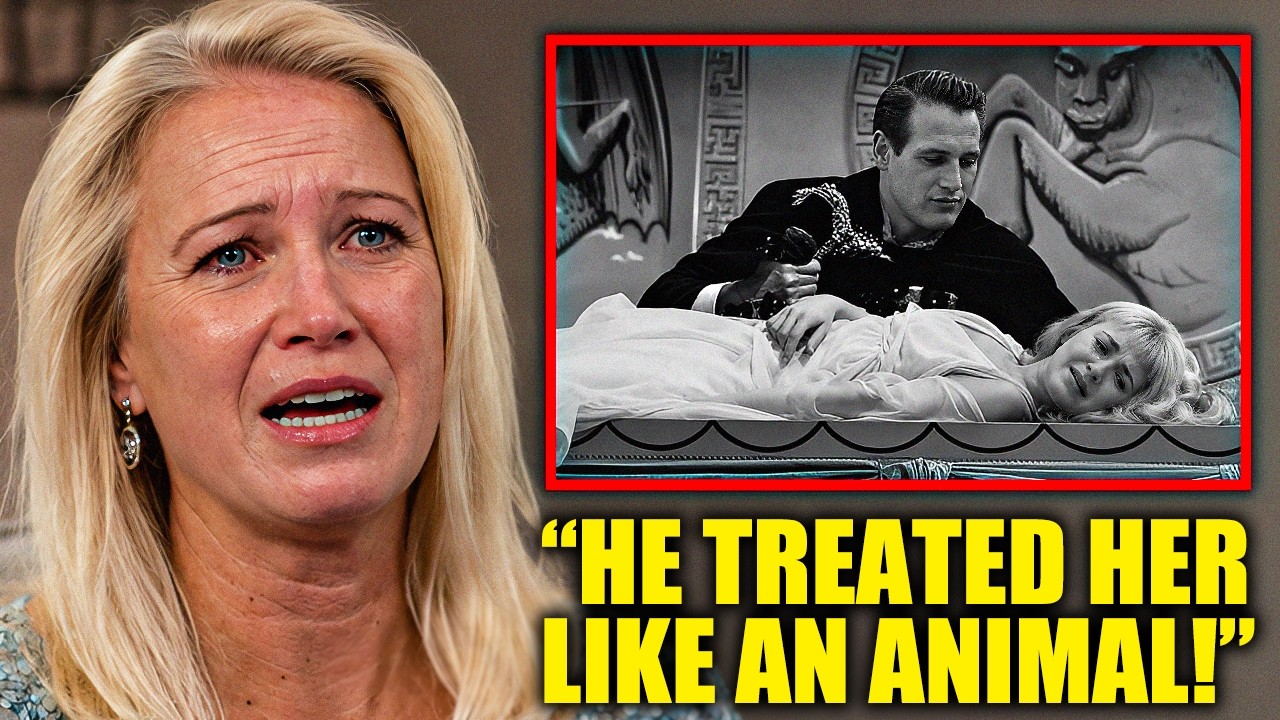
Paul Newman, a celebrated actor famed for his mesmerizing blue eyes and powerful performances, was long viewed as Hollywood royalty with a flawless marriage to Joanne Woodward. Now, decades later, Clea Newman’s voice breaks through, offering unprecedented insight into the man behind the legend—the insecurities, regrets, and family tragedies that shaped him beyond the silver screen.

Born in 1925 in Ohio, Newman’s early life was riddled with identity struggles. Raised between Jewish and Christian Science roots, he often felt like an outsider, even facing rejection from a high school fraternity due to his heritage. Acting became a refuge, yet beneath his charismatic exterior lay deep wounds that would follow him throughout his life.
Newman’s wartime service added layers of trauma to his character. Serving as a radio operator and tail gunner during World War II, he narrowly escaped death when a kamikaze attack struck his aircraft carrier, an event that haunted him silently for years. The war’s brutal realities contrasted sharply with the mythic image he would later project.
Post-war, Paul Newman forged a path in theatre and television while struggling to balance career ambitions with his first marriage to Jacqueline Witte. Their relationship suffered under the strain of his rising stardom and the magnetic pull of fellow actress Joanne Woodward, whose eventual partnership with Newman marked both a professional and deeply personal turning point.
Newman’s ascent to Hollywood stardom was punctuated by both triumph and heartache. Iconic roles in “The Hustler,” “Cool Hand Luke,” and “Butch Cassidy and the Sundance Kid” cemented his status, yet his private life revealed cracks beneath the perfect facade. His divorce from Jacqueline and subsequent marriage to Joanne unfolded amidst public fascination and private turmoil.
The Newman marriage, often portrayed as the epitome of Hollywood devotion, was far more nuanced. Clea reveals moments overshadowed by Paul’s struggles with alcoholism, guilt over his son Scott’s tragic death, and the persistent tension of living under the microscope of fame. Yet amid these challenges, the couple’s bond endured through mutual effort and shared resilience.
Scott Newman’s untimely death in 1978 from an accidental 𝒹𝓇𝓊𝑔 overdose devastated Paul and his family. The loss left an indelible mark, fueling Paul’s deep sense of guilt and pushing him toward extensive philanthropic work, including establishing the Scott Newman Center for 𝒹𝓇𝓊𝑔 𝓪𝓫𝓾𝓼𝓮 prevention—a lasting tribute born from profound personal tragedy.
Despite his success, Paul battled inner demons. His memoir, unearthed decades after his passing, reveals a man wrestling with self-judgment, addiction, and the desire for redemption. These revelations, now publicly embraced by his children, offer a stark contrast to his polished public persona and expose the complexity of celebrity.

Newman’s charitable efforts revolutionized celebrity philanthropy. With Newman’s Own, he pioneered a business model funneling all profits to charity. His commitment extended beyond money—he personally engaged in causes supporting children, clean water access, and refugee aid, illustrating his drive to make a tangible difference amidst personal struggles.
As age dimmed his acting roles, Newman devoted himself more fervently to family and charity. Clea’s reflections reveal a devoted husband and father striving to repair early mistakes. Even as memory and health waned in his final years, his love for Joanne remained unwavering, highlighting a lifelong partnership that withstood hardship and heartbreak.
Paul Newman’s death in 2008 closed a chapter on a life filled with dazzling highs and shattering lows. His funeral was private, reflecting the intimate circle of family who bore witness to the man behind the camera. Joanne Woodward’s battle with Alzheimer’s further intensified the family’s private struggles in the years following his passing.
The posthumous discovery and publication of Newman’s memoir shattered long-held myths about the man. Interviews, letters, and confessions paint a portrait of a flawed yet profoundly human figure, whose daughters now speak openly about the complexities of their father’s legacy—balancing admiration with unvarnished truths.
Susan Newman, Paul’s daughter from his first marriage, quietly passed away in 2025, adding another somber note to the family’s saga. Her death was unannounced until months later, underscoring the private nature of the Newman family amid public fascination with their legendary patriarch.
Clea Newman’s decision to speak openly signals a seismic shift in Hollywood’s narrative around Paul Newman. Her reflections invite audiences to reconsider the concept of celebrity perfection, emphasizing the courage it takes to confront past mistakes and the power of enduring love to heal the deepest wounds.
This breakthrough moment redefines the legacy of Paul Newman—not just as a Hollywood icon, but as a man who wrestled openly with vulnerability, sought redemption, and devoted himself to family and philanthropy. Clea’s revelations open the door for new conversations about fame, family, and the cost of living behind a spotlight.
As the film and entertainment world absorbs these layers of Paul Newman’s story, his daughter’s voice adds urgent clarity to the myth, urging fans and critics alike to embrace the full humanity of the star. His life’s narrative now challenges us to look beyond glamour to the complex realities beneath.
The revelations prompt a reevaluation of Hollywood’s idealized images and raise questions about the balance between public adoration and private reality. Clea’s brave disclosures are a call to honesty, blending respect for legacy with acknowledgment of imperfection—offering a nuanced and richly human portrait of an American icon.
The story of Paul Newman’s life, marriage, and legacy is no longer confined to the silver screen or carefully curated biography. Thanks to his daughter’s candor, we now witness a fuller picture: a man who stumbled, loved fiercely, faltered, and ultimately sought to be better—resonating with the profound truths of the human experience.

In revealing the unfiltered experiences of their famous father, Newman’s children dismantle the Hollywood façade of perfection, providing a rare glimpse into the pressures and pains of living in the spotlight. Their voices ensure that Paul Newman’s story is remembered for its complete humanity, inspiring empathy and understanding.
Clea Newman’s break from silence arrives as a critical cultural moment, challenging the public’s fascination with stars and their sanitized stories. It underscores the necessity of acknowledging flaws and struggles alongside achievements, shifting how legacies are regarded and how fame’s cost is understood.
The unfolding narrative does more than humanize Paul Newman—it illuminates the complexities of family dynamics shaped by fame, tragedy, and love. This is a story about reconciliation with the past and the powerful, often painful journey toward self-acceptance that echoes far beyond Hollywood’s glitz.
As audiences react, the conversation centers on the dual nature of celebrity: the dazzling public image and the private chaos. Paul Newman’s life, illuminated now through his daughter’s voice, epitomizes this dichotomy, challenging us to appreciate the man behind the star with honesty and compassion.
The urgent release of these revelations calls on Hollywood and fans alike to reconsider how stories are told and remembered. It shines a spotlight on the importance of transparency and the healing that comes with truth, offering a legacy that transcends film and reaches into the heart of human experience.
Paul Newman’s daughter’s long-awaited voice breaks the silence surrounding decades of family secrets, bringing to light a legacy intertwined with brilliance, vulnerability, loss, and redemption. This groundbreaking account invites a new generation to understand the complexity behind one of Hollywood’s most enduring legends like never before.