DUCK, MASSACHUSETTS – The fate of Lindsay Clancy, the Duxbury mother who admitted to killing her three young children, now rests with a jury after five agonizing weeks of heart-wrenching testimony. The Commonwealth argues she meticulously planned the murders on January 24, 2023, while the defense claims a devastating postpartum psychosis robbed her of any criminal responsibility.
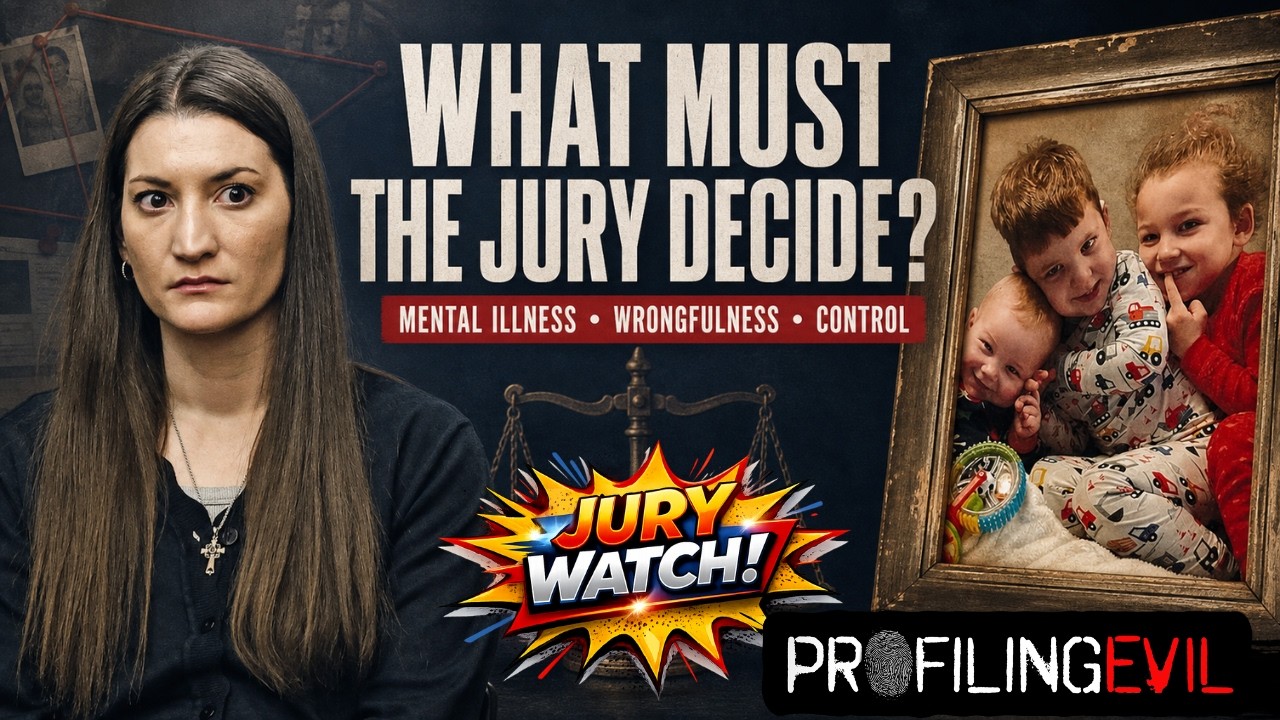 The courtroom fell silent Tuesday as the jury began deliberations, tasked with deciding whether Clancy, 35, understood that her actions were wrong when she strangled her 5-year-old daughter Cora, 3-year-old son Dawson, and 7-month-old daughter Callan in their family home. The verdict will determine if she faces life in prison or a secure psychiatric facility.
Prosecutors painted a chilling portrait of calculated reasoning, pointing to Clancy’s internet searches for travel times, her decision to send her husband Patrick on a series of errands, and her unnervingly calm phone conversations with him while the children lay dead in the basement. The defense countered with a mountain of medical evidence showing a woman in the throes of severe mental illness.
The trial has become a national flashpoint, igniting fierce debates about maternal mental health versus criminal culpability. Both sides conceded that Clancy was deeply troubled, but the core question remains: did she know murdering her own flesh and blood was wrong?
The Commonwealth’s closing argument focused laser-like on the sequence of events that day, arguing that Clancy manufactured the opportunity to 𝓀𝒾𝓁𝓁. They highlighted how she sent Patrick away on a list of fabricated errands, ensuring a window of isolation with the children that she used with devastating efficiency.
“That travel time search—she wanted to know how long he would be gone,” the prosecutor argued, his voice sharp with conviction. “She didn’t need him back quickly. She needed him gone long enough for her to complete her task. This wasn’t a woman spiraling out of control. This was a woman creating a controlled environment for murder.”
The prosecution emphasized the order of the killings, asserting that Clancy strangled Dawson first, moving his body to a separate room, before killing Cora and finally Callan. They argued this demonstrated rational, problem-solving thinking designed to prevent the older children from fleeing or intervening.
“Those children weren’t just killed. They were efficiently eliminated one by one, in an order that made sense to her,” the prosecutor stated. “That’s deliberation. That’s premeditation. That’s a mind that can conform its behavior to the law but chose not to.”
In stark contrast, the defense delivered an impassioned plea, describing Clancy as a “beautiful woman” and devoted mother whose mind was hijacked by a catastrophic psychiatric event. They walked jurors through her fragmented treatment history—a dizzying array of medications, telehealth appointments, and missed red flags by the very system meant to protect her.
“This is not a case about a monster. This is a case about a woman who was failed by everyone around her,” the defense attorney thundered, visibly emotional. “The medicine, the lousy medical care, the providers who didn’t listen—they set her on a path to destruction. She was a loving mother until psychosis took over and made her a puppet.”
The defense zeroed in on the documented evidence of Clancy’s deteriorating mental health: her desperate pleas for help, her journals filled with anxiety, and her repeated requests for more intensive treatment. They argued that a woman planning murder would not be simultaneously begging for inpatient psychiatric care.
Their arguments culminated in a visceral display of humanity, presenting a family “wish jar” filled with hopes for healthy children written before they were even born. “This is who she was,” they argued. “This jar is her love. The murders were the illness, not the woman.”
The jury also heard starkly conflicting expert testimony. Defense psychiatrists concluded that Clancy was actively psychotic and lacked any ability to appreciate the wrongfulness of her conduct. Commonwealth experts conceded her mental illness but stopped short of absolving her, suggesting she retained the capacity to understand right from wrong.
The prosecution seized on Clancy’s suicide attempt following the murders, framing it not as part of the same psychotic episode but as an act of realization and despair following her actions. They argued that her attempt to end her own life was a consequence of her guilt, not a symptom of a break from reality.
They highlighted her phone call with Patrick, where she spoke calmly about the children being asleep, even as they lay dead. “A puppet cannot have a coherent phone call,” the prosecutor argued. “A puppet cannot conceal the truth with a calm voice. That was a woman in control of her actions and her words.”
The judge instructed the jury that they must determine whether Clancy, at the time of the killings, was suffering from a mental disease or defect that caused her to lack “substantial capacity” to appreciate the wrongfulness of her conduct or to conform her behavior to the law.
If they find she was criminally responsible, they must then decide between first-degree murder (deliberate premeditation with extreme atrocity and cruelty) and lesser charges like second-degree murder or manslaughter. Each child represents a separate indictment.
For Patrick Clancy, the husband and father who lost everything, the trial has been a public reliving of an unspeakable nightmare. He testified about finding his children and his wife, describing the scene in hushed, broken tones that left the courtroom in stunned silence.
The defense presented Patrick’s testimony as evidence of Lindsay’s loving nature, highlighting his unwavering support for her despite the unimaginable loss. The prosecution, however, used his testimony to counter the defense’s narrative of a sudden psychotic break, noting that he had observed her behavior leading up to that day.
The public reaction has been intensely polarized, with social media erupting in arguments over whether Clancy is a victim or a villain. Protests have occurred outside the courthouse, with some advocating for her acquittal on mental health grounds and others demanding the harshest punishment.
The verdict, regardless of its outcome, will leave a trail of devastation. Cora, Dawson, and Callan are gone forever. Their father lives with a grief that will never fully heal. And Lindsay Clancy, a woman who showed symptoms of a broken mind, will spend the rest of her life either in a prison cell or a locked psychiatric ward.
As the jury begins its deliberations, the weight of the case hangs heavy in the air. They must navigate a torrent of conflicting evidence and emotion, deciding a case that has no truly just outcome. The law demands an answer, but the tragedy defies easy resolution.
The jury has been sequestered, left to sift through hours of testimony and reams of evidence in a sterile deliberation room. Their decision, expected within days if not hours, will be delivered to a courtroom packed with reporters, family members, and the ghosts of three innocent children.
The defense’s final words to the jury were a plea for humanity. “Find her not guilty because of a lack of criminal responsibility,” they urged. “Not because she didn’t commit these acts, but because her mind was not her own. She deserves treatment, not punishment. She is as much a victim of this tragedy as the children.”
The prosecution’s final words were equally forceful. “Do not let sympathy for a disturbed woman erase the memory of three dead children,” they countered. “She knew what she was doing. She planned it. She executed it. She is not the victim here. Those children are the only victims.”
The jury will also consider the “extreme atrocity and cruelty” prong of first-degree murder, which could hinge on the nature of the strangulations. The medical examiner’s testimony, sealed from the public, described the physical trauma inflicted on the small bodies, a detail legal experts say could heavily influence the verdict.
This case has starkly illuminated the failures of the American mental healthcare system, prompting renewed calls for reform in how postpartum depression and psychosis are screened and treated. Advocates argue that Clancy’s cries for help were not heard until it was too late.
Critics, however, caution against using the system’s failures to excuse individual accountability. They argue that many women experience postpartum psychosis but do not murder their children. The question remains: where does illness end and responsibility begin?
The jury’s task is not to solve the systemic problems or to pick a side in a culture war. Their job is far simpler and infinitely more complex: to apply the law to the facts of this specific case and determine if Lindsay Clancy is criminally responsible for the deaths of her children.
The verdict, when it comes, will be a singular moment of closure for a fractured family, but it will not provide peace. There is no peace to be found in this case. There is only a void left by the loss of three young lives and a mother who may or may not have been able to control her own actions.
Legal analysts suggest the jury could be deadlocked, unable to reach the unanimous decision required for a verdict. The complexity of the psychiatric evidence and the emotional weight of the tragedies make a compromise or a hung jury a very real possibility.
If a guilty verdict is returned on first-degree murder charges, Clancy would face mandatory life imprisonment without the possibility of parole, a sentence that would ensure she dies in prison. A finding of not guilty by reason of insanity would likely result in a commitment to a state hospital.
The trial has taken an immense toll on everyone involved. Jurors have described the evidence as some of the most difficult they have ever been forced to confront. Court staff have been seen wiping away tears. The judge himself has appeared visibly affected by the testimony.
For the Clancy and the extended family members of Lindsay, the wait is a purgatory of its own. They have sat through every detail, every harrowing photograph, and every heartbreaking 911 call, hoping for a measure of justice that they know will never truly come.
As the clock ticks toward a verdict, Duxbury, a quiet coastal town, remains haunted by the memory of that January day. A memorial of stuffed animals and flowers has appeared at the site where the family once lived, a silent testament to the community’s grief.
The outcome of this trial will likely set a precedent for how similar cases are handled in the future. It will be dissected by legal scholars, psychologists, and activists for years to come. But for now, the focus is solely on the twelve individuals tasked with rendering a decision.
The Commonwealth’s case, while built on circumstantial evidence, painted a picture of a woman who was not merely ill but also calculating. They believe the verdict will hinge on whether the jury accepts their interpretation of her actions in the hours leading up to the murders.
The defense believes their case is just as strong, built on a foundation of irrefutable medical records and expert opinions that point to a severe mental break. They maintain that no sane mother could commit such an act, and therefore, the only logical conclusion is insanity.
The jury has asked no questions as of yet during their deliberations, leaving everyone in a state of taut suspense. Every minute that passes feels like an hour, every hour a day, as the world waits for the announcement that will decide the fate of the woman at the center of this American tragedy.
The final verdict will not just be a legal judgment. It will be a statement about how society views maternal mental health, about where we draw the line between compassion and justice, and about the value we place on the lives of the most innocent among us.
Today, the courts will speak. The decision is now in the hands of twelve peers who have heard the evidence, weighed the arguments, and must now decide what justice truly means in a case where every possible answer feels like a defeat.