The quiet tension that simmered beneath the surface of one of television’s most beloved family dramas has finally come into focus, revealing a decades-old professional rift that contradicted the wholesome image of the Walton family. Ellen Corby, the actress who immortalized Grandma Esther Walton, harbored a deep and persistent resentment toward her co-star Richard Thomas, the actor who played her on-screen grandson John-Boy. While audiences saw a warm, multi-generational bond between the characters, the reality behind the cameras was a complex web of irritation, generational conflict, and unspoken animosity that lasted for years.
Corby, a seasoned veteran of the Hollywood studio system, viewed the craft of acting with a level of discipline that bordered on the absolute. She had spent decades learning the mechanics of filmmaking from the ground up, working as a script girl and continuity clerk before ever stepping fully into the spotlight. This background gave her a technical understanding of the industry that few of her peers possessed, but it also instilled in her a rigid set of professional standards that she expected everyone to meet.
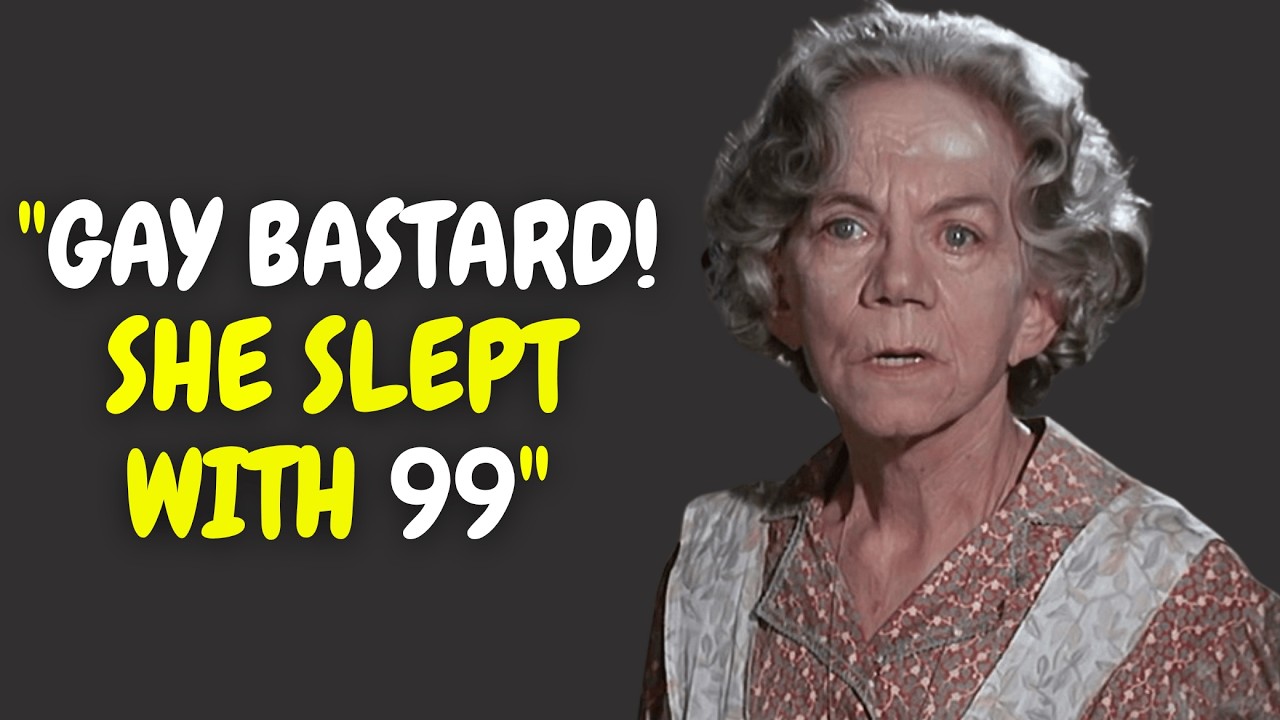 When the Waltons premiered in 1972, she was sixty-one years old, carrying the weight of an Academy Award nomination and decades of uncredited, character-driven work that had built her reputation as a reliable, transformative presence on screen.
Richard Thomas, by contrast, was barely into his twenties when he was cast as John-Boy Walton, the aspiring writer whose sensitive nature and philosophical musings made him the breakout star of the series. His immediate rise to fame was meteoric, and his youthful charm won over audiences and critics alike. But for Corby, that same charm was precisely the problem.
She reportedly found his confidence to be a mask for arrogance, and his intellectual posturing on set grated on her nerves in a way that she could not, or would not, ignore. The generational divide between them was not just a matter of age; it was a fundamental clash of working philosophies that made every shared scene a test of professional endurance.
According to those who worked on the set, the friction between the two actors was palpable, though never explosive. Corby, known for her kindness and warmth toward nearly everyone else on the production, would become noticeably tense and curt whenever Thomas was in her orbit. She was a perfectionist who believed in punctuality, preparation, and the unspoken hierarchy of a seasoned set.
Thomas, representing a new generation of actors who were more relaxed and conversational in their approach, often seemed to her to be taking the opportunity for granted. She reportedly attributed multiple takes and delays to what she perceived as his lack of focus, a charge that created a low-grade but persistent undercurrent of unease.
The tension was not born of a single incident but rather accumulated through a series of small, repeated irritations. Corby was known to appreciate the craft of acting as a serious, almost sacred profession, one that demanded respect for the mechanics of storytelling. She had little patience for what she saw as the frivolity of youth, and Thomas’s habit of joking between takes to lighten the mood was interpreted by her as a sign of disrespect.
She came from an era where an actor was expected to deliver every line flawlessly, without the need for constant retakes or levity, and she found the younger actor’s methods to be a stark contrast to her own rigorous standards.
Despite her strong feelings, Corby never allowed her personal animosity to compromise the integrity of the performance. The on-screen chemistry between Grandma Walton and John-Boy remained heartfelt and convincing, a testament to the professionalism that both actors brought to their work. Even in her frustration, Corby maintained a level of decorum that prevented any public outburst or refusal to work with Thomas.
Those close to her, however, could sense the simmering tension whenever the two shared a scene, and crew members recalled moments when her usually gentle demeanor would harden into something more brittle and distant.
 The root of this animosity remains a subject of speculation. Some suggest it was a simple clash of personalities, the meeting of a rigid, old-school disciplinarian with a free-spirited, intellectually curious young star. Others believe that Corby saw in Thomas the very traits she had to temper in herself to survive in Hollywood, a youthful confidence and ease that she had never been able to fully embrace.
She had fought for every role, worked her way up through the ranks, and earned her place through sheer grit and determination. Watching a young man receive instant acclaim and adoration may have stirred a quiet resentment that she could not easily dismiss.
Corby’s own words, shared in private moments with confidants, paint a picture of a woman who was deeply conflicted about her feelings. She admitted to having no patience for arrogance, and she perceived Thomas’s youthful air as something that could grate on anyone. She was blunt in her assessment, stating that while she respected him as an actor, she did not like him as a man.
This candid admission, rare for an actress who valued her privacy, reveals the depth of the discord that existed beneath the surface of their professional relationship. It was a conflict she reportedly never fully resolved, even as the years passed.
Interestingly, the dynamic between them did not remain static. After Corby suffered a severe stroke in 1976, a health crisis that left her partially paralyzed and temporarily unable to speak, Thomas was among the cast members who reached out with supportive letters and kind words. This gesture of goodwill, while appreciated, did little to bridge the gap between them.
Corby, ever true to her candid nature, reportedly offered a wry smile when his name came up, acknowledging the complexity of their relationship without fully forgiving the past. She admitted that he meant well, but maintained that there are some people you simply cannot connect with, regardless of the kindness they show.
The stroke itself was a pivotal moment in Corby’s life and career, a test of her resilience that she met with remarkable determination. She fought her way through rehabilitation, learning to speak and move again, and ultimately returned to the Waltons to continue her role. Her recovery was woven into the show’s narrative, with Grandma Walton experiencing a similar health struggle, and her comeback was hailed as a triumph of the human spirit.
Yet, even as she reclaimed her place on set, the underlying tension with Thomas remained a constant, a quiet undercurrent that added a layer of complexity to the production.
 Thomas, for his part, has rarely spoken publicly about any friction with Corby, and his public statements have generally been respectful and admiring of her work. This silence on his part may reflect a desire to preserve the legacy of the show, or it may simply be a matter of discretion. The fact remains that the tension was reportedly one-sided in its intensity, with Corby carrying the bulk of the resentment.
She saw in Thomas a representative of a changing industry, one that she felt was losing its respect for the old ways, and she could not reconcile her own values with his approach to the craft.
The legacy of the Waltons is one of family, love, and perseverance, values that Corby herself embodied in her personal life and her professional conduct. Yet, the behind-the-scenes reality of the show was far more complicated than the wholesome narrative presented on screen. The friction between Corby and Thomas serves as a reminder that even the most beloved productions are often built on a foundation of human imperfection, where personal conflicts and professional disagreements are part of the creative process.
For Corby, the conflict was a source of private frustration that she carried with her for the rest of her life.
In the years following Thomas’s departure from the show, Corby’s feelings toward him reportedly softened only slightly. She continued to speak of him with a mixture of admiration for his talent and irritation at his personality, as if the memory of their tense dynamic had left an indelible mark on her consciousness. She never fully reconciled her feelings, and the conflict remained one of the few unresolved chapters in a career defined by grace and professionalism.
It is a testament to her skill that she was able to separate her personal feelings from her performance, delivering a portrayal of a loving grandmother that resonated with millions of viewers.
Corby’s career spanned over six decades, from her early days as a script girl to her iconic role as Grandma Walton. She appeared in classic films like It’s a Wonderful Life, Little Women, Shane, and Sabrina, always bringing a quiet intensity and emotional depth to her characters. Her work earned her three Emmy Awards and an Academy Award nomination, cementing her status as one of the most respected character actresses of her generation.
Yet, for all her accolades, it is the role of Grandma Walton that defines her legacy, a role that required her to project warmth and love while privately grappling with a profound dislike for her on-screen grandson.
 The revelation of this tension adds a new dimension to the history of the Waltons, a show that has long been celebrated for its portrayal of family unity. It humanizes Corby, showing that even the most gracious and respected figures in Hollywood are capable of harboring complex, unresolved emotions. Her dislike for Richard Thomas was not born of malice or cruelty, but rather of a fundamental difference in worldview that she could not bridge.
It was a quiet, persistent resentment that she carried with her, a reminder that the bonds of family, even fictional ones, are not always as harmonious as they appear.
As the entertainment industry continues to revisit the legacy of classic television, this story serves as a poignant reminder of the human cost of creating art. The tension between Corby and Thomas was a private struggle, one that was largely hidden from the public eye, but it shaped the atmosphere of the set and added an undercurrent of unease to a beloved series. It is a story of two actors, separated by generations and philosophies, who managed to create magic on screen despite their personal discord.
Their professionalism ensured that the show remained a success, but the unresolved conflict between them lingers as a footnote in television history.
Ellen Corby passed away on April 14, 1999, at the age of 87, leaving behind a legacy of resilience, grace, and unforgettable performances. She was laid to rest at Forest Lawn Memorial Park in Glendale, California, where she joined the ranks of Hollywood legends who have come before her. Her life was a testament to the power of determination, from her humble beginnings in Wisconsin to her rise as one of television’s most beloved actresses.
Yet, even in her final years, the memory of her difficult relationship with Richard Thomas remained a part of her story, a quiet conflict that she never fully put to rest.
The story of Ellen Corby and Richard Thomas is a fascinating glimpse into the complexities of human relationships, even in the rarefied world of Hollywood. It shows that professional respect and personal animosity can coexist, and that the bonds we see on screen are not always reflections of the relationships behind the scenes. For Corby, the tension with Thomas was a source of private frustration, but it also demonstrated her remarkable ability to separate her personal feelings from her work.
She delivered a performance that touched the hearts of millions, even as she privately struggled with a co-star she could not bring herself to like.
In the end, the legacy of the Waltons is not diminished by this revelation. If anything, it is enriched by the knowledge that the actors who brought the Walton family to life were themselves navigating the complexities of human emotion. The show’s enduring appeal lies in its portrayal of love, family, and perseverance, values that Corby herself embodied in her own life.
Her dislike for Richard Thomas was a human flaw, a reminder that even the most beloved figures are not immune to the petty irritations and unresolved conflicts that define the human experience. It is a story that adds depth to her legacy, a testament to the fact that even the most gracious of souls can carry a quiet resentment that they never fully overcome.