The Western was pronounced dead more than once, its heroes fading into the same dust as the empty studio lots they once rode across. But as the genre went quiet, one actor was already preparing to bring it back to life in a way no one expected. . For decades, the Western was America’s favorite kind of story, and no one embodied it more completely than John Wayne, whose name became synonymous with the cowboy hero himself.
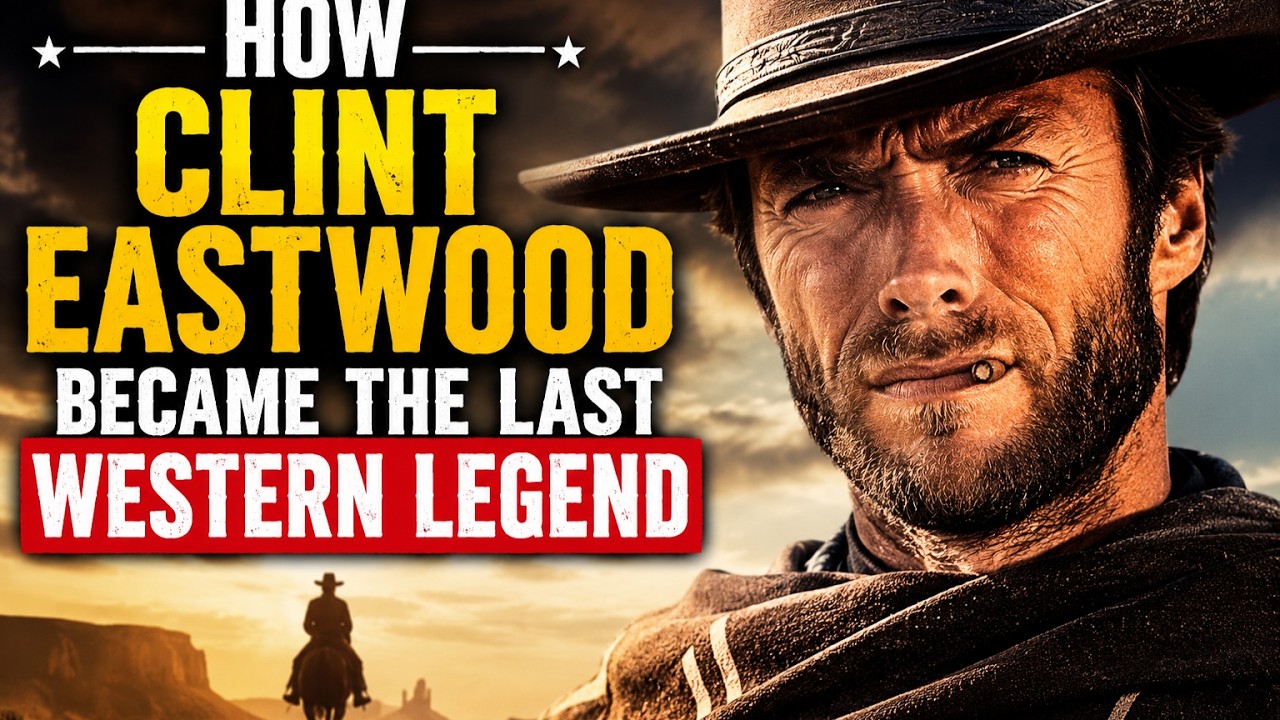
When his era began to fade, many assumed the genre would fade along with it. But Clint Eastwood, then a young actor still struggling to find his footing, was about to prove them wrong. . Eastwood’s rise was not built on instant fame.
It began with rejection, small roles, and years of being overlooked before he landed a foothold on television with Rawhide. That foothold gave him experience, but not yet a legacy. That changed when he took a gamble and traveled to Italy for a low-budget Western that almost no one believed in. A Fistful of Dollars introduced audiences to a nameless drifter with a quiet stare and a moral code entirely his own.
Two sequels followed in 1965 and 1966, and together the trilogy turned Eastwood into a global superstar while completely reshaping what a Western hero could be. Instead of the polished lawman of earlier decades, here was someone rougher, more human, and far more real. Audiences responded because he did not imitate the legends who came before him, but because he dared to be completely different. .
As the years passed, Eastwood did not just act in Westerns. He moved behind the camera and began directing them, shaping stories with patience and restraint. He understood silence and weight, and slowly gained a reputation not just as a performer, but as a true craftsman. Then, in 1992, he released Unforgiven, a film that refused to glorify violence and instead questioned it, treating aging, guilt, and consequence with honesty rarely seen in the genre.
It did not just entertain, it challenged, and for many critics, it proved that the Western still had something powerful left to say. . Many fans and historians now call Eastwood the last great Western legend, not because he was the final man to put on a cowboy hat on screen, but because he was among the last to carry the genre’s soul forward with real purpose. As Hollywood moved on to other trends, Eastwood kept returning to those wide landscapes, refusing to let them fade into nostalgia.
His influence still appears in modern Westerns that borrow his tone, his patience, and his willingness to explore difficult truths instead of easy heroism. Eastwood did not just outlive an era, he gave it one more chapter worth remembering. .