The wholesome image of the Walton family on television masked a series of private battles and career decisions that shaped the show’s history. Richard Thomas, who became a star overnight as John Boy Walton when the series premiered in 1972, was at the center of the show’s early success. He won a Primetime Emmy in 1973, but behind the acclaim, he worried that staying too long would limit his future. Thomas had stage training and had studied at Columbia University before finding television fame.
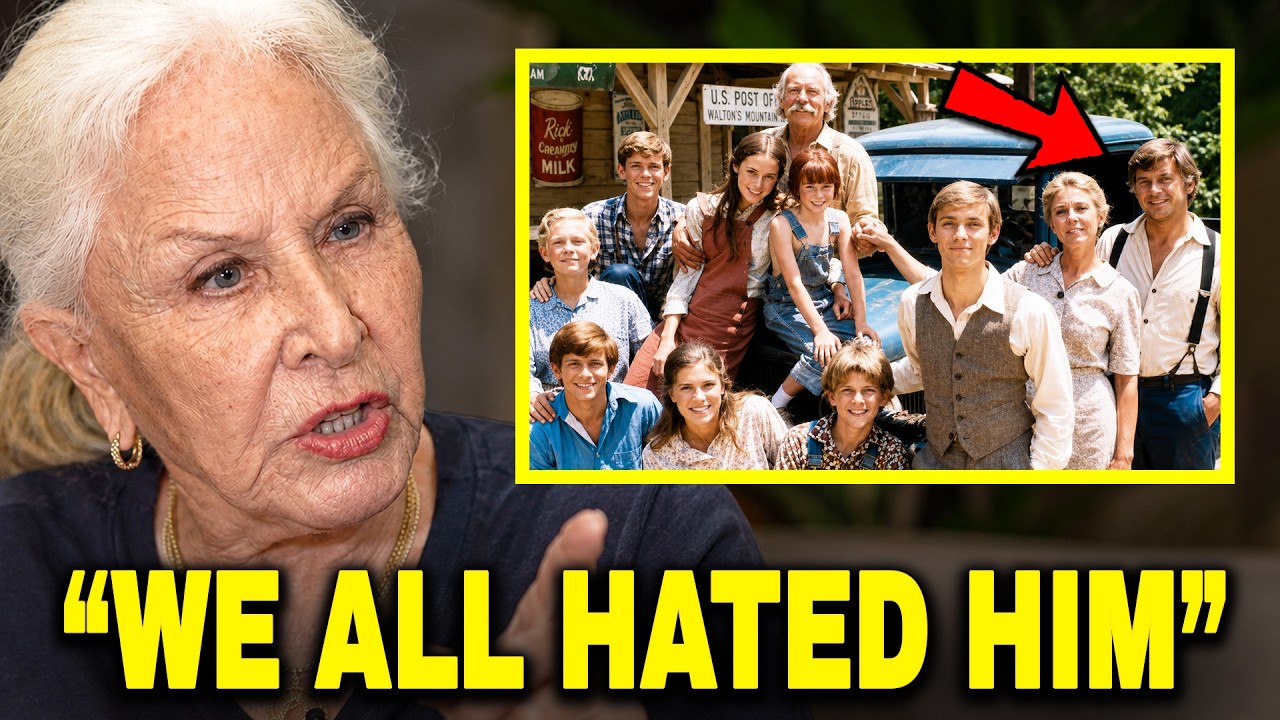
He wanted to explore film and other kinds of roles, but the more recognisable he became as John Boy, the harder it was to imagine him playing anyone else. By the end of the fifth season in 1977, he decided not to return, not because of a dispute, but because he believed remaining on the series could limit the career he wanted. The writers wrote John Boy out by sending him to New York City to pursue his writing, following the character’s established dream. The door was left open for a return, and Robert Wightman eventually took over the role for the eighth and ninth seasons.
While Thomas went on to work on Broadway and in films, the major film career he had imagined never developed exactly as he expected. Will Geer, who played Grandpa Zebulon Walton, brought a very different history to the show. Long before the Waltons, he had supported labour organising and civil rights efforts, had been involved with left-wing political groups, and was a close friend of folk singer Woody Guthrie. In 1951, he was called to testify before the House Un-American Activities Committee, known as HUAC, and refused to cooperate.
That decision led to him being blacklisted, which shut him out of mainstream Hollywood work for years. He spent more than a decade performing on stage, in smaller venues, and in community theatre. By the time the Waltons premiered, Geer was in his late sixties, and the role gave him mainstream recognition that had been taken from him years earlier. Geer remained with the show through the fifth season.
He died on 22 April 1978, at the age of 76, while the series was still in production. Rather than inventing an elaborate explanation, the writers allowed Grandpa Walton to die between seasons. Ellen Corby had built a long career as a character actress before joining the series, and she had been nominated for an Academy Award for I Remember Mama. As Grandma Esther Walton, she brought a sharp personality and dry sense of humour to the show, and she won three Primetime Emmys for the role in 1973, 1976, and 1977.
In November 1976, Corby suffered a severe stroke at the age of 66 while the show was still in production. The stroke seriously affected her speech and mobility, and it was unclear whether she could continue the demanding schedule of a weekly series. The writers chose to address the situation directly: Grandma Walton also suffered a stroke in the storyline, allowing the production to adjust the role around Corby’s real condition. Corby returned to the show beginning with the seventh season, but her appearances were more limited due to the stroke’s lasting effects.
She continued in the later seasons and took part in the reunion movies that followed the original series. Michael Learned became one of the most recognised performers on the show as Olivia Walton, the mother at the centre of the family. She won four Primetime Emmys for the role, in 1973, 1974, 1976, and 1979. Despite that extraordinary recognition, she decided to leave after seven seasons, not because of a feud or scandal, but because she was exhausted.
The Waltons required roughly nine to ten months of production each year, and Learned had spent seven consecutive seasons under that schedule. She later spoke warmly about her castmates and her experience on the show, but she needed time away from the set and wanted to work on other projects. The writers explained Olivia’s absence by having her contract tuberculosis and leave Walton’s Mountain for treatment at a sanitarium. Learned returned for later appearances and for the reunion movies that followed the original series.
Her departure stood in contrast to Thomas’s. Thomas was concerned about typecasting and professional growth, while Learned’s main problem was the sheer workload of the production itself. Patricia Neal had been the original choice for Olivia Walton before Learned ever took the role. Neal was already one of Hollywood’s most respected dramatic actresses, having won the Academy Award for Best Actress for her performance in Hud.
Earl Hamner Jr. , the creator of the Waltons, specifically wanted her for the part. In February 1965, while pregnant with her fifth child, Neal suffered three massive strokes in rapid succession at the age of 39. She was left partially paralysed and experienced serious problems with speech.
Her recovery required years of rehabilitation, but she returned to acting and received an Academy Award nomination in 1968 for The Subject Was Roses. However, the demands of a weekly television drama were very different from a single film performance, and Neal withdrew from the project before filming began. The role went to Learned, and it became one of the most celebrated performances on the series. The version of Olivia that viewers eventually knew existed because Neal’s health made the schedule impossible.
Some younger cast members made quieter exits from the industry after the series ended. Kami Cotler, who played Elizabeth Walton, was only six years old when the show began in 1972 and fifteen when it ended in 1981. Almost her entire childhood was spent working on a nationally watched television series. After the show ended, Cotler went to college rather than chasing another major acting role, and she eventually became a teacher.
She chose not to make acting the centre of her adult life, stepping away from the entertainment world almost completely. John Walmsley, who played Jason Walton, took a different path. The musical character was linked to his own genuine musical interests, which extended beyond the role. Unlike Thomas, he stayed with the series for all nine seasons, then gradually moved toward music composition and production.
His career shifted away from acting toward creative work in another form. For Cotler and Walmsley, leaving the entertainment spotlight was a deliberate choice to build their lives around something else, rather than a failed attempt to remain in Hollywood.