In January 2023, at the 34th Palm Springs International Film Awards, Sally Field took the stage to honor Steven Spielberg with the Vanguard Award for The Fabelmans. Instead of recounting box office records, she chose to reveal something far more personal: a friendship spanning more than half a century, one that almost began as a blind date. Field and Spielberg first crossed paths in 1968 at a party, though Field long misremembered the timing. Her newly hired business manager, who also represented Spielberg, arranged a meeting at Universal Studios that was quietly intended as a setup.
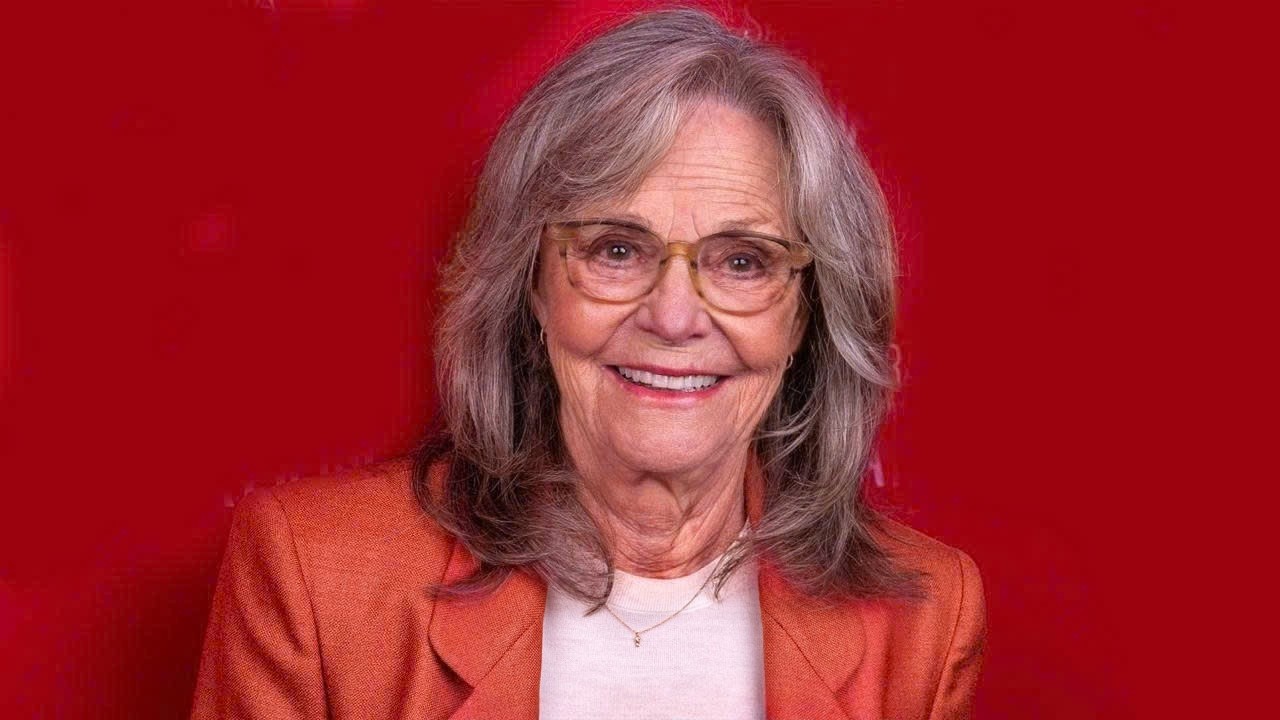
The romance never happened, but Spielberg, as Field put it, has never left my life. She described him asthe person who stood by her through the good and bad, calling him my biggest supporter anda constantly welcoming place. . By the mid-2000s, Spielberg had already imagined Field as Mary Todd Lincoln for his long-awaited film about Abraham Lincoln.
He approached her in 2005, when Liam Neeson was attached to play the presidenteu. Writers came and went before Tony Kushner delivered the screenplay Spielberg had been waiting for, and years of delays followed. Then Neeson left the production, and Daniel Day-Lewis eventually accepted the role after years of declining offers. For Field, that moment triggered an uncomfortable realization:she was about 10 years older than Day-Lewis, while the real Mary Todd Lincoln had been about 10 years younger than her husband.
She also feared Spielberg might prefer a less recognizable face in the role, one audiences could accept without first seeing Sally Field. Those doubts became reality when Spielberg called her and admitted he simply could not picture her opposite Daniel Day-Lewis. For many actors, that conversation would have been the end. After winning two Academy Awards for Norma Rae and Places in the Heart, Field could have accepted the disappointment.
Instead, she challenged him directly. Field later recalled telling him,u201cYou’re wrong, Steven. I am Mary. There is no one else.
It is me. u201d She demanded a screen test, and when Spielberg resisted citing Day-Lewis’s preparation in Ireland, she refused to back down, suggesting she could test alone if necessary. Winning his permission was only the first hurdle. Her first solo test, acting opposite an empty wall, did not convince Spielberg.
He called the next day to say it hadn’t worked, that he still could not see Mary Todd Lincoln standing beside his Abraham Lincoln. Most actors would have accepted defeat. Instead, something extraordinary happened:the footage stayed in Spielberg’s mind, and eventually he sent it to Day-Lewis uin Irelandu. Rather than judging Field alone, Day-Lewis proposed something unexpected:it was unfair to judge her without seeing the two of them together.
He boarded a plane, flew from Ireland to Los Angeles fora single day, and agreed to film a new test with her. Years later, Field would call it the most generous act another actor had ever done for her. Field believed she was flying to meet Day-Lewis for a casual coffee in New York, planning to wear jeans. Then Spielberg’s office called, asking whether she wanted the same hair and makeup team.
Confused, she learned the truth:Daniel was flying in specifically so they could test together in costume. From the moment they met, neither greeted the other as themselves. She arrived as Molly, the name Lincoln used for his wife. Standing several feet apart, she said,u201cMr.
Lincoln. u201d Without hesitation, he answered,u201cMother,u201d another affectionate name Lincoln used. Instead of rehearsing a scripted scene, they spent roughly an hour improvising entirely in character, speaking as husband and wife, discovering their relationship moment by moment. When it ended, she drove home believing she had done all she possibly could.
Then the phone rang:Steven Spielberg and Daniel Day-Lewis were on the line together, asking,u201cWill you be our Molly? u201d
Spielberg later admitted he felt guilty for putting Field through such an emotional ordeal. She disagreed, believing that without that struggle, she never would have truly found Mary Todd Lincoln. More importantly, that remarkable afternoon created such an authentic connection that they barely needed rehearsal once filming began.
For Field, the greatest gift of Lincoln was not the Academy Award nomination she received in 2013, nor the widespread praise. It was the extraordinary environment Spielberg and Day-Lewis created during production. After decades in Hollywood, Field said it was the first time she truly felt free to work exactly the way she had always believed an actor should. Spielberg wore a suit every day on set.
Day-Lewis remained in Lincoln’s voice between takes, communicated with cast members in language inspired by the 19th century, and immersed himself so completely that he later admitted part of him genuinely believed he was Lincoln. British cast and crew were even asked to avoid speaking in their natural accents around him whenever possible, helping preserve the illusion of Civil War era Washington throughout production. While some outsiders viewed those methods as excessive, Field experienced them very differently. She had trained at the Actors Studio under Lee Strasberg, where method acting emphasized emotional truthand complete psychological immersion.
Throughout her career, she often felt uncomfortable revealing how deeply she entered her characters, quietly staying in character between scenes and avoiding conversation to protect her emotional state. On the set of Lincoln, those fears disappeared. Field described the experience as nirvana. For the first time, she did not have to hide her process or apologize for it.
Spielbergand Day-Lewis created an atmosphere where the entire cast and crew respected each actor’s preparation instead of questioning it. That acceptance allowed her to explore Mary Todd Lincoln with complete honesty, revealing not only the first lady’s grief after losing two sons, but her intelligence, resilience, and fierce determination during one of the most turbulent periods in American history. When filming ended, Field admitted she never truly left Mary Todd behind. She has often said that the deepest roles of her career, including Sybil, Norma Rae, Edna Spalding, and Mary Todd Lincoln, did not simply become performances; they permanently changed her.
She believes the human brain cannot entirely separate lived experience from deeply inhabited emotional experience. Once an actor spends months understanding another person’s fears, losses, and hopes, part of that journey remains forever. That realization also shaped her view of success:by then, she had already won two Academy Awards, three Primetime Emmy Awards, and numerous other honors. Yet she insisted that awards were never the greatest reward.
If forced to choose between another trophy and the opportunity to work with artists like Spielberg, Day-Lewis,and Kushner on material of that caliber, she said every serious actor would choose the work itself. For Field, that experience, not the accolades, became the true achievement of Lincoln. More than a decade after Lincoln premiered in 2012, Field no longer speaks about Spielberg simply as the director who gave her one of the defining roles of her career. She speaks about him as someone who has remained a constant presence through nearly every chapter of her adult life.
At the Palm Springs ceremony, she reminded the audience their friendship had begun almost by accident, through a business manager’s attempt to arrange a blind date. The romance never happened, but something much stronger did. She reflected on his influence beyond her own life:his films, she said, had become part of the world’s collective memory, with generations instantly recognizing lines like,u201cWe’re going to need a bigger boat,u201d u201cPhone home,u201d and u201cSnakes. Why did it have to be snakes?
u201d According to Field, his humanity, humor, imagination, and compassion have been woven into audiences’ lives so completely that people often forget how extraordinary that achievement truly is. When Spielberg took the stage to accept the award, his response revealed the admiration flowed in both directions. He publicly thanked Field before telling the audience her portrayal of Mary Todd Lincoln remained one of the finest performances of her long Oscar-winning career. Then he shared something even more personal:Field had become part of his family.
She had attended his wedding more than30 years earlier, celebrated life’s milestones alongside him, and remained close to his wife and children throughout the years. It was a rare glimpse into a friendship that had quietly endured while countless Hollywood relationships faded away. Today, as Field reflects on that remarkable journey, her greatest memories are not centered on awards or headlines. She remembers the people who stood beside her when doubt threatened to overwhelm confidence, when difficult decisions had to be made, and when loyalty mattered more than success.
Her story with Spielberg proves that some of Hollywood’s most meaningful relationships are not romantic, competitive, or transactionalthey are built on decades of trust, honesty, and unwavering belief in one another. From fighting for the role of Mary Todd Lincoln to celebrating each other’s greatest achievements, Field and Spielberg proved that genuine loyalty can outlast fame itself.