The disappearance of Lilly and Jack Sullivan in rural Nova Scotia remains one of the most closely watched missing-child cases in Canada — and despite extensive searches, forensic reviews, and multiple investigative strategies, the mystery has only deepened.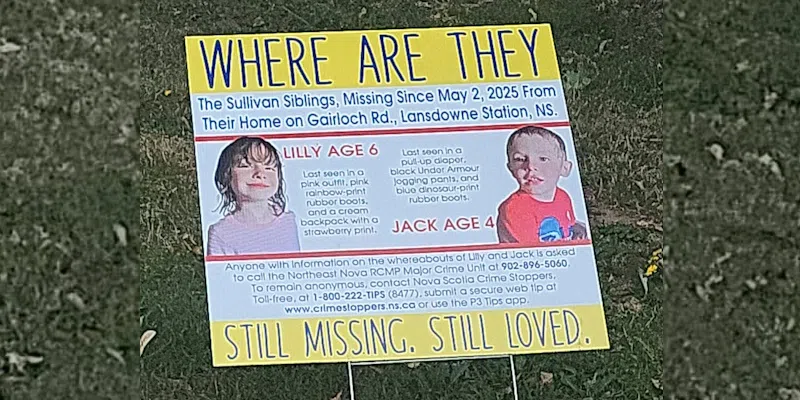
From the beginning, the case has been defined by uncertainty. The children vanished from their home in Lansdowne Station, triggering a large-scale search involving ground teams, specialized units, and coordinated efforts from multiple agencies. Yet even after months of activity, no confirmed trace of the siblings has been found beyond limited physical items recovered early in the investigation.
One of the most discussed elements in the case has been the use of investigative tools such as polygraph testing. While not admissible in court, these examinations have been used to guide investigative direction, narrow focus areas, and assess consistency in statements from individuals connected to the household. However, experts stress that passing or failing such tests does not establish guilt or innocence — only physiological responses under specific questioning conditions.
Court documents released during the investigation have also added complexity, particularly the distinction between “no evidence of criminality” and “no crime occurred.” That phrasing has fueled public debate, as investigators continue to walk a careful line between a missing-persons classification and the possibility of undisclosed foul play.
Behind the scenes, authorities have reportedly conducted extensive digital and financial analysis — reviewing phone records, movement data, and banking activity to reconstruct timelines and identify inconsistencies. These types of forensic checks are often used in long-term missing persons cases to detect patterns that may not be visible through traditional search efforts.
Despite this, officials have remained cautious in their public statements, repeatedly emphasizing that there is still no confirmed evidence of what happened to Lilly and Jack. That lack of clarity has left both investigators and the public operating in a space filled with theories, interpretations, and unanswered questions.
Meanwhile, family members and community supporters continue to push for answers, holding vigils and calling for renewed focus on the case as time passes without resolution.
The central tension remains unchanged:
A massive investigation has been launched — but the outcome is still unknown.
And with every passing update, one question grows louder in Nova Scotia and beyond:
What truly happened to Lilly and Jack — and why, after all this time, are there still no definitive answers?
#LillyAndJackSullivan #NovaScotia #MissingChildren #TrueCrime #ColdCase #RCMPInvestigation #UnsolvedMystery