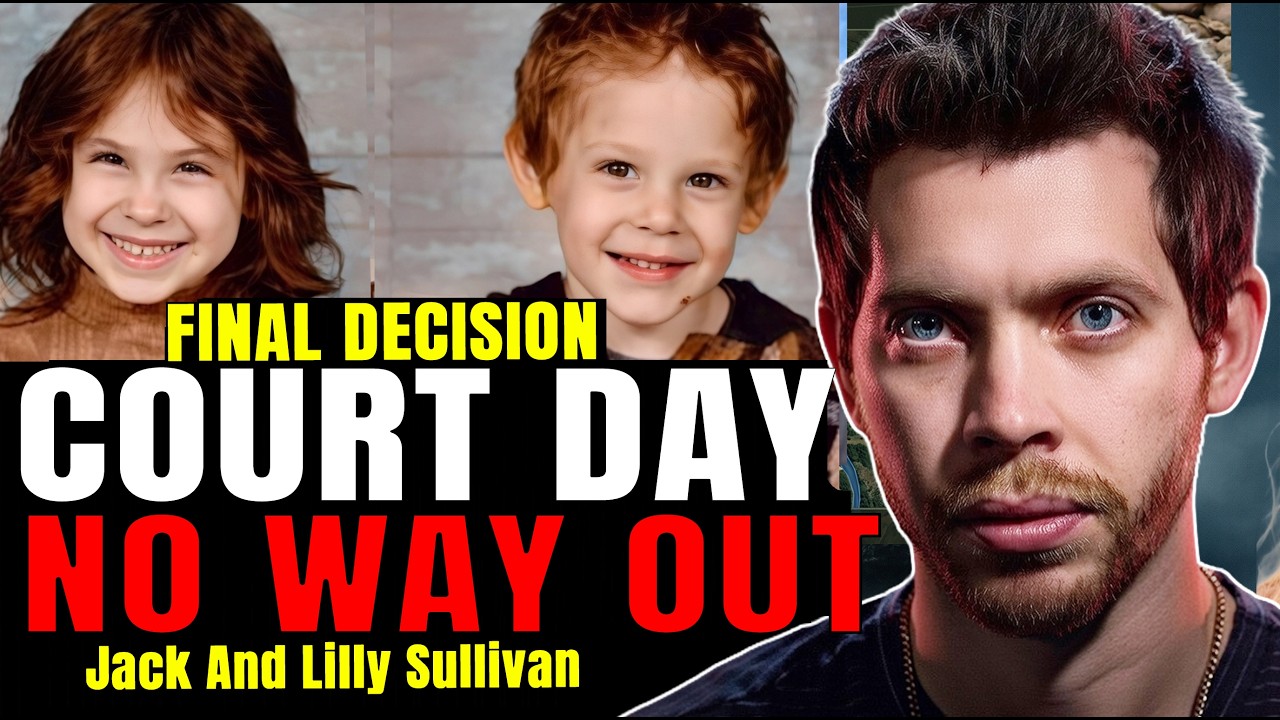
The air in the courtroom will be thick with the weight of two words. For Daniel Martell, the stepfather of missing six-year-old Lily Sullivan and four-year-old Jack Sullivan, the moment of reckoning has arrived. He stands accused of sexual assault, assault, and forcible confinement, charges that carry the full force of the Crown’s prosecution.
But the plea he is about to enter is not merely a procedural formality; it is a strategic declaration of war, a signal to the world about how he intends to fight the mountain of evidence that the Royal Canadian Mounted Police have spent months meticulously assembling. The RCMP’s investigation, a sprawling and relentless operation, has been building a case that they believe is robust enough to withstand the brutal crucible of a full trial. The question that hangs in the air, unanswered, is whether Martell will concede to that reality or force the state to prove every single detail in open court.
 The decision he makes in those fleeting seconds will echo far beyond the confines of the courtroom walls. A guilty plea would be an admission that the evidence is overwhelming, that the forensic realities and witness testimonies have painted him into a corner from which there is no escape. It would be a tacit acknowledgment that the RCMP’s months of work, the thousands of hours of video review, and the relentless pursuit of every lead have successfully cornered their prey.
Conversely, a not guilty plea is a gauntlet thrown down, a demand for full disclosure, a challenge to the prosecution to lay bare every piece of evidence, every witness statement, and every forensic analysis. It is a declaration that he believes there is a weakness in the state’s armor, a flaw in their narrative that a skilled defense lawyer can exploit. This is not just a legal maneuver; it is a psychological battle, a test of wills that will determine the trajectory of a case that has gripped the nation with a mixture of horror and desperate hope.
To understand the gravity of this moment, one must first appreciate the sheer scale of the investigation that has led to this precipice. The RCMP did not treat the initial report as a simple case of two children wandering into the woods. From the very beginning, the response was one of extreme caution and exhaustive thoroughness.
The timeline begins on May 2nd, 2025, in the early morning hours, when a frantic 911 call reported two children missing from their home. The initial narrative, presented by the adults in the household, was that Lily and Jack had wandered into the heavily wooded terrain that surrounds their property before full daylight. This story, seemingly innocent and tragic, set the frame for the initial search efforts.
But the RCMP’s mindset was never one of blind acceptance. They immediately began to build a case, treating the scene not just as a search and rescue operation, but as a potential crime scene, preserving evidence and cataloging every detail with an almost obsessive precision.
The first major step in the investigative process came on May 12th, 2025, when both adults in the household were subjected to polygraph examinations. The results, as reported, indicated that both responded truthfully to the questions posed to them. On the surface, this should have been a significant hurdle for the prosecution.
A clean polygraph result often has the effect of steering an investigation away from a suspect, suggesting that they are not being deceptive. However, the RCMP’s behavior in the months that followed tells a different story. They did not close the case.
They did not pack up their equipment and move on. Instead, they dug deeper, suggesting that the polygraph results, while indicating a lack of deception on the specific questions asked, did not align with the totality of the evidence they were beginning to uncover. The polygraph is a tool that measures physiological stress, but it is not a lie detector in the absolute sense.
It is a measure of reaction, and the RCMP knew that the absence of stress in one session did not negate the presence of forensic reality.
The turning point, the moment that likely shifted the entire trajectory of the investigation, came with the discovery of the pink blanket. This was not a single piece of evidence but a collection of clues that painted a damning picture. The first piece of the blanket, belonging to little Lily, was found hanging in a tree, approximately one kilometer from the family home.
This location, deep in the woods, seemed to corroborate the wandering narrative. However, the second piece of the same blanket was found in a far more incriminating location: inside the home, hidden in a trash bag. This discovery shattered the initial story.
A single blanket, torn and separated into two distinct pieces, located in two vastly different environments, is not the result of a child wandering. It is the result of deliberate placement, a conscious effort to create a false trail or to dispose of evidence in a manner that would confuse investigators. The RCMP’s forensic teams have been analyzing this blanket for months, looking for fibers, DNA, and any other microscopic traces that could link Martel directly to the act of tearing and placing it.
The second round of polygraphs, which the public has largely been unaware of, is perhaps the most telling indicator of the investigators’ mindset. Why would they return to a suspect who had already passed a polygraph? The answer lies in the evolution of their evidence.
As they began to piece together the timeline of the morning of May 2nd, inconsistencies began to emerge. The movements of the adults, the state of the home, and the physical evidence found at the scene did not match the narrative of two children who had simply slipped out of the house unnoticed. The second polygraph was not a re-test of the same questions; it was a new interrogation, designed to probe the newly discovered discrepancies.
 It was a high-pressure session, a chance for the investigators to confront Martel with the evidence they had gathered, to watch his physiological responses as they introduced the pink blanket, the timeline inconsistencies, and the other undisclosed findings. The fact that this second round happened at all is a testament to the RCMP’s belief that the initial story was a fabrication.
Beyond the blanket, the investigation has uncovered a pattern of behavior that prosecutors believe is relevant to the case. The charges of sexual assault, assault, and forcible confinement are not related to the disappearance of Lily and Jack, at least not officially. The victim in these charges is an adult, whose identity is protected by a publication ban.
However, the timeline of these alleged offenses overlaps with the period leading up to the disappearance. Investigators do not look at events in isolation; they look for patterns of control, coercion, and escalation. The alleged behavior towards the adult victim paints a picture of a man who is capable of violence and domination.
This pattern, when viewed alongside the circumstances of the children’s disappearance, creates a compelling narrative for the prosecution. It suggests that the disappearance was not an isolated incident but rather a culmination of a dangerous and controlling personality. The RCMP will argue that this prior behavior is indicative of a propensity for violence, making it more likely that he was involved in the children’s fate.
The sheer volume of work done by the RCMP is staggering and speaks to the seriousness with which they have treated this case. They have conducted dozens of interviews with family members, friends, neighbors, and potential witnesses. They have reviewed thousands of hours of video footage from security cameras, traffic cameras, and even doorbell cameras in the surrounding area.
They have processed over a thousand public tips, each one requiring verification and follow-up. They have deployed search dogs, conducted grid searches of the heavily wooded terrain, and made repeated returns to the property itself, often with new equipment or new intelligence. This was never a cursory investigation.
It was a full-scale mobilization of resources, a commitment to finding the truth, regardless of where it led. The repeated returns to the property are particularly significant, as they suggest that investigators believe there is more to be found, either physical evidence that was missed or a need to re-examine the scene with fresh eyes.
The courtroom on the day of the plea will be a tense environment. The families of Lily and Jack will be present, their faces etched with grief and a desperate need for answers. The media will be out in force, their cameras trained on the doors, waiting for a glimpse of the accused.
The judge will preside over the proceedings with a solemn authority, ensuring that the legal process is followed to the letter. And Daniel Martell will stand, facing the judge, with his lawyer by his side. The two words he will speak will be heard by everyone in the room, and their meaning will be analyzed and dissected by legal experts and the public alike.
A guilty plea would bring a degree of closure to the legal proceedings, but it would leave the most painful question unanswered: where are Lily and Jack? A not guilty plea would open the door to a lengthy and painful trial, a public airing of the most intimate and horrific details of the case.
The decision is a strategic one, guided by the advice of his legal counsel. If the defense believes that the RCMP’s evidence is weak, circumstantial, or legally inadmissible, they will advise a not guilty plea, betting on their ability to dismantle the prosecution’s case in court. They will seek to suppress evidence, challenge the credibility of witnesses, and attack the methodology of the forensic analysis.
They will argue that the polygraph results, which initially indicated truthfulness, prove that their client is innocent. They will try to create reasonable doubt in the minds of the jurors. On the other hand, if the defense has been shown the full weight of the evidence, including forensic DNA matches, witness testimony that contradicts Martel’s timeline, or even a confession, they may advise a guilty plea as a strategic move to avoid a harsher sentence.
A guilty plea often comes with a degree of leniency, a recognition by the court that the accused has accepted responsibility and spared the victims the trauma of a trial.
 The RCMP, for their part, are confident in their case. They have spent months building it, and they believe that the evidence is solid. They have not revealed the full extent of what they know, and they are holding their cards close to their chest.
The second round of polygraphs, the discovery of the blanket, and the pattern of behavior are just the tip of the iceberg. There are likely other pieces of evidence that have not been made public, pieces that could be the key to unlocking the mystery of what happened to Lily and Jack. The prosecution will be ready for either plea.
If Martel pleads guilty, they will present a detailed summary of the facts to the court, outlining the full extent of his crimes. If he pleads not guilty, they will begin the arduous process of preparing for a trial, which could take months or even years to complete.
The waiting phase is deceptive. It looks calm on the surface, but behind the scenes, the machinery of justice is grinding forward. Documents are being filed, witnesses are being prepared, and legal arguments are being drafted.
The next update in this case could come from anywhere. A new court document could be released, a new witness statement could surface, or a new piece of forensic evidence could be announced. The narrative is fluid, and it can change in an instant.
The public is hungry for information, desperate for any scrap of news that might shed light on the fate of the two children. But the most important information is being held in the hands of the investigators and the prosecutors, and they are not sharing it with the public. They are saving it for the courtroom, where it will have the maximum impact.
The case of Lily and Jack Sullivan is a nightmare that has unfolded in real time. It is a story of innocence lost, of a family torn apart, and of a community left in a state of shock. The focus now is on Daniel Martell and the words he will speak.
His plea will not bring the children back, but it will determine the course of justice. It will determine whether the full truth of what happened on that May morning will be revealed in a court of law or whether it will remain a dark and painful secret. The eyes of the nation are on that courtroom, waiting for the moment when everything changes.
The two words are coming, and when they are spoken, the case will move at a speed that will leave many breathless. The details will surface, the documents will be analyzed, and the statements will be scrutinized. And in those details, in the paperwork, in the timelines, and in the contradictions, the truth will eventually be found.
The investigation has been a testament to the dogged persistence of the RCMP. They have faced criticism from the public, who have questioned why the children have not been found. They have faced the immense pressure of a high-profile case, knowing that every move they make is being watched.
But they have remained focused on their goal: to find the truth. The second round of polygraphs is proof that they were not satisfied with the initial answers. They pushed further, they asked harder questions, and they refused to accept the easy explanation.
This is the mark of a professional investigation, one that is driven by evidence, not by assumptions. The discovery of the pink blanket in the trash bag was a pivotal moment, a piece of physical evidence that directly contradicted the narrative of a simple wandering. It was a clue that the RCMP seized upon, and it has likely led them to uncover even more damning evidence.
The charges against Martel are serious, and they carry significant penalties. Sexual assault, assault, and forcible confinement are all indictable offenses, and a conviction on any of them could result in a lengthy prison sentence. The fact that the Crown has chosen to proceed with these charges, in addition to the ongoing investigation into the children’s disappearance, suggests that they believe they have a strong case.
 They are not proceeding on a whim; they are proceeding because they believe the evidence is there. The adult victim in these charges has shown immense courage in coming forward, and their testimony will be crucial to the prosecution’s case. The overlap in the timeline between these alleged offenses and the disappearance is a detail that will not be lost on the jury.
It will be used to paint a picture of a man who was spiraling out of control, a man who was capable of committing heinous acts.
As the court date approaches, the tension is palpable. The families of Lily and Jack are preparing themselves for the emotional rollercoaster that is about to begin. They are hoping for answers, but they are also dreading the details that may come to light.
The community is holding its breath, waiting to see if justice will be served. And Daniel Martell is sitting in a cell, contemplating his future. He has a choice to make, a choice that will define the rest of his life.
He can accept responsibility for his actions, or he can fight the charges, forcing the state to prove its case. The decision is his alone, but it will have profound consequences for everyone involved. The courtroom is the stage, and the 𝒹𝓇𝒶𝓂𝒶 is about to begin.
The two words he speaks will be the opening line of the final act, and the world is watching to see how the story will end.
The details of the case are complex, and the public has only been given a glimpse of the evidence. The RCMP have been tight-lipped, releasing only the information that is necessary to advance the investigation. They have not revealed the contents of the second polygraph sessions, nor have they shared the full forensic analysis of the pink blanket.
They have not discussed the nature of the relationship between Martel and the adult victim, nor have they detailed the specific allegations of assault and forcible confinement. This secrecy is intentional. It is designed to protect the integrity of the investigation and to ensure that Martel does not have the opportunity to tailor his story to fit the evidence.
The prosecution will want to present their case in a controlled manner, revealing the evidence in a strategic order to maximize its impact on the jury.
The waiting phase is a time of intense speculation and rumor. Online forums are filled with theories, and armchair detectives are poring over every detail that has been released. But the reality is that most of the information is not public.
The true picture of what happened on May 2nd is known only to a select few: the investigators, the prosecutors, and the accused. This is a situation that is ripe for misinformation, and it is important to rely on official sources for information. The court proceedings will be the primary source of truth, and it is there that the evidence will be presented and tested.
Until then, the public must wait, and the families must endure the agony of the unknown. The case is moving forward, and the next major development will be the plea. It is a moment that will be remembered, a moment that will set the stage for everything that follows.
The two words are coming, and they will change everything.