Buddy Hackett spent decades making America laugh, yet the man behind the microphone carried challenges that were largely invisible to his millions of fans. The comedian, whose face and voice made him instantly recognizable, built one of the most durable careers in entertainment while quietly navigating obstacles that could have ended his ambitions before they began. Born Leonard Hacker in Brooklyn, New York in 1924, Hackett grew up in a working-class household where humor was woven into daily life. As a child, he contracted Bell’s palsy, a condition that left lasting effects on his face and speech.
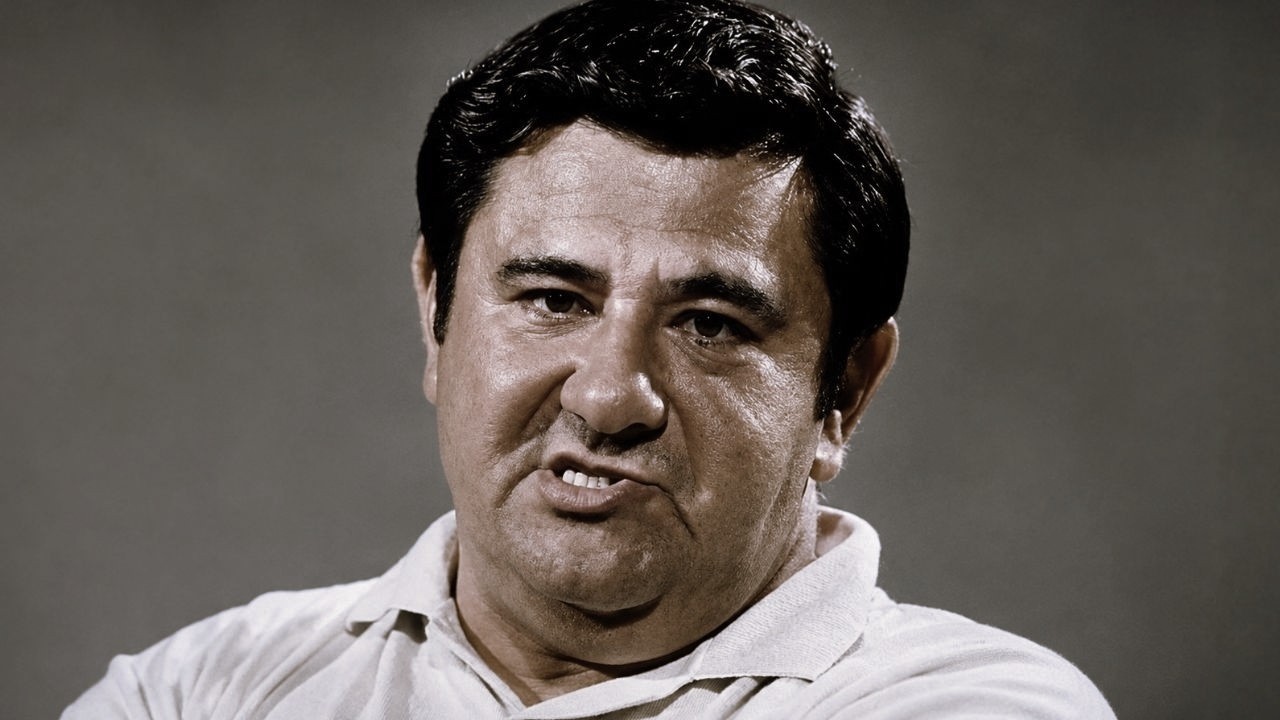
In an industry that placed a premium on polish and conventional good looks, those differences could have been disqualifying. Instead, they became the raw material of a comic identity that audiences found irresistible. Before any measure of fame, Hackett worked a string of jobs in the Catskills resorts, the storied retreats where many comedians of his generation sharpened their craft. He entertained guests, organized activities, and learned to read a room with precision, sensing an audience’s mood and holding attention through storytelling and timing.
His earliest performances failed outright, a lesson he carried for the rest of his career: laughter had to be earned. World War II interrupted his path like it did for so many others of his generation. After serving in the army, Hackett returned home without a clear plan but with a firm conviction that he belonged in front of an audience. He slowly rebuilt his career in clubs and theaters, eventually adopting the stage name Buddy Hackett.
His natural storytelling ability and unapologetic personality helped him break through in an increasingly crowded field. As television expanded across the country, Hackett became a familiar presence on national programs, introducing himself to millions of viewers. His big break came not from fitting Hollywood’s mold, but from refusing to. He was not polished or glamorous, and he did not try to be.
Audiences responded to his authenticity, and that connection defined his rise. The 1960s brought some of his most memorable film roles. He appeared in The Music Man and the ensemble comedy It’s a Mad, Mad, Mad, Mad World, holding his own alongside some of the era’s biggest stars. Decades later, Disney introduced him to a new generation, first through The Love Bug and later as the voice of Scuttle in The Little Mermaid.
Children who had never seen his stand-up act connected instantly with his warmth. Still, Hackett’s greatest success may not have been in Hollywood at all. Las Vegas became his true home. Night after night, he filled showrooms with audiences eager to hear his stories.
His performances often felt less like polished routines and more like conversations with old friends. He had a rare talent for turning ordinary moments into memorable entertainment. Away from the spotlight, Hackett built a lasting personal life. He married Sherry Cohen in 1955, and their marriage endured for nearly five decades.
At a time when many celebrities struggled to balance fame and family, Hackett worked to keep his private life protected and his loved ones out of unnecessary public attention. In his later years, health problems accumulated. Heart disease, diabetes, and other complications gradually slowed him down. Buddy Hackett died in 2003 at the age of 78, leaving behind a legacy that stretched across generations of American entertainment.
His story is not simply one of fame, but of persistence. He proved that success does not require perfection, only authenticity, resilience, and the willingness to embrace what makes you different. Long after the laughter faded, that remains his most enduring gift.