The legendary production of Gone with the Wind was a four-hour saga of war, obsession, and survival that captivated audiences in 1939 and shattered box office records. Yet behind the Technicolor sunsets and plantation grandeur lay a chaotic battlefield of bruised egos, brutal pay gaps, and censorship fights that nearly undid the epic before it ever reached the screen. From a producer who burned down his own backlot to a historic Oscar night marred by segregation, the film’s creation was as turbulent as the Civil War it depicted.
Production began on December 10, 1938, with the filming of the Burning of Atlanta, one of the most expensive scenes ever attempted in Hollywood history. The only problem was that Scarlett O’Hara, the character at the center of the inferno, had not yet been cast. Producer David O.
 Selznick ordered years of accumulated sets on the 40-acre backlot to be torched, including a massive wall built for Cecil B. DeMille’s 1927 King of Kings. Pipes running kerosene and water steered the blaze as flames rose an estimated 500 feet into the sky, alarming nearby residents who believed a real disaster was unfolding.
The search for Scarlett became a national publicity event, with more than 1,400 women interviewed and an estimated $92,000 spent on the hunt. Vivien Leigh, a British actress, quietly decided the role was hers despite industry conventional wisdom that no Englishwoman could convincingly play a Southern belle. She traveled to Hollywood, waited, and was finally introduced to Selznick on the Burning Atlanta set by her agent, who declared, “I want you to meet your Scarlett O’Hara.”
The moment played more like a coronation than a casting call.
Katharine Hepburn, meanwhile, approached the role with characteristic confidence, announcing to Selznick, “I am Scarlett O’Hara. The role is practically written for me.” His reply became legend: “I can’t imagine Rhett Butler chasing you for 12 years.”
Hepburn had been branded “box office poison” by theater owners after a string of underperforming films, and Selznick refused to gamble his unprecedented budget on her. She declined his offer of a screen test and walked away, leaving the part to the British unknown who submitted to the ritual without complaint.
Clark Gable, the King of Hollywood, arrived with his own reservations, nearly walking off the production over a scripted scene requiring his character, Rhett Butler, to cry after Scarlett’s miscarriage. Gable refused, fearing the tears would damage his rugged screen persona. Director Victor Fleming backed the script, and Olivia de Havilland privately urged Gable to trust the moment.
A compromise was struck: the scene would be shot twice, once with full emotion and once with his back to the camera. In the editing room, the emotional take won, and the tear stayed.
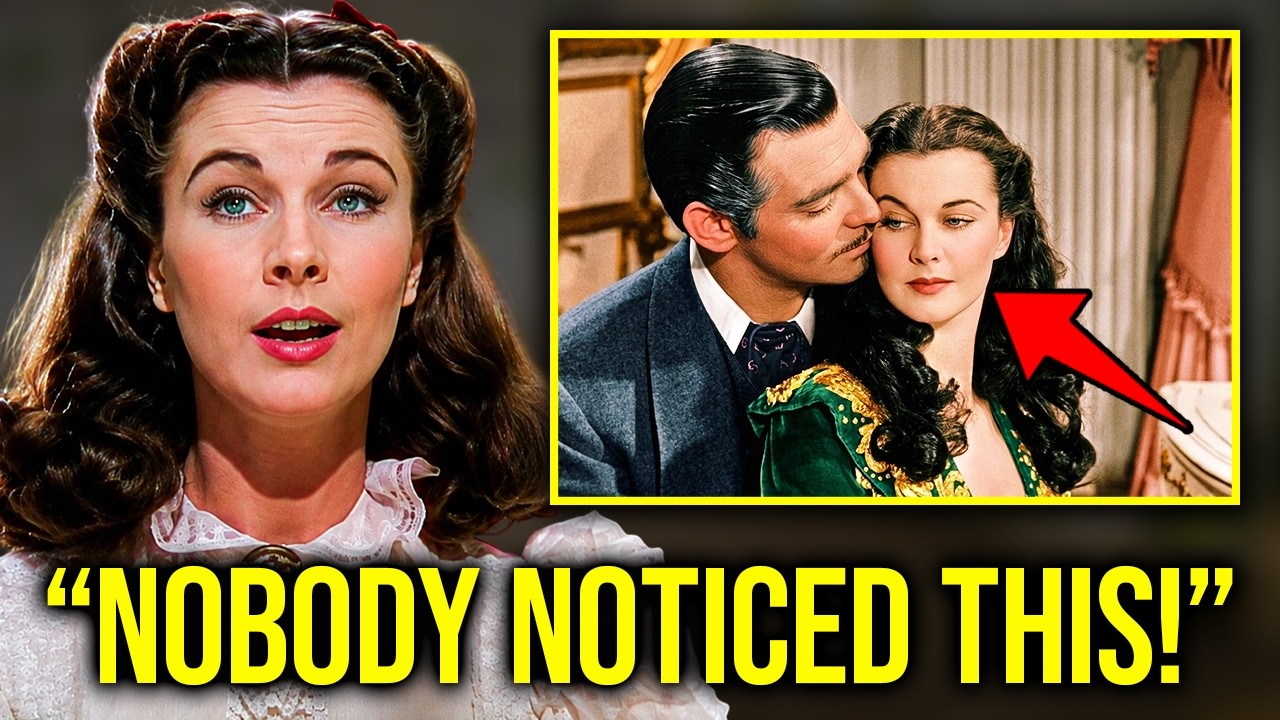
The film’s most famous image, Rhett carrying Scarlett up the grand staircase, was viewed by the Production Code Administration as a depiction of rape within marriage. Joseph Breen, the Hays Office enforcer, objected to the sequence as early as 1937, warning against any “suggestion of rape or of struggles suggestive of rape.” The scene survived only through implication, cutting to black before anything explicit occurred.
 The following morning, Scarlett wakes up visibly content, a framing that many audiences accepted in 1939 but which has fueled debate for more than 80 years.
The pay gap between the film’s leads was stark. Vivien Leigh worked approximately 125 days and was paid $25,000, while Clark Gable worked 71 days and earned $120,000. Gable’s established stardom and standing MGM salary gave him enormous leverage, while Leigh, despite defeating virtually every leading lady in Hollywood, was treated as a fortunate newcomer.
Her reward for carrying the film was a restrictive seven-year contract alongside that single payday, a discrepancy that barely raised an eyebrow within the 1939 studio system.
Leslie Howard, who played Ashley Wilkes, described the character as a “dreadful milksop” and accepted the role only as leverage to secure a producer credit on another project. He skipped the Atlanta premiere entirely. Gable’s hesitation ran deeper than the tears; he feared expectations were so enormous that anything short of perfection would be seen as failure.
He agreed largely for practical reasons, as the salary helped finalize an expensive divorce and marry Carole Lombard. Margaret Mitchell herself sold the rights for $50,000 and refused to write the screenplay, maintaining her distance from the adaptation.
More than a dozen writers worked on the script, including F. Scott Fitzgerald, who came, drafted, and left without a screen credit. Midway through production, Selznick summoned Ben Hecht, who rewrote the entire first half of the film in less than a week, surviving on a diet of bananas and salted peanuts.
Directors fared no better. George Cukor, who spent two years in pre-production, lasted only 18 days of principal photography before being dismissed. Victor Fleming took over but collapsed from exhaustion, forcing Sam Wood to step in.
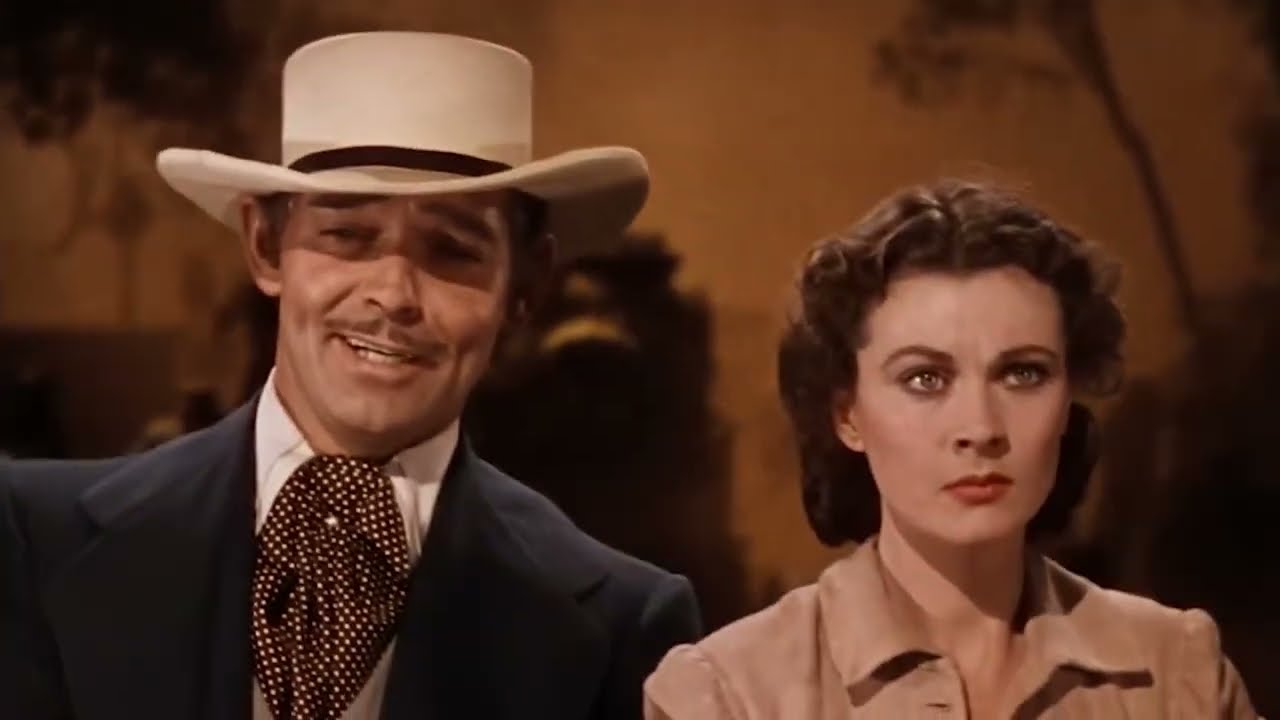 Selznick’s relentless oversight covered dialogue, camera setups, and even individual gestures.
The film cost approximately $3. 85 million, well over $70 million in today’s terms, making it one of the most expensive gambles Hollywood had ever seen. The production employed 59 leading and supporting cast members, 2,400 extras, and hundreds of animals.
Roughly 450,000 feet of Technicolor film were shot, and Selznick rented all seven existing three-strip Technicolor cameras for a single night. Gary Cooper, considered for Rhett, predicted it would be “the biggest flop Hollywood has ever seen,” and said he was glad it would be Gable falling on his face instead of him.
The world premiere in Atlanta on December 15, 1939, turned the city into a stage. Georgia’s governor declared the date an official state holiday, and Atlanta’s mayor built a three-day civic celebration around the film. Around 300,000 spectators lined seven miles of streets as limousines carried cast members to the Loew’s Grand Theater.
But none of the film’s Black cast members were part of the celebration. Georgia’s segregation laws meant Hattie McDaniel, Butterfly McQueen, and the others could not sit with their white colleagues. Gable threatened to stay away, but McDaniel persuaded him to attend.
The film’s most famous line, “Frankly, my dear, I don’t give a damn,” nearly did not survive the Hays Code. In Mitchell’s novel, Rhett’s farewell is “My dear, I don’t give a damn,” with “frankly” added for the screen. Just before release, regulations were amended to allow words like “damn” when used sparingly in historically accurate contexts.
Selznick argued his way through Breen’s office, and the line remained. The controversy fueled curiosity, and the line became one of the most quoted in cinema history.
 Off camera, the romance was less pleasant. Clark Gable developed advanced periodontal disease in 1933, requiring nearly all his teeth to be extracted. By the time he stepped into Rhett Butler’s boots, he wore full dentures, which caused persistent halitosis, worsened by his heavy smoking.
Vivien Leigh did not hide her feelings, later saying, “Kissing Clark Gable in Gone with the Wind was not that exciting. His dentures smelled something awful.”
The film’s closing line, “After all, tomorrow is another day,” nearly titled the entire film. Mitchell’s publisher favored “Tomorrow Is Another Day,” but Mitchell chose Gone with the Wind from Ernest Dowson’s poem “Cynara.” The film premiered in December 1939, as World War II began in Europe.
In Britain, it played continuously in London for four years, even through the Blitz, as audiences watched a fictional woman battle through the ashes of her world.
Long before release, civil rights organizations raised alarms. Walter White of the NAACP pressed Selznick to hire a Black adviser, and the Pittsburgh Courier ran editorials during production. Selznick removed references to the Ku Klux Klan by name and cut racial epithets after continued pressure.
He hired technical advisers, both of whom were white. The surface shifted, but the underlying framework remained, centering white Southern perspectives and using Black characters primarily to support the emotional journeys of white leads. In 2020, HBO Max temporarily pulled the film, returning it with an introductory disclaimer contextualizing its depiction of slavery.
On February 29, 1940, Hattie McDaniel made history as the first African American to win an Academy Award, taking Best Supporting Actress for her role as Mammy. But the ceremony at the Coconut Grove nightclub enforced a strict whites-only policy. Selznick had to negotiate directly with hotel management for her to attend.
While her white co-stars sat at Selznick’s table near the stage, McDaniel was escorted to a small table against a far wall. She delivered her speech with remarkable dignity, expressing hope to “always be a credit to my race and the motion picture industry.” Afterward, the celebration moved to another venue that also barred Black guests, and McDaniel did not join.
She reached the highest honor her industry could bestow, only to find herself excluded from the very party that followed.