Hollywood has a long and deeply troubling history of failing its youngest stars, and the stories of Corey Haim, River Phoenix, Jonathan Brandis, Bobby Driscoll, Brad Renfro, Jay North, and Jack Wild serve as a devastating testament to that grim reality. These were not just actors who faded from the spotlight; they were children thrust into a brutal industry that often prioritized profit over their well-being, leaving them to navigate a minefield of exploitation, addiction, and profound psychological damage with little to no support. Their collective tragedy is not a series of isolated incidents but a systemic failure that has repeated itself for generations, a pattern of abuse and neglect that has destroyed countless promising lives.
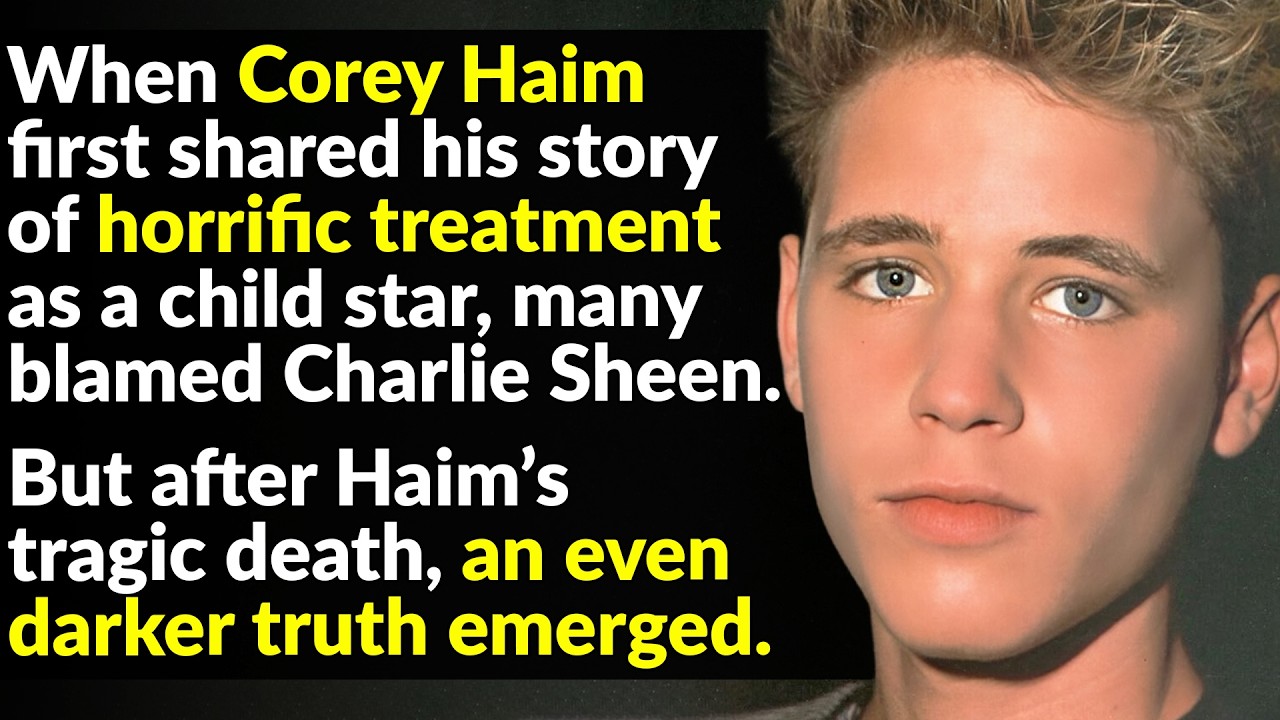
The case of Corey Haim is perhaps one of the most tragic and well-documented examples of this systemic failure. Haim, who shot to fame in the 1980s alongside his friend Corey Feldman, was a charismatic and talented young actor whose career was derailed by a combination of addiction and alleged sexual abuse. His story, which came to light in a 2000s reality show and in Feldman’s later documentary, paints a picture of a vulnerable boy who was preyed upon by powerful men in the industry.
 Haim himself spoke of being molested at the age of 14, and after his untimely death in 2010 from pneumonia and a weakened system, Feldman alleged that Haim had been a victim of a network of predators, a claim that has been met with both support and skepticism but which highlights the immense pressure and danger that child actors face.
Haim’s descent was a slow, painful spiral that was visible to anyone paying attention. His struggles with addiction began early, with a stint in rehab at a young age leading to a dependency on Valium that escalated to a shocking 85 pills a day. This addiction not only destroyed his health but also his career, as he became unreliable and difficult to insure, leading to a string of direct-to-video films and financial ruin.
The psychological scars from his alleged abuse compounded his addiction, creating a cycle of self-destruction that he was never able to break. His story is a harrowing example of how the industry’s failure to protect a child can have consequences that echo for a lifetime, ultimately contributing to his tragic end at just 38 years old.
The fate of River Phoenix, a contemporary of Haim’s who was considered one of the most gifted actors of his generation, is another profound tragedy that underscores the perils of child stardom. Phoenix, who was raised in a cult and began performing on the streets to support his family, was a deeply sensitive and introspective soul. His breakout role in Stand by Me at the age of 16 catapulted him to fame, but the pressure of his own success and the trauma of his childhood weighed heavily on him.
He was a passionate vegan and animal rights activist, a stark contrast to the self-destructive path he would eventually take. His experimentation with drugs, which began in his early twenties, was a desperate attempt to cope with the immense pressures of his life, and it culminated in a fatal overdose outside the Viper Room in 1993, a shocking event that left the world reeling.
Phoenix’s death at the age of 23 was a wake-up call that the industry largely ignored. The media’s reaction was often sensationalist and cruel, focusing on the hypocrisy of a clean-living vegan dying from a drug overdose rather than the systemic issues that may have contributed to his demise. Those who knew him insisted that his drug use was not a long-term addiction but a tragic, isolated incident that went horribly wrong.
However, the underlying pain and pressure that led him to experiment in the first place were rooted in a childhood that was anything but normal. His story, like Haim’s, is a reminder that the trauma of being a child star can manifest in unexpected and devastating ways, even for those who seem to have it all. The loss of such a profound talent is a loss for the world, and it remains a stark warning about the cost of fame.
Jonathan Brandis’s story is a quieter, but equally heartbreaking, tragedy of a star who was left behind. Brandis was a massive teen heartthrob in the early 1990s, thanks to his role in SeaQuest DSV and films like The NeverEnding Story II. He was adored by millions of teenage girls, but the intense fame was overwhelming for him.
When the show was cancelled and his subsequent film roles were cut or failed to find distribution, his career began to sputter. The rejection he faced, particularly when his role in the 2002 film Hart’s War was reduced to a deleted scene, was a crushing blow. He spiraled into a deep depression, and in 2003, at the age of 27, he took his own life.
 His father later revealed that Brandis had been struggling with undiagnosed bipolar disorder, a condition that was never properly addressed.
Brandis’s story highlights a critical flaw in the Hollywood system: the complete lack of mental health support for its young stars. He was a professional who showed up and did his job, but the emotional toll of his career and its sudden decline was too much for him to bear. The pressure to maintain his teen idol status, the constant rejection, and the instability of his career created a perfect storm of despair.
His death, which was initially reported as a suicide, was a devastating loss that was felt by his friends and family, but it also served as a reminder that the industry’s obsession with youth and fame is a double-edged sword. When the fame fades, as it inevitably does, many of these actors are left with nothing but the psychological scars of their experiences, and often, no one is there to help them pick up the pieces.
The story of Bobby Driscoll, one of Walt Disney’s first major child stars, is a chilling precursor to the tragedies that would follow. Driscoll was the voice of Peter Pan and the star of Treasure Island, and his face was everywhere. However, when he hit puberty and developed acne, Disney abruptly dropped him, and the guards at the studio gate refused to let him in.
This rejection was a devastating blow that sent him into a downward spiral. He turned to drugs, was arrested multiple times, and his life fell apart. He died in 1968 in an abandoned building in New York City, and his body was unclaimed for over a year.
He was buried in a pauper’s grave, a tragic end for a man who had once been one of the most famous children in the world.
Driscoll’s story is a stark illustration of the industry’s callousness and its tendency to discard its stars once they are no longer useful. He was a child who was exploited for his talent and then thrown away when he no longer fit the mold. His addiction and subsequent death were a direct result of the trauma of being abandoned by the very people who had made him a star.
The fact that Disney, a company that built its empire on the innocence of childhood, could so callously turn its back on a child who had helped build that empire is a damning indictment of the industry’s values. His story is a reminder that the pursuit of fame can be a Faustian bargain, and for many, the price is their very soul.
 Brad Renfro, a talented actor who was discovered at the age of 10, was another tragic victim of Hollywood’s dark side. Renfro was a natural talent, but he was also a deeply troubled child from a broken home. He began using drugs and alcohol at a very young age, and his career was a constant battle against his own demons.
He was arrested multiple times for drug possession and theft, and his behavior on set was often erratic. Despite his immense talent, he was never able to escape the cycle of addiction. He died in 2008 at the age of 25 from an accidental overdose, a tragic end to a life that had been filled with so much promise.
His story is a reminder that for many child stars, the struggle is not just about fame, but about survival.
Renfro’s story is particularly tragic because he was a child who was clearly crying out for help. He was given managers and minders, but no one was able to provide the stability and support he desperately needed. His grandmother, who was his guardian, admitted she had turned him loose when he turned 18, and he was left to fend for himself in a world that had already taken so much from him.
The fact that he was so young when he began his descent into addiction, and that the adults around him were unable to stop it, is a damning indictment of the system. His death, like so many others, was a preventable tragedy that was allowed to happen because the industry was more concerned with his box office appeal than his well-being.
Jay North, the star of Dennis the Menace, had a different but equally horrifying experience. North was subjected to physical and emotional abuse at the hands of his own aunt and uncle, who were hired to be his guardians on set. He was isolated from his peers, forced to work grueling hours, and punished if he made a mistake.
He later revealed that his aunt would take him off set and hit him, always careful not to leave marks. This abuse went on for years, and no one, not even his mother, knew what was happening. North’s story is a chilling reminder that the abuse of child actors is not always at the hands of predatory strangers; sometimes, it is the people who are supposed to be protecting them.
North’s experience highlights the vulnerability of child actors, who are often completely dependent on the adults around them. He was a child who was trapped in a nightmare, forced to smile for the cameras while enduring horrific treatment behind the scenes. The psychological damage from this abuse stayed with him for the rest of his life, and he eventually left Hollywood to escape the shadow of his past.
 He joined the Navy, but even there, he was ridiculed for his role as Dennis the Menace. His story is a testament to the resilience of the human spirit, but it is also a stark reminder of the deep and lasting scars that child stardom can leave. He was able to find some peace later in life, but the trauma of his childhood never truly left him.
Finally, the story of Jack Wild, the beloved Artful Dodger from Oliver! , is a tragic tale of a star who was unable to cope with the pressures of fame. Wild was a charming and talented young actor who was nominated for an Oscar at the age of 16.
However, as he grew older, the roles began to dry up, and he turned to alcohol to cope with his frustration and loneliness. His addiction spiraled out of control, leading to a divorce, financial ruin, and a series of health problems, including pancreatitis and multiple heart attacks. He was able to achieve sobriety later in life, but the damage to his body was already done.
He was diagnosed with oral cancer in 2001 and died in 2006 at the age of 53.
Wild’s story is a classic example of the “child star curse,” where the success that brings fame and fortune also brings a unique set of pressures that can be impossible to handle. He was a teen heartthrob who was adored by millions, but he was also a young man who was deeply unhappy and insecure. His addiction was a way of numbing the pain of his fading career and his personal struggles.
His story is a reminder that fame is not a cure for unhappiness, and that for many child stars, the transition from childhood stardom to adulthood is an incredibly difficult and often destructive process. His legacy is one of talent and charm, but it is also a cautionary tale about the dangers of a life lived in the spotlight.
The collective tragedy of these seven actors is not just a series of individual stories; it is a damning indictment of the entertainment industry. These were children who were exploited for their talent, then discarded when they were no longer useful. They were subjected to abuse, addiction, and psychological trauma, and in most cases, the adults who were supposed to protect them failed them completely.
The industry has a long history of prioritizing profit over the well-being of its youngest stars, and the consequences have been devastating. Their stories serve as a powerful reminder that the glitz and glamour of Hollywood often hide a much darker reality, and that the cost of fame can be tragically high. The names Corey Haim, River Phoenix, Jonathan Brandis, Bobby Driscoll, Brad Renfro, Jay North, and Jack Wild are forever etched in the annals of Hollywood history, not just for their talent, but for the profound and heartbreaking ways in which the industry failed them.
Their lives are a stark warning that the pursuit of stardom must never come at the expense of a child’s safety and well-being, and that the industry must do more to protect the most vulnerable members of its community.